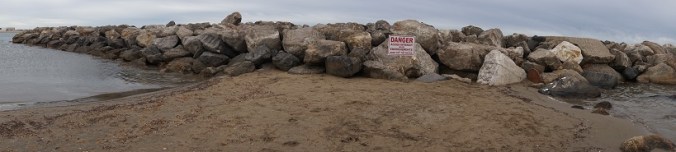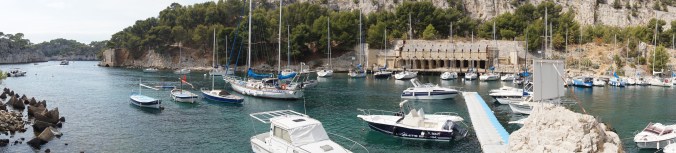
Les Calanques, Cassis, France

cassis 8

Walking round to Plage de Bestouan, we had noticed a sign to ‘Les Calanques’. A brief look at a map showed this to be a series of inlets. Since it was a rather cloudy day, we set out wearing walking boots. However, within minutes the weather turned hot and sunny and I began to wish I was in sandals with my swimming costume in the bag. After a long steep climb through the suburbs of Cassis, we started to head down dirt tracks with glimpses of sea to our left. We ducked down a small path and popped out on limestone rocks with a handful of nudists taking the sun. Clearly the lack of swimwear was only a problem if I wanted it to be. I resolved to forgo the nudey swim (despite Dave offering to hold my towel), keen to press on to ‘Les Calanques’.
cassis 6


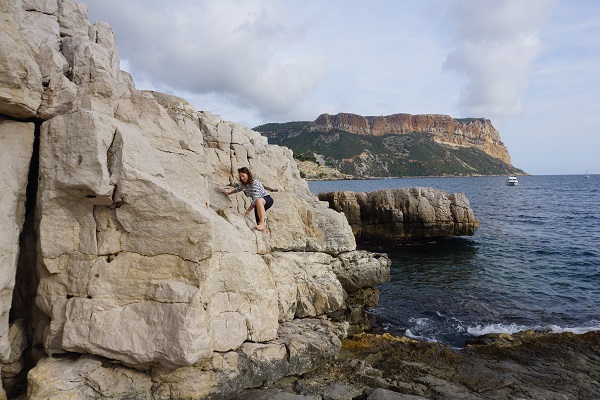
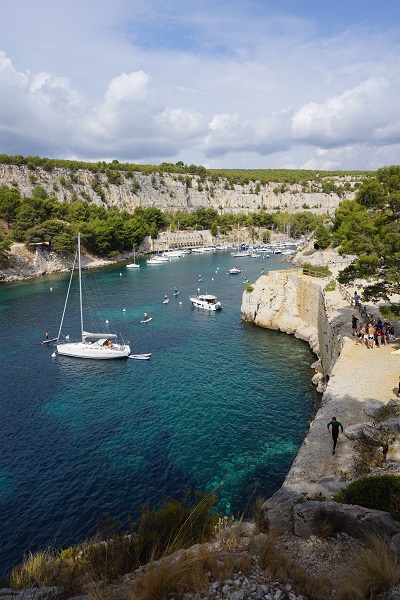
Soon we saw another hot and tired looking couple infront of us, clearly pursuing the same goal. And soon signs to ‘Les Calanques’ started to appear. But then we were surprised to see a sign saying ‘Privee’ and a big beach resort type place with tennis courts and a very smart restaurant. We pushed past this, trying to look more confident than we felt, and were rewarded with our first view of Presq’ile, the long limestone headland which is a dedicated nature reserve. We saw a couple of small boys bouncing up and down excitedly in wetsuits to the right of us and decided  to go and investigate. We were stunned to find that they were standing on the edge of a steep limestone cliff which went plunging down into a steep ravine. This, we deduced, was ‘Les Calanques’ – which I now know means ‘the coves’.
cassis 7


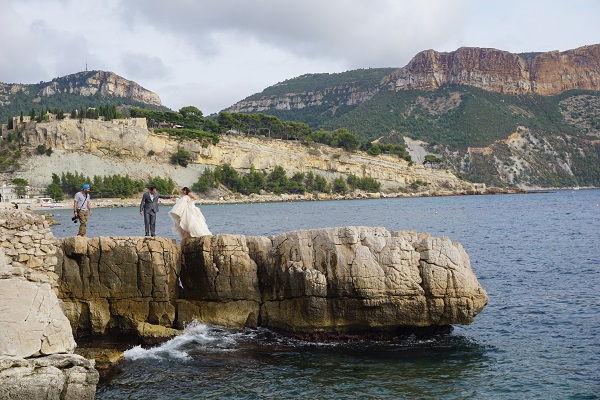
This first ravine was amazing, with sheer limestone cliffs which look like the remains of a massive quarry. The ravine was like a mini fjord, perhaps half a mile deep and narrowing to a tiny beach. Between the opening and the beach were hundreds of boats, a kayak school, and the remains of an old limestone works of Roman origins which closed in the 1980’s. There were also signs of second world war naval defences. And of course there were several small boys in wetsuits jumping off the rocks into the sea.

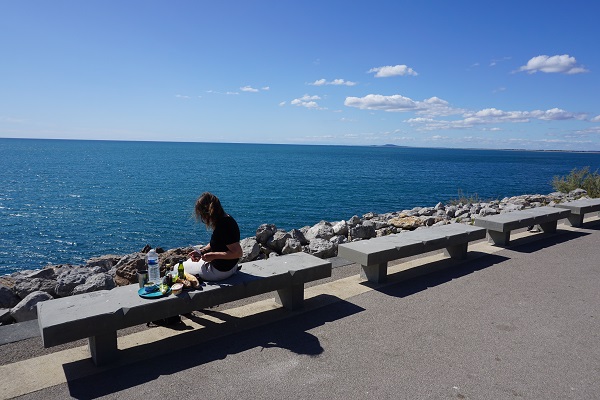
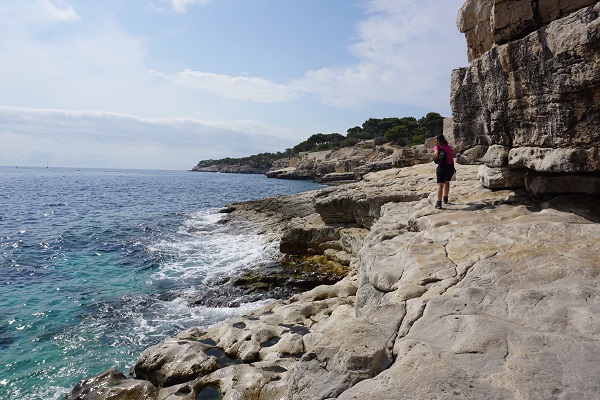
By now we were both hot and tired so we retired to the other side of the Presq’ile for a picnic on the limestone flats and – since the sea was quite rough – contented ourselves with dipping our feet in the sea.

We resolved to spend another day in Cassis, exploring Les Calanques by sea.
cassis 9

Cassis on the French Riviera

cassis 3

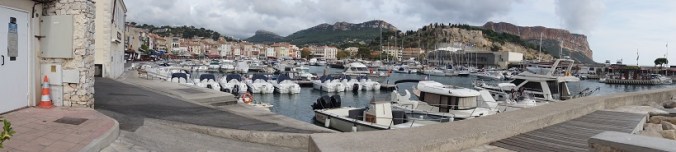
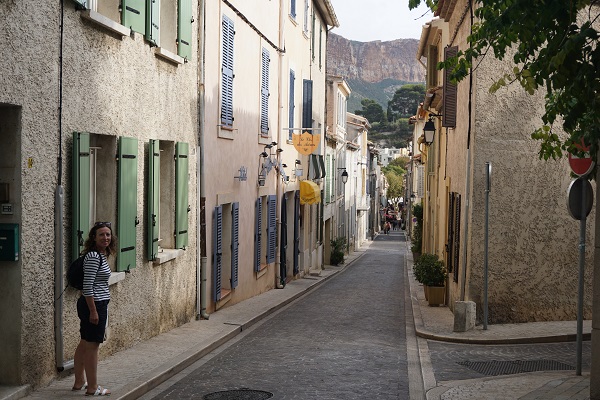
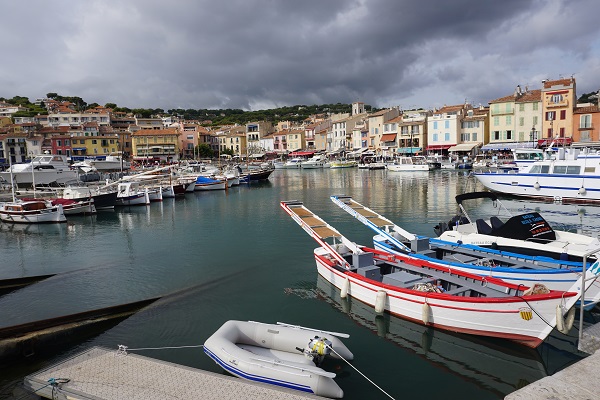
Today, we we whizzed back down  to the coast, past Marseille to Cassis, a fishing port on the Riviera. Nothing had prepared us for the drama of the setting, with sheer cliffs of limestone and a red coloured sedimentary rock which slightly reminded me of the grand canyon. Cassis itself is a beguilingly pretty town with pastel coloured houses clustered round le Grand Plage and harbour.    We soon found a campsite, Les Cigales, at the top of the town with views to the sea. The walk down the steep hill to the town was a cinch – the walk back up a wee bit more challenging! I noticed that the clientele of this campsite was different from the usual – there were far more young people, and far more campers. We thought it had a nice relaxed vibe without too many signs forbidding us from doing this and that. No loo seats and the showers were a bit dodgy but there was soap in the bathroom. Hoorah!
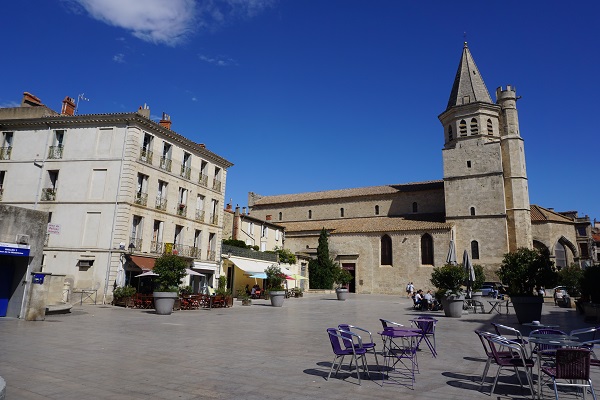
We walked down to take a look at the harbour and were struck by how upmarket the shops and restaurants were. My guidebook described it as an unspoiled fishing port but there were clearly signs that we were on the Riviera. A quick glance in the estate agent window confirmed that prices were soaring. Shame.  I wouldn’t have minded a bolthole in Cassis, nothing too fancy; just a bit of land, sea views and a pool!

cassis 1

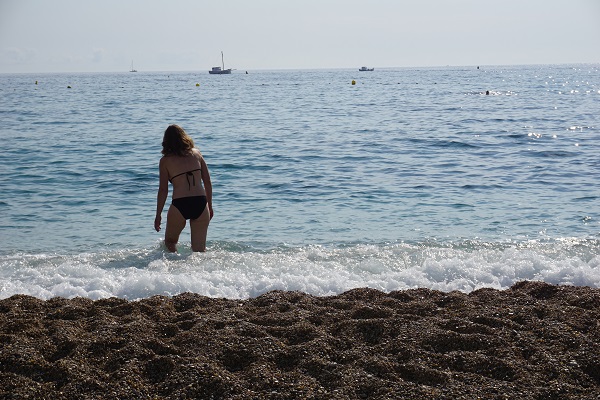
After a quick look round the shops, and at the town beach,  ‘Le Grand Plage’ we walked round to le Bestouan, a pebbly beach away from the the main town.  It was cloudy so I didn’t much fancy a swim but there was a café right on the beach, so we had to pop in for a drink. The waiters got their kicks out of mimicking the French accents of poor unsuspecting English tourists and we were not their only victims. There were tantalising signs to ‘Les Calanques’ that I was keen to follow but it was getting late and we needed to buy food so we resolved to explore further the next day.

cassis 4

Up at the campsite, a young man with red hair introduced himself as Paul from Cork and asked us to keep an eye on his bike while he went for a shower. He was staying on the pitch next to ours. He said he’d flown into Nice and was intending to cycle to Barcelona and go home from there. On day one, he lost the key to his bike lock and had to smash it off so he was doomed to stay with his bike at all times. While he was in the shower, I took a peek at his set up. He had no tent, just a hammock slung between two trees. Talk about travelling light! When he came back, I asked him to join us for supper. He politely refused but it was obvious he was living off biscuits and he soon gave in and joined us. It made a pleasant change to have some company, even if it meant I had to give up my seat and sit on the step of the van. David and Paul had plenty to talk about as it turned out he was a junior doctor in an emergency department in Cork. He said he does a couple of these ‘mini adventures’ a year, and was planning to take a year off to travel round Europe as soon as he qualifies.

cassis 2

I did feel a touch sorry for Irish Paul in his hammock as I rolled out my double bed that night but I was full of admiration for his adventurous spirit.

cassis 5

Arles, Van Gogh and Gauguin, France

arle 2

Arles was next in our sights. There are so many reasons to visit this beautiful city. My main interest was its association with Van Gogh, who spent one of his most productive years here. He set up a studio with the intention of working alongside other artists. He invited Gauguin to work alongside him, which worked for a bit, but artistic differences became too much. The townspeople got up a petition to have Van Gogh moved on, after which he cut off his ear and gave it to a local prostitute. And was then committed to a mental hospital.

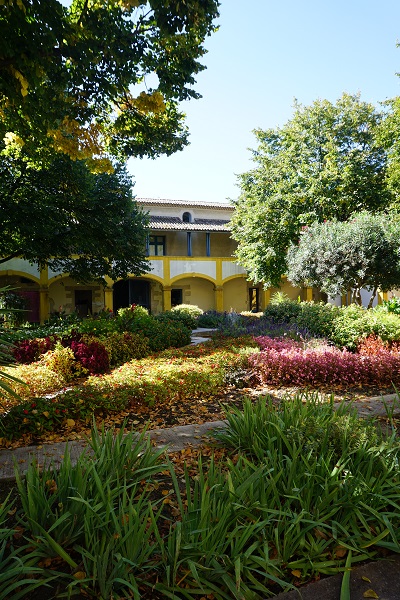
Since then, a whole tourist industry has grown up around his work, including the Foundation of Vincent Van Gogh. Sadly, the Foundation was closed when we got there, so our Van Gogh tour was sadly curtailed. However, we did see the hospital where Van Gogh was committed after he cut off his ear: the courtyard looks exactly the same as it did when he painted it in 1889.

arle 1

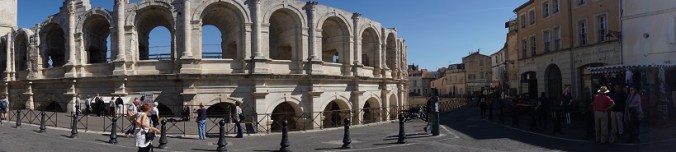
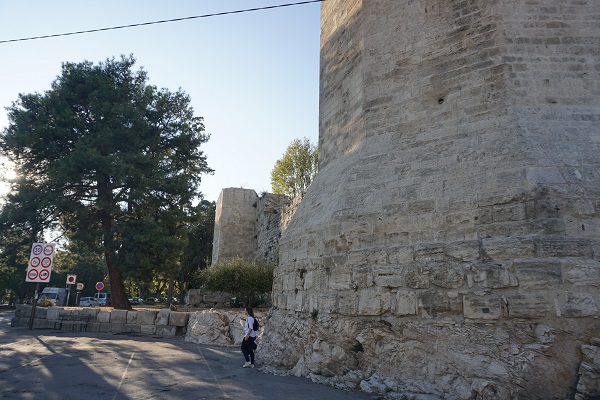
The town itself was an inspiration in many other ways. First impressions were a little tricky as we were diverted due to a traffic incident and ended up having to park in a super expensive spot. However, as soon as we started to wander up the steep, shady streets, we realised we were somewhere special. The medieval and roman antecedents of this hill town were everywhere to see. What surprised us was the extent of the roman remains which litter the town. We happened acorss  a full sized amphitheatre AND a theatre, both very well preserved. I felt very lucky to be here off season as it was clear that this was a super popular tourist town which would be rammed in summer. For the first time in our trip, we saw guided groups of American and Japanese tourists who were clearly “doing” roman remains or “doing” art history. As a place to visit, it was a joy, with narrow, car free streets giving way to open squares.  It was fun to dive down small passageways and see where we’d pop out. Putting aside the monuments and tourist hot spots, there were bits of ancient graffiti, ancient arches and city walls everywhere.

arle 5

There was also a contemporary buzz about the place, with the ‘Rencontres d’Arles’ taking place. This is a photographic exhibition which has happened every summer since 1970, exhibiting contemporary photographs and creative works on various heritage sights around the city. We were happening across interesting images in every nook and cranny.

arle 3

After the Montpellier mess up, we were pleased to find a campsite within walking distance of the town.  Once we were settled, we walked in again to enjoy a sunset drink within spitting distance of the amphitheatre. Then we went on to ‘Oscar’s café’ with jazz playing and an exhibition about African body art on the walls. The reclaimed furniture was mismatched and the food dishes were individual: a salad of local, freshly picked tomatoes and chevre; red mullet fillets with a potato and pear accompaniment. Another facet of fascinating Arles.

arle 4


Pont du Gard, Provence, France

pont 1 small

Avignon, Aix en Provence, Arles…there were so many choices of places to go…where should we go next? Or, given that the weather was beautifully sunny, should we skip the tourist sights and head to the coast?

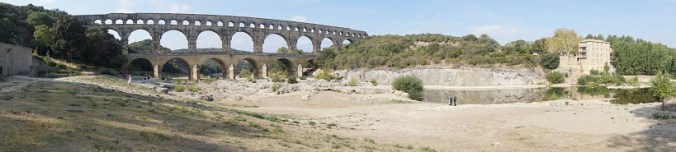
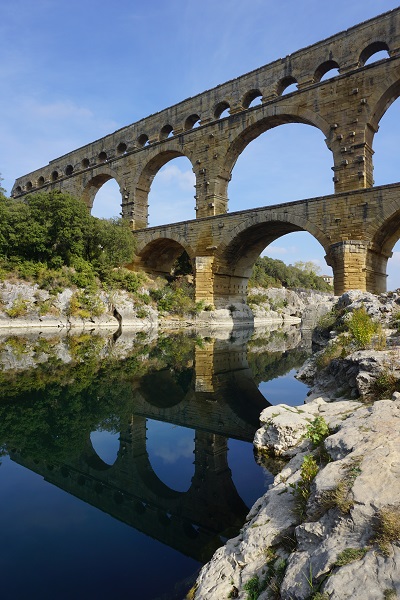
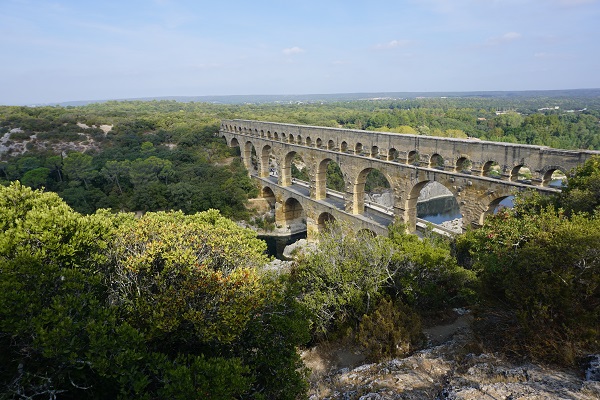
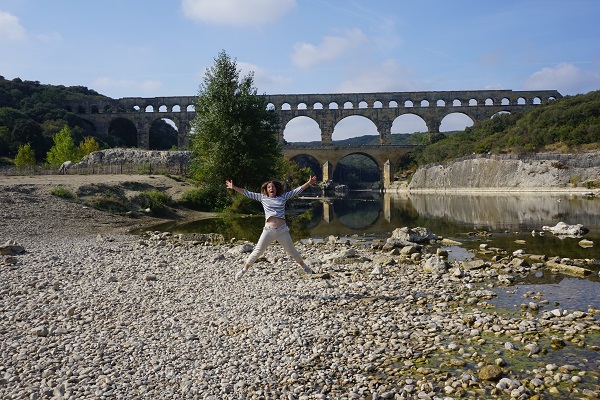
In the end we settled on a visit to the Pont du Gard,one of Frances most popular tourist destinations. A roman aqueduct. One of the best preserved in the world. It crosses the Gardon River near the town of Vers-Pont-du-Gard and is a UNESCO world heritage sight. You’ve probably seen it. The image has graced many a postcode and table mat.

pont 2 small

Approaching the sight, a massive car park and a steep entrance fee. So far so predictable David was keen, I was less sure.

And then we caught our first glimpse of the aqueduct, towering over the river. Not one, not two but three tiers.

pont 3 small

It was worth it.

I hope David’s photos do justice to the experience. But there’s no substitute for the experience. If you get a chance to see it, do.

pont 4 small


Montpellier on the Rhone, France

montp 1 small

Our next destination was Montpellier, just a few miles further along the coast from Sete. The plan was to head in, scope the place, and then find a campsite as close to the centre as possible. We were keen to spend an evening in the city, which has a reputation for its nightlife, especially its live music, but not keen to bring the campervan with us. Once we have a camp set up, it’s not that easy to drive off.

After some trouble parking (all the main car parks were underground, with not enough head room for the van) we found a space on a tree lined avenue by the Rhone, facing what looked like university halls of residence.  Montpellier is famous for its University.. With no map, we took pot luck on which direction to head and happened across a tram line. Soon we were on board the tram, heading for the Place de Comedie, the central square known as L’Oeuf (the egg) because of its oval shape. First impressions were favourable: bold new designer builds mingle with lush parks, fountains and elegant squares, all on a grand scale. There were lots of young people milling about which made  a refreshing change from the retirement crew we’ve been rubbing shoulders with on the campsites. We wandered through the centre past the Opera house and the Musee Fabre, the fine arts museum, which had an interesting sounding exhibition, ‘Francis Bacon – Bruce Nauman, face a face’. Perhaps we’d have a chance to go in later.  Happening across a market, we bought some ripe plums and I eyed up a pair of knock-off Birkenstocks to replace the sandals which broke yesterday.  “Seulement dix euros, madame.” Sold!

Returning to the van, we picnicked on a bench by the river, watching some boys casting their lines on the far bank.  David, who never travels without a fishing rod, was keen to give it a try himself but Id rather watch paint dry and it was time to find a campsite. The weather was hotting up. As we drove out of Montpellier, we comforted ourselves with the fact that we’d be back soon. But could we find a campsite? No. Our usual approach is to search for campsites on the satnav but nothing came up, and we didn’t pass anything, either. Finally, David managed to locate one at Perols, right at the end of the tramline, so we headed out there, only to find it closed. We pushed on towards the coast, our dreams of a night on the town in Montpellier starting to recede.

montp 4 small


And then suddenly we spotted a flamingo. And did a double take – what?? I didn’t realise there were wild flamingos in France. And yet here they were.  Looking about, I realised we had strayed into unexpected terrain, a flat landscape of lagoons, marshes and salt flats known as the ‘Petit Camargue’. There was not just one, but hundreds of flamingos, standing on one leg, or curving their long necks to drink. When they take flight, they seem to defy gravity. Incredible, beautiful, comical birds. And that colour! There were also white egrets and grey herons. But it was the pink flamingos that made such a striking impression.

Not long after that we hit the sea and found a beach resort called Palavas-les-Flots with a campsite. Shades of Valras Plage made my heart sink –  and yet there was something special about the location with the beach on one side of us and a lake full of flamingos on the other.  We gave up on Montpellier, swapping it for the usual round of campsite activities – table tennis, swimming pool, beach.

At sunset, we wandered along the windswept prom with low expectations for the evening ahead. We were heading for some underwhelming restaurants clustered round a Marina. Then suddenly we spotted a canal between us and the marina – how would we get across? – at which point, we looked up to see some people whizzing past us overhead – there was a cable car! Soon we were flying across the canal, our legs dangling high above the water.

Dinner on the Marina was nothing special, but the view of the sunset was spectacular and the outside tables were buzzing – until the sun went down, and everyone disappeared into the warmth.  Soon we were the only diners left outside.

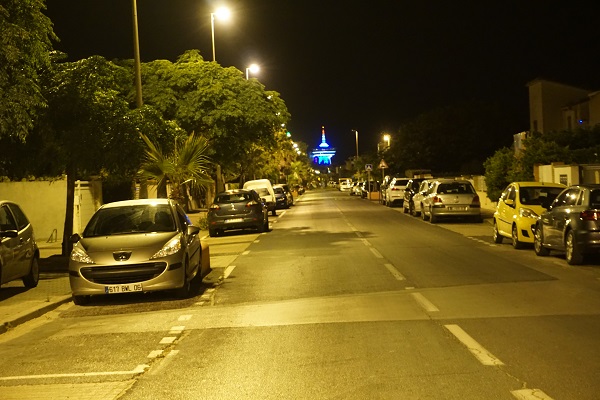
After the meal, we found the cable car closed and resigned ourselves to taking the long way round, down the canal and across a bridge. On the other side of the bridge, we happened across ‘the lighthouse of the mediterranean’, a tall tower with a panoramic view of the town and the sea. We had to pay 2 euros to take the lift to the top and the cost of a drink was astronomical, but the views were worth it.  We were the only customers.
montp 3 small


Cycling and walking in Sete, France

sete 7 small

I got up and dressed – but as soon as I started walking, my sandal broke. Disaster!  I’ve been living in sandals. Time to hit the shops.

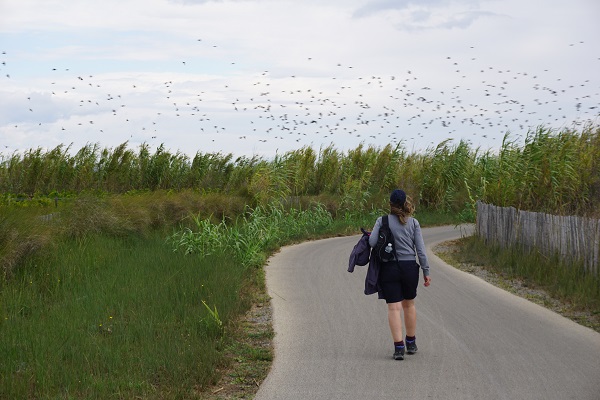
Both of us were somewhat saddle sore today so we vetoed the bikes and pulled on our walking boots for the 8 or 9 miles into Sete. The straight line of the cycle path seemed somewhat dull on foot, but we noticed certain things which had passed us by: the starlings lined up on the telegraph wires across the road, then suddenly taking flight and “murmurating” before diving in to the bamboo plants, perhaps to escape the wind, which was very strong today.

sete 6 small

Once in Sete, we stopped to buy lunch at a boulangerie – a leek tart for me and a sort of anchovy and tomato topped bread for David – you wouldn’t find that in Greggs!  Then we set out to explore the town a little more, venturing into the central area around the station.  Things were a lot quieter now that the weekend was over and the wind made it difficult to walk in a straight line, so we dived into a junk shop. It was an interesting shop with an eclectic blend of vintage and antiques including a good collection of Velos Solex, which I know Mervyn, my father in law, would have enjoyed –  but the prices were crazy so we didn’t stay too long. We debated walking back to the campsite but by now our legs were screaming in protest so we decided to get a bus but had just missed one. It was a couple of hours until the next bus. We opted to stay in town and wait. We found the shopping street and I had a look for sandals, but French fashion shops only seem to sell little strappy sandals which wouldn’t stand up to the kind of punishment I put them through. No sandals for me today.

sete 8 small

Despite the wind, the sun was out, so we found a bar by the canal with tables facing the sun to wait out the remaining hour until the bus came. What a hardship. When the bus came, the fare was 1 euro 30 to anywhere you like. Cycle paths, public toilets, bus services – it is striking how much the French invest in their public services. Ho, hum.

sete 9 small

Sete and Mont St Clair, France

sete 4 small

Today, we hired bicycles. I’ve never been very good on a bicycle, and neither has David, but when in France….

Hiring the bikes was a bit of a hassle: the huge campsite is always understaffed, and the front desk is chaotic. The first bike they gave me had a puncture but we sorted that out and at about midday, we were off, with instructions to return the bikes by 7 pm. It’s an eight mile ride to Sete, which sounded quite far to me, but infact it took less than an hour. We flew along the two lane cycle track which runs the length of the beach, stopping for a coffee half way at a beach bar.

sete 1 small

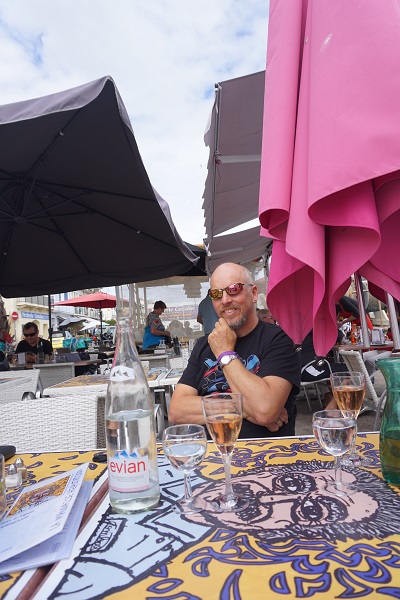
Arriving in Sete, we headed for the strip of harbourside fish restaurants which had caught our eye the day before. La Mauvaise Reputation drew us in with its memorable name and pretty harbourside tables. It was sunny but there was a fair old wind gusting through and one of the restaurant umbrellas blew over, almost braining one of the customers and smashing several glasses, at which point the waiter decided to put down the umbrellas. So we spent a couple of hours in full sun enjoying a leisurely restaurant lunch, lingering over it in the way that the French do. We went for the regional specialities. Tapenade and some kind of prawn Bouillabasse-type dish for me, and an Octopush salad and  ‘Marmite de Pecheur’ (a similar dish to mine but served with a side dish of dry toast and aioli) for David.   And a carafe of Rose, thank you very much. After which we decided we’d better stay off the bikes for a while. So we pushed them around town, admiring the traditional rowing boats plying up and down the river.

sete 2 small

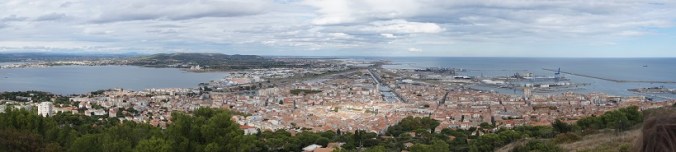
David was keen to strike up the hill to Mont St Clair and take a look at the enormous houses with big walled gardens which we’d seen in estate agent windows. Like a fool, I agreed. Cue an hour of pushing our bikes up some of the steepest inclines I’ve ever seen. David seemed to think it was all quite fun and I was so tired I couldn’t speak so we kept going up. The afternoon culminated in a flight of five hundred or so steep stone steps which we carried, yes, carried the bikes up. And still there was one more hill. However, it was now clear that David wasn’t the only one wanting to reach the top of the hill. There was a procession of puffed out cyclists, slow winding cars and even coaches. At the top of the hill was the viewpoint of Mont St. Clair, marked by a big cross.  Going up there was clearly the thing to do on a Sunday afternoon. There were a couple of shops selling icecreams, and an artist’s studio and an old church which an information board informed me used to be a haven for pirates back in the middle ages. In front of us there was an amazing view of Sete, the canal running down to the sea  and to the right, Marseillan Plage curving all the way to our campsite and then on another few miles to the nudist resort of Cap D’Agde (not that I could see anything at that distance!) Then to the left, the Etang de Thau, with oyster beds all neatly laid out, and kitesurfers streaking across the water. A beautiful sight.

sete 3 sMALL

We stopped for an icecream and then got back on the bikes, taking the opposite direction to all the crowds. We glided down a quiet hill past all the gated mansions and shady gardens which David had wanted to see. We passed ‘Pierre Blanche’, a nature reserve, a wooded hill with big white stones lying about and then finally we were back at sea level and picking up our cycle track to go back along the beach. We staggered back onto the campsite just in time to hand in our bikes –  and to book ourselves in for an extra night.

Sete, you are my favourite French town yet, knocking Collioure off the top spot. Will I find anything to top you…?

sete 5 small

Sete, Etang de Thau and Marseillan Plage, France

x nell ben small

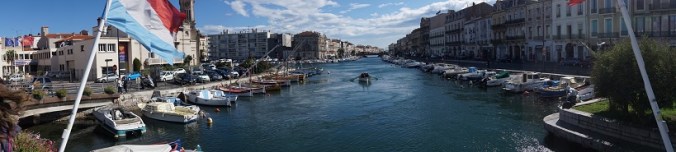
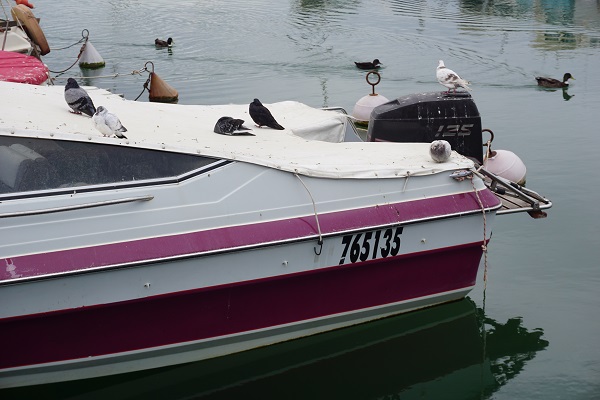
After the gloominess of Valras Plage,  the raw energy and excitement of Sete. It’s a fishing port, sometimes known as the ‘Venice of the North’ which gives a clue to the nature of the place. It is a confluence of waters, the sea, the Etang de Thau (a lagoon famed for its shellfish) and the canal which runs through the middle of the town. It’s a busy working port, with some seriously impressive fishing craft coming in and out. It’s also a great place to hang out, the canal lined with seafood restaurants and bars.

The town feels like an island, rising out of the flat landscape of the Languedoc, topped by the heights of leafy Mont St Clair.  There are some surprisingly elegant buildings around the harbour, including the impressive Palais Consulaire.  Even the graffiti is interesting.  Straight away, we liked the place and decided to stay for a few days.

x graff small

We were hoping to find a campsite within walking distance of the town but there wasn’t one, so instead we headed out to the nearest beach campsite, a straight run of eight miles to La Castellas on Marseillan Plage. The campsite is unlike anything we’ve seen before, a massive site catering to 1,000 people, most of them in rows of mobile homes. It looks a bit like a military barracks. You need a map to find your way around. There’s a shop, a bakery, a spa and a hairdresser. A massive pool with flumes and slides. The toilet block is a a good half a mile from our pitch, which can be a bit awkward on a windy dark night when I’m staggering about with my eyes half shut dressed in David’s dressing gown! However, the site is just behind the sand dunes, and the beach is stunning – everything that Valras Plage was not. It’s a bit like Studland’s big sister – no on beach development at all, just miles and miles of open sand curving around to Sete at one end and Cap d’Agde at the other.

x nell small

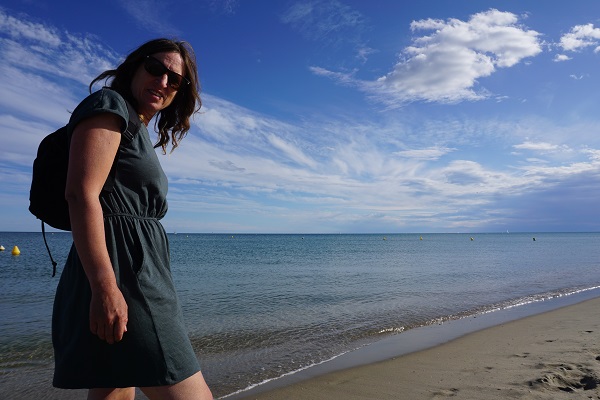
So it was down to the beach for us and straight into the sea. There were only about a dozen people on the beach. The sea was cold and David wimped out but he bought me a Magnum so I let him off! There was a beach bar playing laid back music, and I was happy, eating my Magnum in the sun, and with the prospect of visiting Sete again tomorrow.
x shad small

Valras Plage, France

VrP 4 small

I’m not going to linger on Valras Plage. The weather was grey and dull and so was the town.  It was my fault we went there. I read an article in which it was named as one of the top 10 beaches in France. The campsite owner from Weymouth said it was rather like Weymouth, but in my opinion, Weymouth wins hands down.

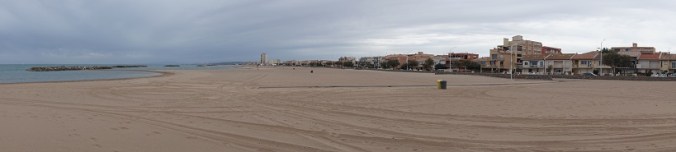
We did a lot of walking about. There was a long – very long – sandy beach and two streets of tacky shops selling all the same tacky stuff. There was a marina at one end of the town and on the other side of a river, a pretty beach with sand dunes but we couldn’t find a way to reach it. The other end of the town was dominated by a massive Casino. Which was shut.

The campsite had some nice features and the proprietors were lovely but, as we discovered in the morning, it was too close to a busy road.

All in all, Valras Plage was a ‘fail’ from which we quickly move on.

VrP 1

Beziers to Valras Plage, France

Bez 3 small

We are on our way to Valras Plage, with no camp site booked. That will be the way from this point on as David only planned our campsites as far as Collioures. He thought it would be nice to have the freedom to wander at will, and guessed that there would be plenty of free spaces at this time of year. He was right in one way – there are plenty of spaces, just as long as the site is open. As we drive along, we note that many sites are closed: we are now officially into  “low season” camping.

Before searching for a campsite, we head off to have a look at Beziers. We walk through dusty, rundown streets to find a roman amphitheatre which is barely recognisable as an amphitheatre, andoverrun by feral cats. Everywhere are tantalising clues of roman occupation, of medieval buildings and of a prosperous 18th century past but in general the town feels quite neglected with dog shit and rubbish strewn about. The dark side of France – high unemployment, homelessness, lack of public funds – is here to see. On the other side, posters announce that a programme of restoration is planned. There are two beautiful churches and a busy covered market in which to buy our lunch. We picnic in an elegant square outside the Eglise Madeleine,  French school kids flirting and fighting their way through lunch break. The church was built on the sight of a massacre. In 1209, 20,000 citizens of Beziers were massacred by crusaders lead by Simon de Montfort on the order of the Pope. They wanted to route out the Cathars, a reforming Christian sect who were critical of the corruption of the Catholic church.  When de Montfort asked the pope how the troops were to distinguish between Cathars and Catholics, he commanded,  “kill them all. God will recognise his own!” 

Bez 1 small

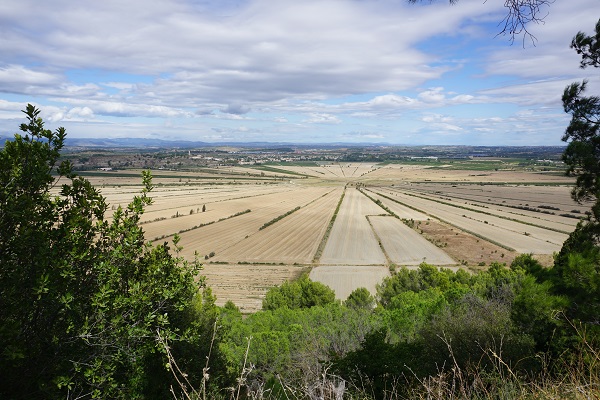
After lunch, we go in search of more roman remains. Oppidum D’Enserune is an ancient hilltop town which dates back to the 6th century B.C. It was discovered in 1860 and the main excavations were carried out from 1915-1967.  I found the remains quite hard to decipher,  although I can see there are sophisticated systems in place for water and food storage, with vast “doliam” (earthenware vases) for grain storage. The views are spectacular, looking across the Beziers plain and the mountains to the North. There’s a weird and beautiful formation in the fields below, not unlike a massive crop circle. It is ‘L’Etang de Montady’ – the swamp of Montady. In the 13th century, the Bishop of Narbonne ordered this wetland to be drained. It was achieved by digging irrigation ditches between each ‘wedge of field. The ditches all converge in the centre, and the water is drained by underground pipes and carried several kilometres to the South. It is a real feat of engineering, the only one of its kind in Europe and it still in use today.

Bez 2 small

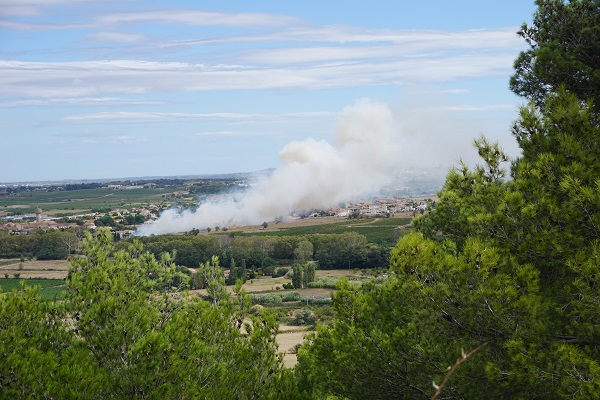
Perhaps draining the land was a bad idea: it’s a very hot day, and the land looks very dry. As we are watching, some fields catch fire. We watch the flames moving far below as the fire engines and waterplanes arrive. It’s the second forest fire we’ve seen since our arrival in France: apparently it’s a particularly bad year.

Bez 4 small

A visit to the museum reveals an impressive collection of pots, jewellery, tools and lamps. I am particularly taken with a two handled ‘Attic ceramic’ pot, varnished in black and decorated with red figures, dating back to the 4th century. Just the thing for swigging wine at a feast.

Back to Valras Plage to track down a campsite. We find one quite quickly, and as the man behind the desk takes down details of our address he pipes up, “Swanage? I’m from Weymouth!”

“What brings you here?”

He nods to a woman who just stepped through from the office. “Fell in love with a French girl, didn’t I?”

VrP 2 small