Permuteran Beach, North West Bali

balic2

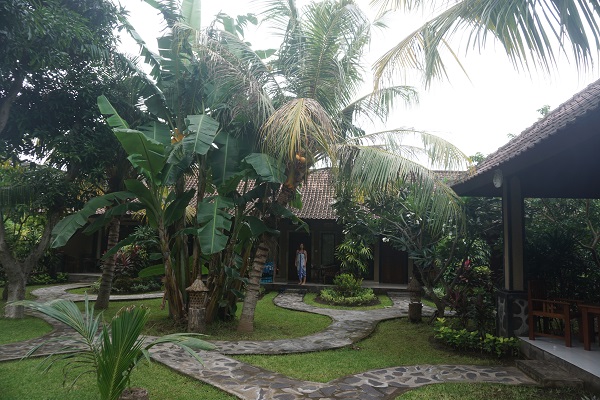
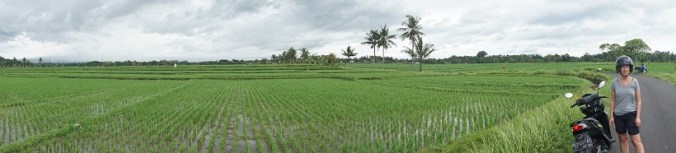
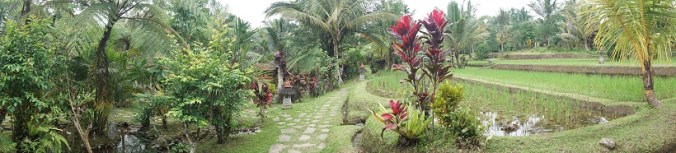
We have moved – to Permuteran village on the North Western tip of Bali, which is one of the quietest and unspoilt places in Bali. It is common practice here for your accommodation to take care of travel arrangements, so we arranged for a car and driver through Echo Beach Villas and made the three hour trip across the mountains to Permuteran. For the next week, home is a simple homestay called ‘Pondok Rayhu’. The family we are staying with really take care of their guests. The rooms look out over a  lovingly tended garden.

balic1

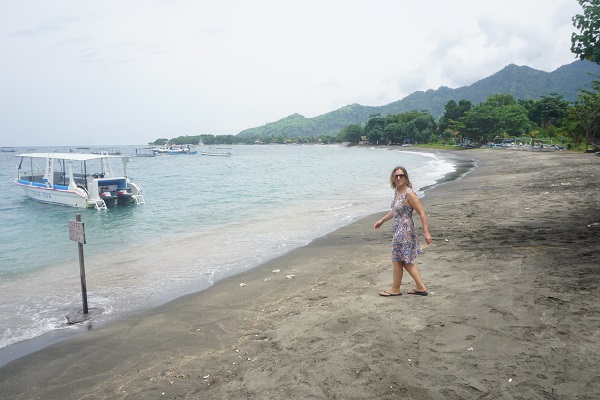
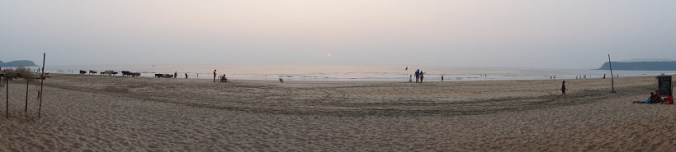
Permuteran is a seaside town with a very pretty beach. It is best known as a diving hot spot because of its proximity to Mengangan Island. However, since it is the rainy season, there are few divers around. The whole place has an ‘off season’ feel, but as long as you don’t mind having entire restaurants to yourself, it is all the more beautiful for it.

balic7

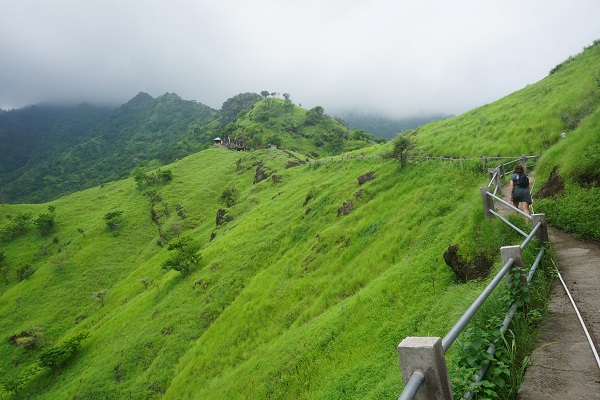
The village is surrounded by lush green hills. Our first day was cloudy so we decided to skip the beach and go for a walk. Our landlady recommended we walk up to a temple called Bukit Kursi which is situated directly behind the village.

balic3.jpg

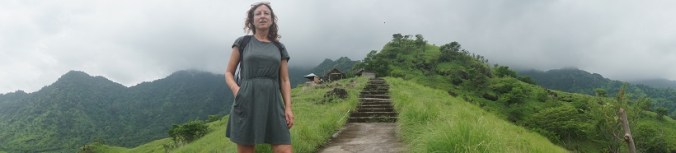
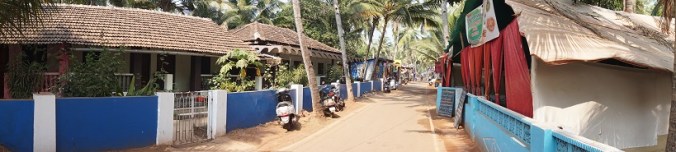
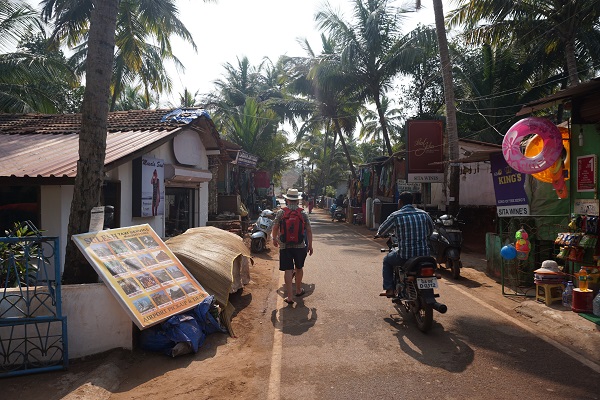
After walking about a mile along the the main street, which is lined with guest houses and restaurants, we turned right and headed inland. Another half a mile and we arrived at a car park where we were invited to make a small donation to the upkeep of the temple. Then we set off for the temple. This involved climbing hundreds of steps.

balic5

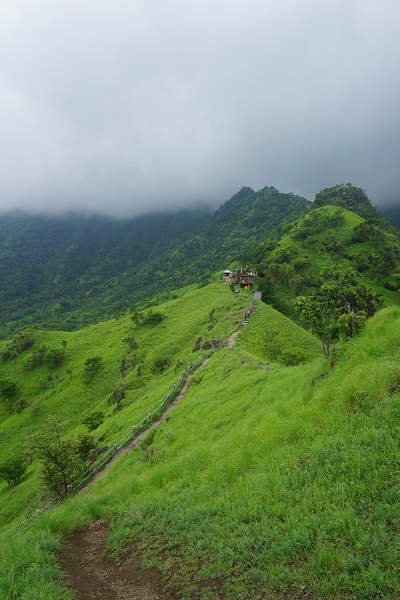
It was very hot and I had to keep stopping to knock back water and moan to Dave about how hot I was! After twenty minutes of stop-start climbing, we arrived at our destination. The temple itself was small and simple – it was all about the location.  The views were spectacular! The colour of the hills impossibly green!

balic6

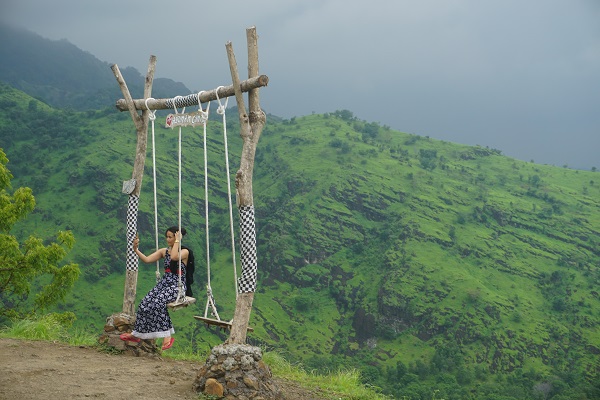
Next, we walked down a secondary path to a ridge. There were a couple of swings which swung out over the bay. After taking some time to admire the view, we set off back down the path. As soon as my foot touched the final step, the heavens opened. Neither of us had brought a coat! We splashed our way back down the road until we spotted a café. We ducked in and ordered a couple of juices, which we sipped very slowly as we waited for the rain to stop.

balic4

A tale of two temples: Pura Tanah Lot and Pura Luhur Batukau, Bali

balib2

We wanted to get out and see the sights so David hired a scooter. It is well worth hiring a scooter in Bali, it cost us 60,000 a day, which is just over three quid! I did find it nerve-racking on the busy roads,  especially leaving Canggu but David is an experienced rider and I soon started to relax.

balib5

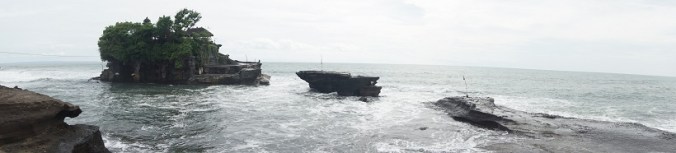
Our first ride was to Pura Tanah Lot, one of the most important sea temples, which is about 40 minutes ride from Canggu. I gather in peak season the queues to get in stretch for miles but after stopping to pay our admission fee, we went straight in.

One advantage of being here in the rainy season is the island is relatively quiet. Whether tourists have been scared off by the fact that Mount Agung is active, I don’t know. The island is still on ‘amber’ alert and there is an exclusion zone of six kilometres –  but away from the volcano, everything is running normally.

Arriving at Tanah Lot, I was surprised by the size of the car park and the hundreds of shops and restaurants which lead up to the temple. The commercialism extended into the temple, with hawkers selling souvenirs on every corner and dozens more giftshops and restaurants.  Quite a few areas of the temple were cordoned off, with noisy building work in progress.

Part of the temple can only be reached at low tide. We arrived at high tide, so there was no chance of crossing, but I gather only Balinese visitors are allowed in, anyway. We climbed up a steep hill to get a better view of the ‘island’, and were greeted by another row of shops and cafes. We stopped in one for a ‘Kopi Luwak’ or civet coffee.

balib3

For anyone who hasn’t heard of this, it is a very high quality coffee which gets it’s particular flavour from the unusual production method – the coffee beans are eaten and pooed out by the Asian Palm Civet! Don’t panic, the beans are scrupulously cleaned and roasted. It is the digestive juices of the civet which give it its particular flavour. Personally, I didn’t notice the difference between this and my usual Lavazzo, but I can’t claim to be a coffee expert.

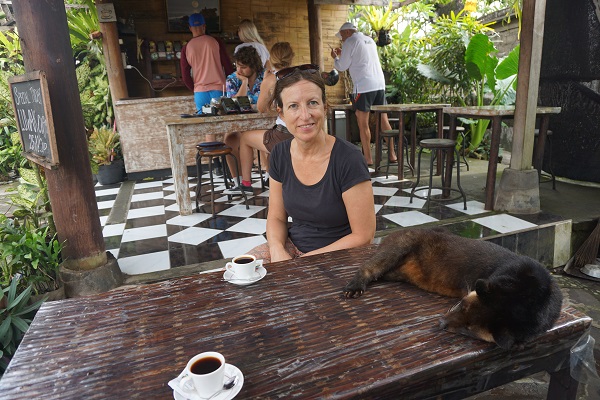
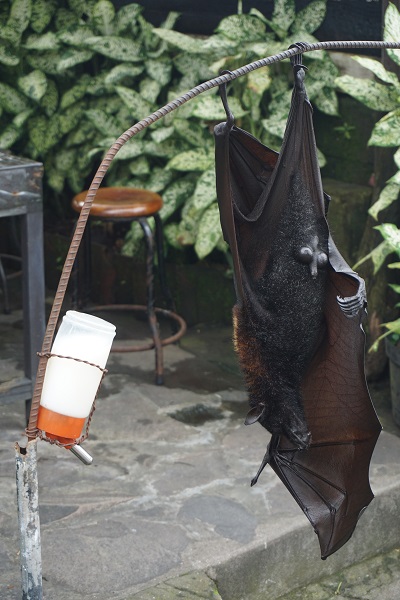
I gather there have been ethical issues about the way civets are treated in this production process, but in this café, the civets were treated like Gods! They sprawled about the furniture, sleeping or revelling in being stroked by the café owner and visitors.  As well as the civets, there was a big scary fruit bat, which attracted plenty of attention from passing tourists.

balib4

I enjoyed our visit to ‘Tanah Lot’, the ‘island’ part of the temple was well worth seeing, but with all the hawkers and sellers and tourists and building work, it didn’t have much spiritual atmosphere.

Our second ride was to the temple of Pura Luhur Batukau. This was a much longer ride, probably about two hours. Fortunately, David had brought our SatNav along, loaded with maps of Bali.

balib6

The urban scenery soon gave way to terraces of paddy fields and picturesque villages dotted with small shrines and temples. At one stage, we found ourselves bumping along an unmade road. It began to rain and we stopped to put on our coats. I donned a long brown poncho which I found under the seat of the motorbike – it was very effective, if not very fetching! I thought perhaps we should turn back, but David was keen to press on. Fortunately, we soon popped out onto a better road and entered a tiny village. We were well off the tourist trail now.

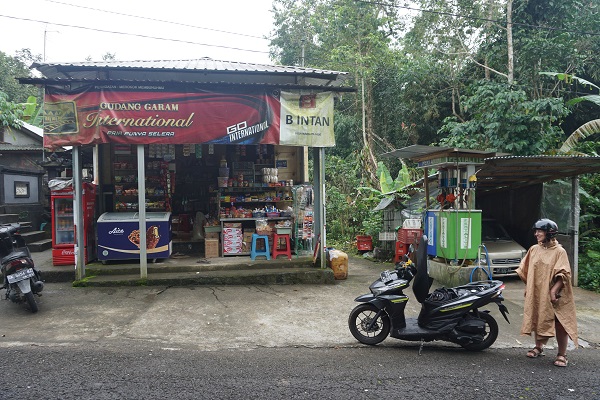
As the rain began to thicken, we passed a temple where a ceremony was about to begin. Dozens of villagers were dressed in white and an entire orchestra sat by the side of the road with traditional instruments in front of them. As we climbed the lower slopes of the Gunun Batukau mountain, the rain became torrential and we decided to take a break. It was difficult to find anywhere to stop but eventually, we saw a sign to ‘Pruna Dewi – Bungalow and Restaurant’. The restaurant looked over an enchanting garden where they grow the organic red rice and vegetables which we ate in the restaurant. The red rice was particularly delicious.

balib10


Refreshed, we got back on the bike and rode the remaining few miles to Pura Luhur Batukau. The rain had stopped. We paid a small entrance fee, and were kitted out with sarongs. Then we climbed up a long flight of steps to the various parts of the temple.

balib8

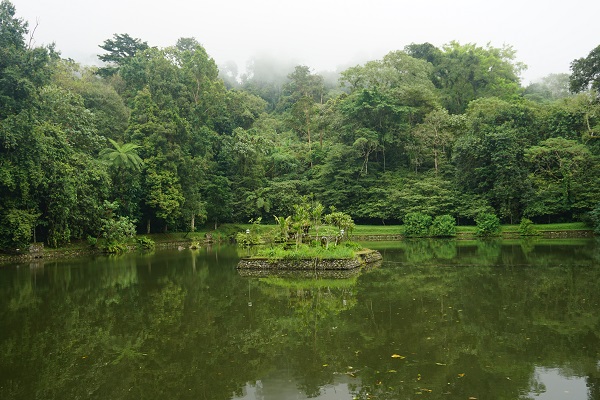
What a contrast it was to Pura Tanah Lot with its peaceful mountain setting and deeply spiritual atmosphere. The temple is set in a fragrant garden of frangipani and hibiscus and surrounded by dense tropical forest. Apparently, it is one of the most sacred places in Bali, which dates back to the 11th century, and yet we only came across two other groups of visitors. Certain areas of the temple were out of bounds, but there was still plenty to see. The sound of monkeys screeching merged with ceremonial chimes as mist curled through the trees.

Walking through the gardens, we came across a large lake full of huge koi carp (cue excitement from David – Fish! Fish! Fish!) There were some steps across the lake to an island in the middle, but the steps were submerged and we were not brave enough to attempt it.

balib9

On the way home, the Sat Nav ran out of power and we had to find out way without it. If it was left to me, we’d still be out there but fortunately, David has a good sense of direction and we made it back before dark.  I’m not sure I’m ready for Canggu on a scooter at night.

balib7


Batu Balong Beach, Canggu, Bali

balia7

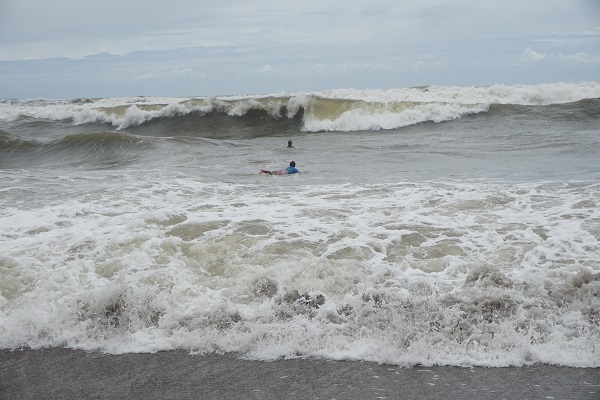
In my last blog, I mentioned that we’d walked along to Batu Balong beach and seen that the water was full surfers. Today, we decided that it was time to get off our backsides and do something active. Something that neither of us has ever done before. Yes, you guessed it – surfing!  However, on arrival at the beach and seeing the size of the waves I suffered a loss of nerve and tried to back out. Fortunately, David managed to bring me round – remember the Quaker credo, live adventurously!  We then had to wait for a couple of nerve racking hours as the tide was too high for beginners.

balia2

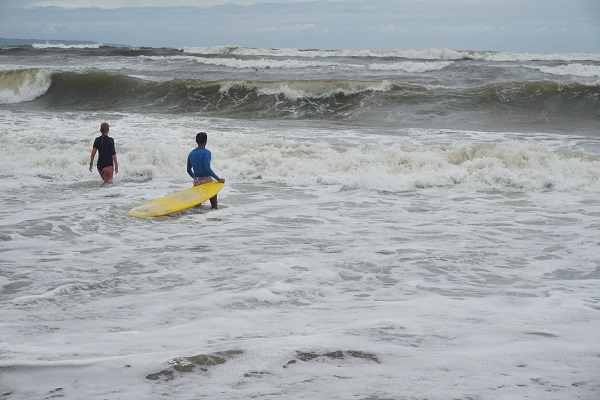
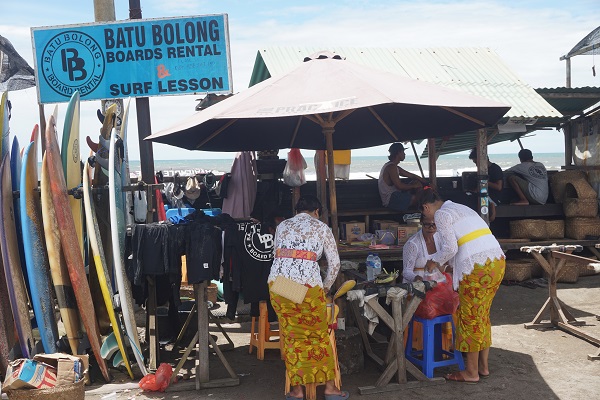
There are dozens of small surfing rentals and surf schools lining the beach but we decided to go with Batu Balong surfboard rental. The cost was IDR 350,000 per person for two hours  – about 18 quid. In other words, great value. For that we were kitted up in rash vests, provided with boards and one to one tuition.  My instructor Dennis was born in Canggu and had been surfing all his life. He was 45 and David’s instructor, Made was 58 which made me feel a bit more relaxed about taking up surfing at 51. Dennis and Made took us down to the beach and ran us through the basics. Dennis showed me how to lie on the board on my stomach and paddle out and how to get from that position to kneeling and then from kneeling to standing. It seemed pretty hard. If it was hard on the beach, how hard would it be out there…?

balia6

It was time to hit the surf. Getting off the beach was the first challenge.  Dennis instructed me to wait until the waves had died down and then it was ‘Go, go, go!’ Paddling the board against the waves is harder than it looks. You have to keep your head up and back arched, as if doing the ‘Baby Cobrayoga position. If you face a big wave, you need to move from ‘Baby Cobra’ to ‘Upward facing dog’ whilst gripping the edge of the board –  and pray that the wave doesn’t turn you over. By the time I was in the right part of the sea to catch the wave, I was exhausted! Fortunately, Dennis was on hand to help me get into position to catch a wave. He held my board until the right wave came along and then it was ‘paddle, paddle, paddle’. As I crested the wave, I managed to get onto my knees but not onto my feet. Despite this, I was excited (or amped as the surf dudes say!) and eager to go back for more. I soon discovered that getting back into position is half the battle. Paddling the board becomes more and more tiring.

balia3.jpg

Next time round, I got to my feet and managed a wobbly surf before sinking with the wave. Gnarly, dude!

I had managed to stand up five times I told Dennis I’d had enough, I felt I had no energy left, but he persuaded me to go on last time. The sixth time was the greatest, I was up there for long enough to take a look round, to adjust my feet, to get a sense of what I was doing. The adrenaline rush gave me a push to go back once more.

After my final surf, Dennis took me back in. As I approached the beach, I caught sight of David sitting there. Yes –  I wasn’t the biggest wimp on the beach – he’d wimped out before me! Going in is as tricky as going out. Dennis kindly took my surf board off me as the waves tried to drag me back. I was grateful for the rash vest as I staggered out of the water. I’m not sure it’s possible to make a dignified exit onto the shore while wearing a bikini.

balia1

On the beach, David looked as shattered as I felt. He’d managed to stand up a couple of times, but he’d found the paddling of the board hard and had ended up coming back to the beach for a rest before the end. We looked at the time and realised we’d been out for less than half our allotted time. Ah well, it had been a blast, and after a shower in ‘Old Man’ I turned to David and said, ‘I’m amped that we handled those gnarly waves, man! And once the noodle arms are gone, maybe we’ll shoot the curls again!’

And he smiled and gave me a high five –  ‘Dude, totally!’

balia4

Echo Beach, Bali

bali2

Blast from the past

As soon as I stepped out of Denpasar airport, the smell hit me, transporting me back 32 years.

I was eighteen and I’d just arrived in Bali for a two week holiday. I was travelling with my friend Jess en route to a working holiday in Australia. The start of six amazing months.  We were staying in a traditional walled compound near Legian Beach, sharing it with a large extended family and an assortment of chickens, dogs and cows.  As soon as we stepped out of the room, there was that smell. I soon realised it was the smell of the myriad of daily offerings which are left in tiny baskets of woven palm – on the streets, on the steps, in the houses, on shrines and in temples.

These offerings are made every day to give thanks and appease the various Hindu gods and demons. It is the smell of incense and frangipani flowers. To me it is the smell of excitement and possibility as I stood on the brink of my first adventure.

First stop, Canggu

Bali1.jpg

We have just under a month in Bali this time, and plan to move around and see different parts of the island. Our first stop is Canggu, an area best known for its incredible surf and its laidback, surfer vibe.

Back in 1985, Canggu would didn’t even feature on the tourist map, and was principally given over to agriculture. It is in the West of Bali, north of the busiest area of Kuta, Legian and Seminyak where I stayed last time. It is now developing rapidly with lots of cool new places to stay and eat popping up every day.

bali5

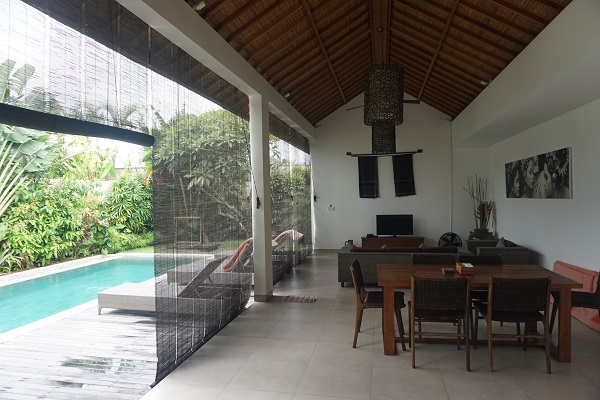
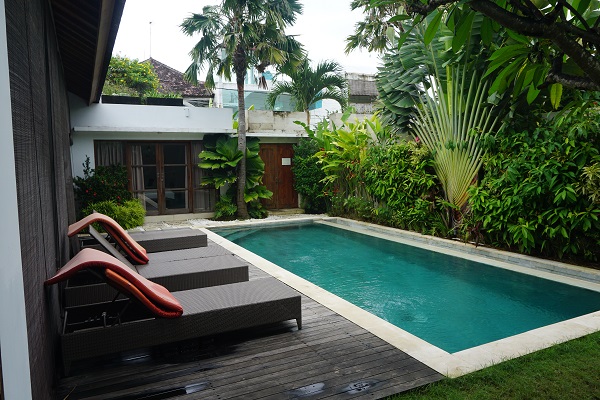
I’d booked us into a one bedroom apartment in Echo Beach Villas, a five minute walk from Echo Beach, one of the beaches which make up the Canggu area. We were delighted to find that the place was overbooked, so we’d been ‘upgraded’ to a two bedroom house with a private pool for the first couple of nights. A stunning place which I’d recommend to anyone coming here. It’s a contemporary place, but they’ve borrowed from traditional Balinese architecture so that the living area and bathrooms are largely outside. The owners have made a real effort to be eco friendly, with recycled wood, and various schemes to conserve power and water. Breakfast of fresh fruit, bread and coffee is brought to your accommodation every morning.

bali4

Shabby chic

As soon as we’d settled into our new home, we decided to head out and look at the beach. First impressions? To be honest, not great. It is the rainy season in Bali right now and the sky was grey and cloudy and so was the sea.  Unfortunately the massive waves had thrown a lot of rubbish onto the beach. The beach was edged with a wall of corrugated iron which was covered in graffiti. Admittedly some of it was quite good but nothing to rival Banksy. All in all, I thought it looked more ‘shabby’ than ‘chic’.

Old man

However, we returned the next morning when the sun was out and I began to see its charms. There’s some stylish little surf shacks selling cocktails and coffee and some incredible restaurants, including one called ‘Breeze’ which looked a bit like the Popeye’s village in ‘Popeye’ the movie, with wooden treehouses on stilts and in the centre of it all, a swimming pool. We walked along from Echo Beach to Batu Balong, the next beach along. There were some incredible waves and the water was full of surfers. We stopped at a well known surfing hangout called ‘Old Man’. Not sure why it’s called ‘Old Man’ –  it was full of young surf dudes – and Dave, of course!  We drank fresh juice and ate Nasi Goreng and Gado Gado. Indonesian food is delicious, and generally good value, although not as goood as it used to be. Oh dear. You know you’re getting old when you say things are not as good as they used to be…

bali3

Mombai stopover, India

Taxi trouble

mom7

It was Thursday. David and I were having breakfast, discussing plans. We were leaving on Saturday, so we wanted to make the most of our second to last day in Goa. Perhaps a boat trip ‘up country’ to meander down the river and look at the birds – I’d already seen sea eagles and a glimpse of a bright blue Kingfisher. But then David went to check the tickets and found we were scheduled to leave on Friday, not Saturday. So suddenly, it was our last day. Disappointing, but not the end of the world and at least he’d spotted it! Our flight wasn’t until the evening, so we wouldn’t have to leave until after lunch on Friday. David went to find the manager – who delivered some unexpected news. There was a taxi strike the next day.

Taxi strike? How would we get to the airport? The manager said it was no problem. We could get a bus. Actually, it would be three buses, since there wasn’t a direct one, with a little bit of walking between each bus, but as long as we left early, we should be fine. Three buses? Walking down the road in the sweltering heat with rucksacks on our back? There had to be another way! The manager asked us to leave it with him. There was another couple in the same situation. Perhaps he could sort something out.

Ten minutes later, he was back with a second suggestion. He could get us a taxi – but we’d have to leave by 6 am to beat the strike. It would take an hour and a half to reach the city and the strike didn’t start until 8 am. It would be expensive, but if we shared the taxi with the other couple, it would bring the costs down. This sounded better. The 6 am start was a pain, but it was definitely preferable to the three bus idea. But would we then be stuck at the airport from 7.30 am until our flight left in the evening? The manager shook his head. No need for that. There was a beach near the airport, and he was sure we could find a hotel on the beach with a luggage deposit room, we could camp out there for the day.

Better, but I still wasn’t convinced. How easy would it be to find a hotel? I had visions of us wandering up and down the beach with our rucksacks on, desperate to find a hotel.

I went to have a chat with the ‘other couple’ and she had a third suggestion. Find a hotel near the airport and rent out a room for the day. She’d googled it already and found one for less than fifty quid, with breakfast and the use of a pool. Yes! I have my answer. Whack it on the plastic. Thank you, sir!

The next morning we set off at 6 am, with a load of wet washing folded up in our luggage. There hadn’t been time to dry it. Apart from a couple of near misses with oncoming traffic (standard practice for Goan taxi drivers) we arrived at the hotel without incident. After a good breakfast, we had a nice relaxed day, catching up on sleep and taking a dip in the pool. We had three separate flights to take  (Goa-Mombai, Mombai to Koala Lumpur, Koala Lumpur to Denpasar, Bali) so we wanted to rest up.

The best laid plans

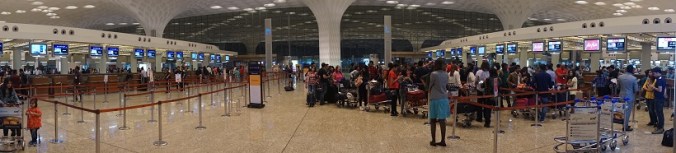
We arrived at the airport to find an assault on our senses.  The domestic flight lounge was full to bursting and everyone was animated and chatting. There were no seats, and long queues to buy food and drink. The flight was called late and there were further delays as soldiers searched each piece of hand luggage. Oh boy.

It was a relief to get on the plane and I settled back for the 45 minute flight to Mombai. But suddenly, it was announced that Mombai was so busy that we faced considerable delays. Unfortunately, we didn’t have enough fuel to hang around waiting for our slot, so we were being diverted to somewhere I’d never heard of to refuel. This place was actually further away from Mombai than Goa. As we sat on the runway waiting to refuel, I realised that we were in danger of missing our connecting flight to Kuala Lumpur. I pushed the button and an air steward came and listened carefully to my concerns and walked off without saying a word. He didn’t come back. As time ticked by, we watched the time of our flight come and go – but since Mombai was in chaos, perhaps our next flight would be delayed, too?

On arrival in Mombai, we raced through Arrivals as fast as we could, but as soon as we reached Departures, our hopes were dashed. Our plane left 10 minutes ago. It was almost midnight and we were stuck in Mombai. Air India weren’t offering to help, they didn’t even offer an apology for the delay. Our next flight was with Air Asia. They instructed us to ring our booking agent and try and secure a refund for the flight we’d missed before booking another flight, but they were unable to let us use their phone. So David pulled out his UK mobile and made a two pound a minute call to our booking agent. After several anxious minutes holding the line they said that in principle they would refund the flight but we’d have to put in a written claim.

The next thing to do was to book a new flight. Air Asia said they couldn’t help and we didn’t have internet access. All they could do was to accompany us out of Departures. Once outside, the Air Asia representative kindly offered to take us to a travel agent across the road and we were offered seats on the same flight the next day but they weren’t cheap. We agonised for a bit but in the end decided we’d turn it down and see if we could find something cheaper online once we had internet access.

Two travellers and a Tuk Tuk

The time was now 2.30 am in the morning and we hadn’t eaten since lunchtime or slept since 5 am – but with no internet and the taxis on strike, we had no idea how to get to a hotel. Cue sense of humour failure.
mom3

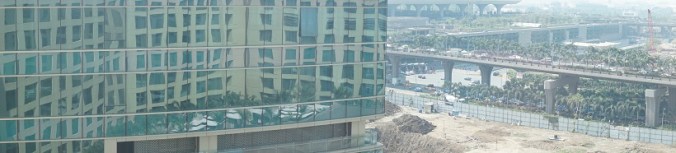
In the distance, we could see a shining beacon – a Marriott hotel – way out our budget, but by this stage we didn’t care. The most obvious thing to do was to hike over there with our packs on our backs, but between us and the hotel there was a spaghetti junction of roads, flyovers and roundabouts, all still buzzing with traffic.  There again maybe not. We followed a sign down an underpass to a car park, hoping to get near a road, and were rewarded by the sight of a line of TukTuks. David stuck his hand out, bypassing the line of people waiting, and asked how much to the Marriott? 100 rupees (roughly a quid). Yes please! It’s not easy to get two people and two large rucksacks in a TukTuk in the middle of a busy road but somehow we did it, and soon we were chugging our way round spaghetti junction towards the Marriott.
 

mom2

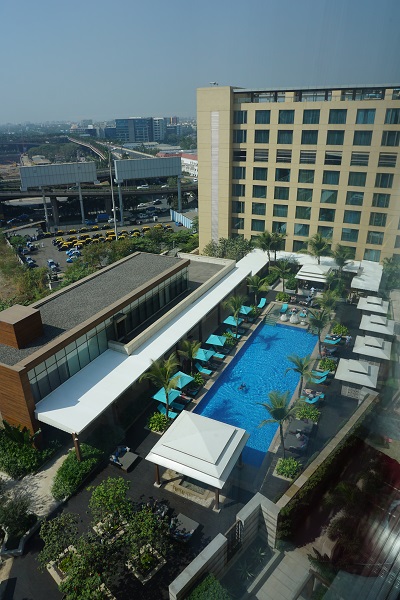
The moment we pulled up outside the six star Marriott hotel will live long in my memory. A woman stood at the door bidding farewell to her guests after a black tie event, resplendent in a red and gold sari. The doormen watched open mouthed as our driver squeezed between a Merc and a BMW and we spilled out onto the pavement, rucksacks in tow.

Are we nearly there yet?

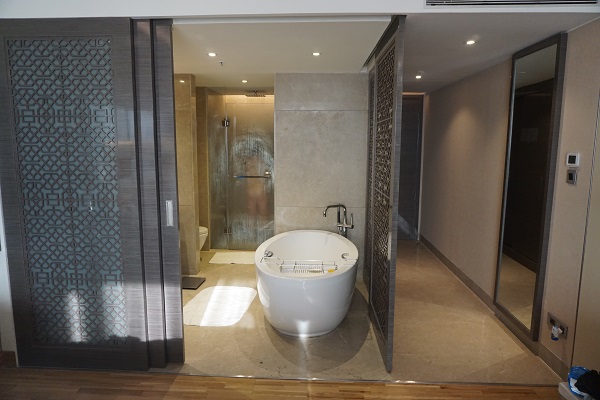
Yes, it was expensive, but oh so worth it as I sank into the enormous kingsized bed, after a long soak in the freestanding bathtub. It was worth it again the next morning as I browsed the multitude of offerings available for breakfast. And it was worth it again when the member of staff on the desk agreed to let us keep our room for the whole day for no extra cost, with use of the enormous swimming pool. David had managed to book us onto a flight for the next evening for a reasonable price, with an unexpected bonus – we were flying direct to Bali.
mom8

That should have been it, but despite having arrived at the airport in plenty of time, we still found ourselves running to catch the flight. Mombai Airport was twice  as chaotic as Goa Airport, with endless waits for passport control and security.

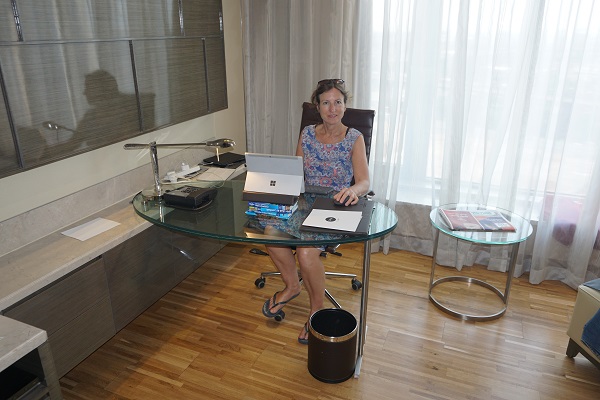
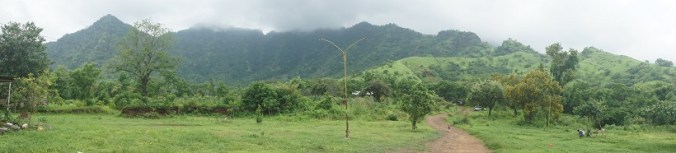
Fortunately, this flight went without a hitch and we arrived in Bali yesterday, having spent a fortune and lost an entire day.
mom4

Ashtanga Yoga at Agonda Beach and a visit to Palolem Beach, Goa, India

goa63

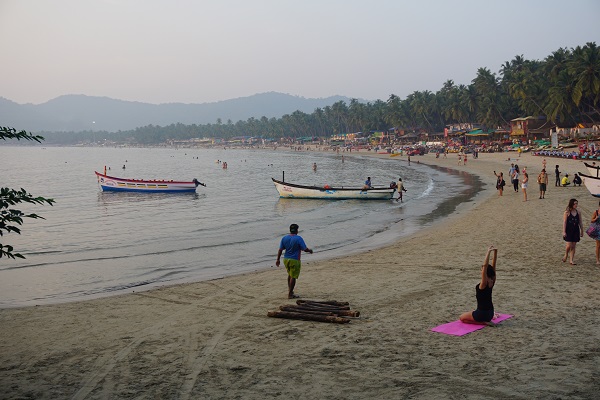
Agonda Beach is littered with people doing yoga. It followed there must be yoga studios around and I was keen to give it a try.

I’ve taken various yoga classes over the years but never for long enough to rise out of the ranks of beginner. However, compared to David I’m a seasoned expert. Which is why I was amazed when he said he would join me.

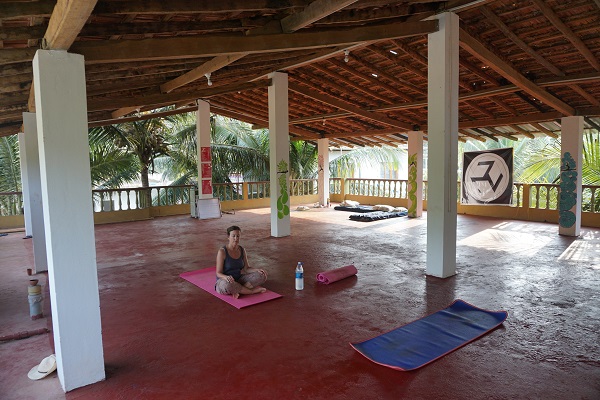
We spotted a place on the shopping street behind the beach offering drop in classes in Ashtanga Yoga at 4.30 pm. 4.30 pm seemed like a good time, so we headed down that way. The sign pointed up some stairs to the second floor of what looked like a residential building. Arriving, we found ourselves in a massive open space. Three other people were already seated on yoga mats. There was an Indian woman in glasses and culottes who bid us welcome – presumably the yoga teacher. I asked her if it was a suitable class for beginners and she said ‘yes’ – but there was a twinkle in her eye as she added ‘you can try’. How hard was this going to be…?

goa68

The answer was very hard indeed. The glasses and the culottes were clearly a cover – as soon as she hit the mat, the yoga teacher was Superwoman! Ashtanga yoga is a tremendous energetic form of yoga based on rapid, repeated sequences of movements which are designed to work up a sweat. And sweat we did. At one point, I glanced to one side and managed to restrain an un-yoga-ly laugh –  to see David hanging upside down in downward dog with one leg in the air was really quite surprising! Shame I don’t have a picture.

Later in the class, she had us doing a spot of nostril breathing, and then taking quick, powerful outbreaths. David’s were so powerful and went on so long I thought he would hyperventilate.

Amazingly, we made it to the end of the class without backing out (although I have to confess I did take the odd time out) and left feeling proud of ourselves and somewhat elated. Whether that was because of the deprivation of oxygen to the brain, or because of the magic of yoga, I still don’t know.

Three days later, we surprised ourselves again by going back and doing it all again. This time, we were the only ones in the class and I think she went a little bit easier on us. David declares himself a convert to yoga and I think we will go again.

goa65

The next evening we took a trip to Palolem Beach by Tuk Tuk. Palolem Beach is a few miles down the road from Agonda. The drive took us through the countryside and it was nice to get away from beach and see a bit of green for few minutes. David spotted a monkey sitting in a field.

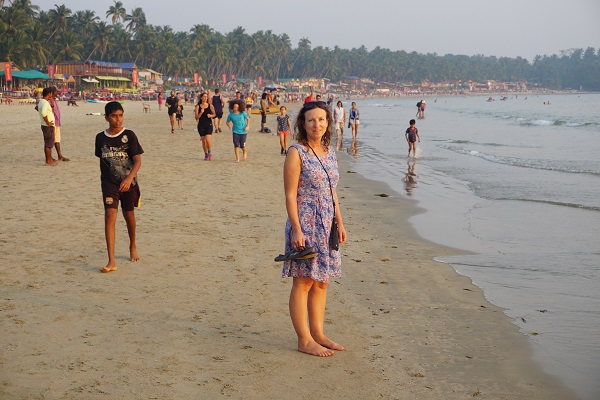
Arriving at Palolem, my first impression was of a more developed version of Agonda. More people, more shops, more traffic. Once on the beach, it was a similar set up to Agonda – but as the sun began to set, I was overwhelmed by the number of people. There was some sort of fun run taking place: a steady stream of parents and kids were running down the beach, in the opposite direction to us.

goa64

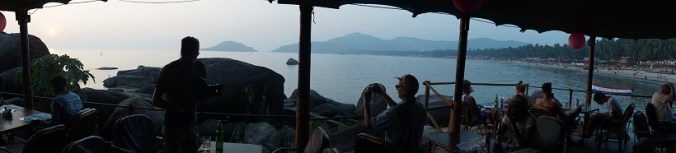
The restaurants were bigger and better lit and some were pounding out music. I spotted a bar on the rocks on one end of the beach and suggested we go there to watch the sunset. After our drink, we walked the length of the beach, dodging vendors trying to sell us light sticks, and boys playing football. There was a big stadium style light which lit up the fisherman’s part of the beach, which made it possible to play football in the dark.

goa66

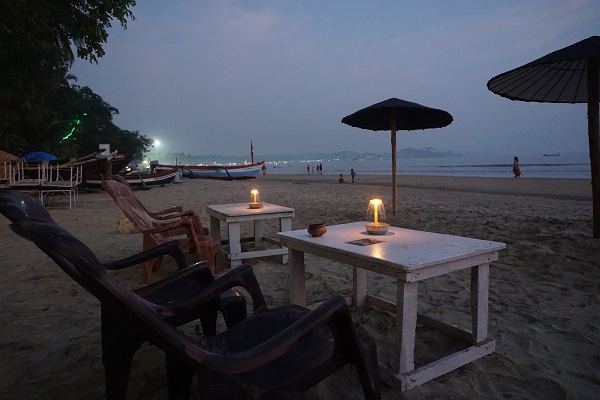
We stopped for a second drink at the other end of the beach at a bar called ‘The Cosy Nook’. It was quieter up this end, and a bit more to my taste – in other words, a bit like Agonda. We had a meal on the sands in the busier part of the beach and then headed off to find a Tuk-Tuk. Before we left, we did a bit of bargaining in the shops and came away with a large Indian bedspread and a new shirt for David. As we drove away from Palolem, I felt glad to be going back to chilled Agonda.

goa62

Sadly, our time at Agonda has come to an end somewhat abruptly. I would have written more posts but have lost a lot of time due to being ill –  and then the sudden realisation that we are leaving tomorrow, Friday and not Saturday as we thought.
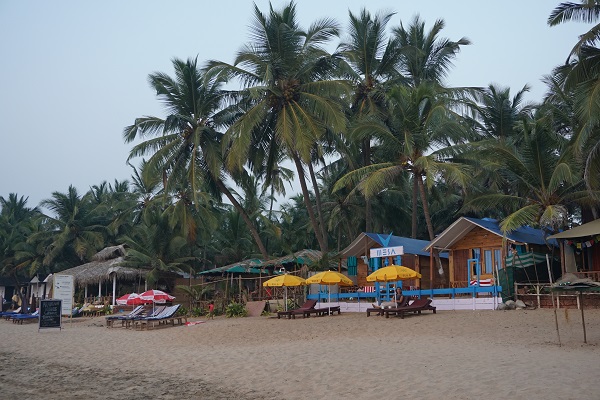
Just time to write a little about the food, which has been wonderful. The beach is lined with restaurants, most of which sell a wide variety of food types. Behind the beach, the road is also lined with restaurants, which tend more towards Goan food although there are also a number of ‘hippy’ cafes selling avocado and chocolate smoothies, bean sprouted salads and so on.

goa67

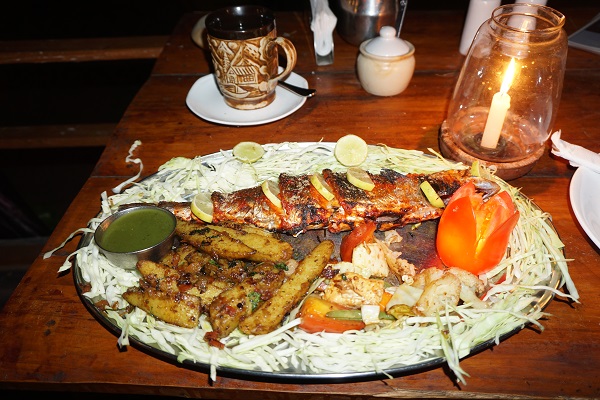
Goan food is delicious and I feel like I have only just started to discover it. It reflects the fact that Goa was a Portugese colony until it was annexed by India in 1961. The curries tend to incorporate sweet and sour flavours, often using tomato sauces flavoured with chilli lime, coconut and tamarind. It is predominantly based on vegetarian dishes and seafood. We have eaten some lovely fresh fish, and particularly enjoyed Kingfish cooked tandoori style.

So, farewell to Goa with its warm, friendly people and beautiful, sandy beaches.  We are sorry to leave but excited about our next destination, Bali.

goa61

Dolphin boat trip, Agonda Beach, Goa, India

goa35

Humble apologies for the lack of blog, I’ve been laid up with a common condition which afflicts travellers worldwide – call it Montezuma’s Revenge, Delhi Belly, the Goa Two Step – I think we know what I’m talking about. And the less said about it the better. All well now and raring to make up for lost time…

So – going back a few days – one of the lads working at Mesa (our beach home) arranged a trip on a fishing boat for us, leaving the beach at eight in the morning. We were up and ready by five to eight, but it seems there’s a slightly loose concept of time out here and we didn’t actually take to the seas until 9.30 am. Fortunately we weren’t going anywhere, and it gave us time to enjoy a leisurely breakfast. Breakfast at Mesa involves a ten minute stroll along the beach to the restaurant at Beach Bumps (Is it just me or is the name a bit off? Beach Bums makes perfect sense to me but Beach Bumps evokes odd images of pregnant women lying in rows on the beach.) The breakfast is set, and consists of fresh juice (pineapple, orange or watermelon), black tea, porridge and eggs any way you like them. As we waddled our way back from Beach Bumps, we spotted some dolphins playing just off the beach. Clearly, it was going to be a good day to see dolphins.

goa34


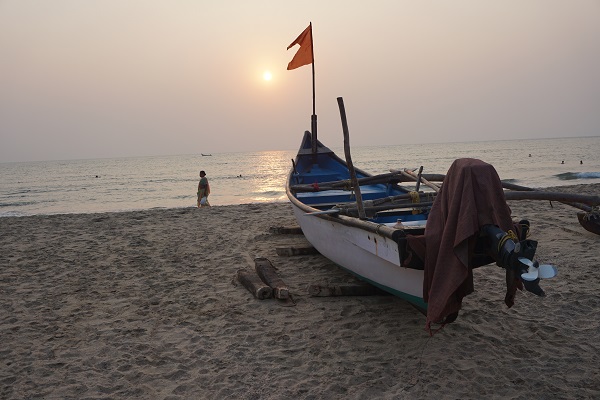
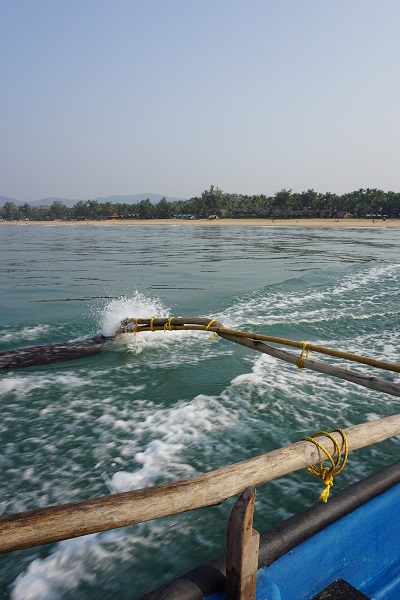
The fishing boats are very pretty, wooden and painted in various colours with their names emblazoned on the front.  On one side, they have a strut lashed to the side which I presume keeps them stable in water. They are powered by a small motor but there’s a long rounded oar just in case the engine fails. It takes six men to push them up and down the beach, using large wooden beams placed underneath them. Once they are in the water, it’s quite a challenge to climb into them. I threw myself over the side, just in time to see that our fisherman had thoughtfully placed an upturned bucket in the sea for me to stand on.


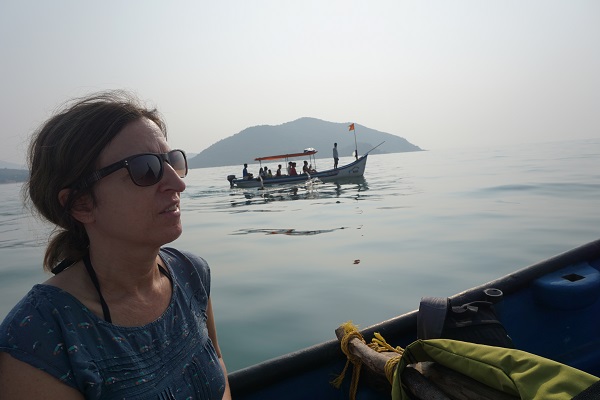
Once we were at sea, an immediate feeling of pleasure swept over me and by glancing at David I could see he was feeling the same. It was so good to be out on the water. Soon we were entertained by the sight of dolphins all around us, amongst them a mother and baby, the mother with a distinctive pink snout, the baby impossibly small and perfect. We could hear them breathing before we saw them. After half an hour of watching them, we moved off to look at the coast.

goa37


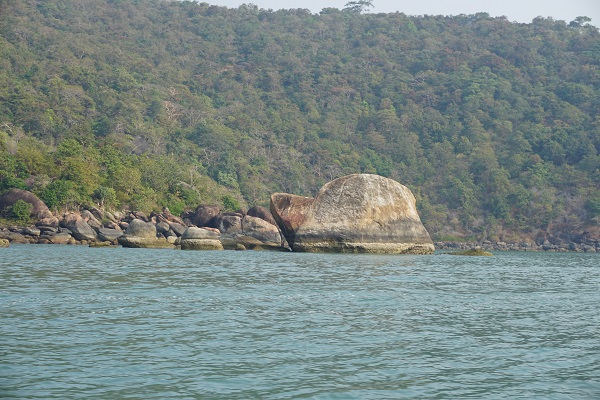
As Agonda Beach receeded, the coast became more rocky. The rocks were large and red and piled up on top of each other, forming distinctive shapes which reminded us the stones at Carnac (for further details, see my first ever blog!) One was particularly striking. Our fisherman said it was known as ‘the turtle’, and we could see why.

goa33

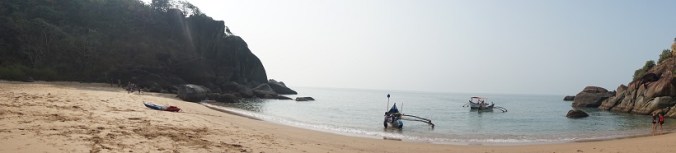
We passed a tiny strip of beach known as Honeymoon Beach – a favourite spot for young lovers, at a guess, although by the looks of the makeshift shelters on the beach, it is also used by local fishermen. Round the next corner we reached our destination, Butterfly Beach. So called because the inlet is shaped like a pair of butterfly wings.  A beautiful small beach with just a single family on it – no shops or sellers. Our fisherman told us it can only be accessed from the sea. After a bit of googling, I discovered this isn’t strictly true but the path is quite difficult to access and it supports the fishermen if people take the boat trip. So if you go there and take the path, don’t say I told you!

goa36


We managed to pull into the beach for long enough for us to get out, but there was no way to land, so the fisherman gave us 10 minutes and then he came back and picked us up.

Back on Agonda, the dolphins were out in force again, and we lingered to watch them play. Then it was back to the beach.

In summary, a lovely, tranquil trip. From now on, I’d be able to look out to sea and know that the dolphins are out there.

goa31

Mesa on Agonda Beach, Goa, India

goaa4

In my last blog, I left you on tenterhooks, wondering what we would do next. We’d just been told that the hotel we had booked and paid for, Divine Beach Resort, was closed. The taxi driver offered to wait while we checked it out.

We pushed out way through a dingy alley, heading for the beach. We met a helpful bloke called Ronny and asked him if he had heard of Divine Beach Resort. He had indeed – infact, he was the manager of Mesi, a new hotel – or strictly speaking, a series of beach shacks –  which was built on the site of Divine Beach Resort. The original owner had shut up shop and disappeared, leaving no forwarding address. Apparently, we were not the first to turn up to check in. Fortunately, he said he could offer us a beach shack for the same price. It crossed my mind it might be a scam, but he seemed such a lovely, genuine bloke that we believed him. The beach shack was not the greatest, but it was fine for one night, and the next night we moved into a beachfront shack which was exactly what I’d hoped for. Basic but comfortable – what more do you need when you have a shady balcony with uninterrupted views down a white sand beach to the Indian Ocean?

goaa2

Ronny recommended I get in touch with my booking agent to ask for a refund. I got on the phone straight away and within a couple of hours had secured a refund.

Finding that our hotel had disappeared was not the only surprising thing about Agonda Beach. Here’s a list of things which have struck me so far.

10 surprising things about Agonda Beach

Cows roam free

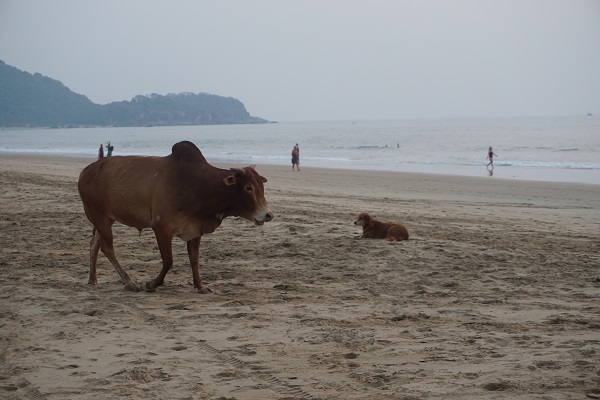
Cows are sacred in India, right? I knew that. But still, I didn’t expect to see cows on the beach. There’s something incongruous about it. They wander up and down in groups, or crash on the beach. Waiters come out of restaurants and feed them a bread roll or two before shooing them on. There are even special shades provided for them.

No hawkers allowed

I’d expected to be hassled by people asking if I want a massage, or want to buy a drink or a batik or jewellery. But here at Agonda, beach hawkers are banned. You will be asked if you want to go on a boat trip, but that’s about as far as it goes.

Horses roam free

As well as the cows, there are a handful of horses. Sometimes they get saddled up and taken for a ride, but the rest of the time they roam around with no collar or bit.

Hardly any mosquitoes

I was going to write ‘no mosquitoes’ but we’ve had a hot day today and I just got a bite. But compared to most tropical places I’ve been, mosquitoes are really no issue.

Dogs roam free

Wild dogs and tame dogs rub shoulders on the beach. You take a seat on a lounger and find a dog curled up asleep. Each restaurant seems to have a dog or three, hanging around, willing you to drop something. Occasionally dog fights break out but all in all they seem to get on okay and I haven’t seen any aggression aimed at humans. The first night we walked down the beach to listen to some music, I did the inevitable – stepped in a dog poo. No surprise there. David calls me a poo-seeking missile. I do tend to find them. Since then, I’ve carried a torch. If you’re wondering what happens to all this dog, horse and cow poo, you’ll be relieved to hear that a band of cleaners regularly work the beach so it doesn’t get out of hand.

goaa3

Power cuts are standard

Apparently, this applies right across Goa. We’ve had cuts from a couple of minutes to a couple of hours. According to Ronny, one half of the beach has more power than the other – and we’re in the less well supplied area. So far this hasn’t caused any issues for us. The upside of this is the lack of light pollution on the beach. It looks so pretty as you walk along at night with the rows of fairy lights and candles. So far we haven’t had a cloud free night, but when we do, we’ll have a great view of the stars.

Nights are cool

Some of the huts and hotels feature air conditioning but you pay a premium for it. At this time of year, we’re hitting 33-34c in the afternoon, but the night time temperature plunges to around 23 c. There are always lovely breezes blowing off the sea. So the reality is you don’t need air conditioning , which is fortunate given what I just said about power cuts.

Downward dog is de rigeur

In the morning and the evening when it is cool, the beach is littered with people in strange positions – standing on their head, in downward dog, cross legged or swaddled up like chrysalides waiting to hatch. Yoga is everywhere and by the look of the abs on display, it gets results!

Water is in short supply

I learned to my cost that water, like electricity, is in short supply. Just before 10 pm I took a shower and was left covered in soap. In Agonda, the water goes off at night.

Turtles nest

Turtles lay their eggs on Agonda Beach! Last year it happened in February but it could happen next week. It’s amazing to me that they lay their eggs on a beach with this much activity. Long may it last.

goaa1

Agonda Beach, Goa, India

goa3

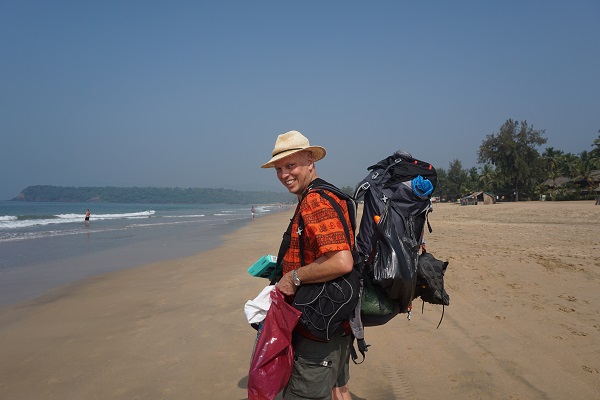
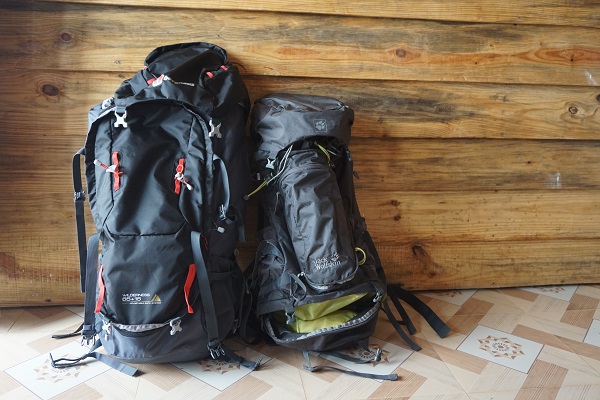
Hello! Good to see you again! Happy new year! After a break for Christmas, David and I have set off on the next leg of our Senior Gap Year. We’ll be on the road for the next five months and look forward to telling you all about the ups and downs of our excellent adventure. We have graduated (or regressed…?) from suitcases to backpacks since we plan to do some more ‘proper’ travelling this time round.  We may even do some hiking. So move over Gappies and let us show you how it’s done. Or at least give us points for trying!

goa6

First destination – Divine Beach Resort in Agonda Beach in Southern Goa. A couple of weeks on the beach to ease us back in. The accommodation was all booked and paid. but first of all we had to get there…

We arrived in Goa’s largest city Vasco de Gama. David had booked a night in a hotel near the airport as we flew in late. After a long wait at customs we hit the official money exchange, and were handed large piles of notes. We headed out to the baggage drop, feeling slightly addled by the flight, trying to work out the rate of rupees to the pound. At the baggage drop, an airport attendant swept in and loaded our rucksacks onto a trolley. Before we could protest, he headed for the exit, leaving us trotting in his wake.

Outside the airport, it was chaos with dozens of taxi drivers competing for our attention. Our airport attendant steered us to the official taxi rank where a complicated series of administrative tasks took place very quickly. Before long we found ourselves in a fixed price taxi, heading (we hoped) for our hotel, but not before David had pressed far too many rupees into the airport attendant’s hand.

The taxi ride to the hotel was surreal. The driver made a quick stop to buy a single cigarette off a man by the side of the road but otherwise he kept his pedal to the metal and didn’t seem too fussy which side of the road he was on. As we crashed over speed bumps, an array of Christmas lights, Nativity scenes and Santa’s Grottoes went flashing by. Clearly, Christmas is big in Goa. Still, he got us to the hotel and was honest enough to tell David he was trying to pay him far too much. We’ll get the hang of these rupees eventually…

The next morning, we set off in another taxi for Agonda Beach in Southern Goa, but first we asked our driver to head into the city. I realised on the plane that I had forgotten to bring my keyboard. I use a Surface Pro, which has a separate bluetooth keyboard. No keyboard = no blog.

Our lovely taxi driver phoned a friend who knew about computers and took us to the right part of town. He parked up while we ran about looking for India’s equivalent of Dixons. We soon found ourselves plunged into a warren of tiny backstreet shops, selling watches, batteries, mobile phones – but no computers. I took the opportunity to get myself a new battery for my watch and had it fitted on the spot for less than a pound. Meanwhile, mopeds weaved round us, one laden with a family of four, another with a woman on the back carrying a tower of cardboard boxes. A woman in a sari balancing a bag of rice on her head walked elegantly by whilst a man in jeans talked urgently into his phone. All this may be commonplace to those of you who have visited India but neither David or I have been to India before. Yet to an extent it feels familiar, in the way that Los Angeles feels familiar, because you’ve seen it on TV and the movies. Familiar but not quite the same.

We soon discovered that we were in the wrong street for computers and were helpfully directed to a nearby shopping centre. We crossed a road, passing fruit sellers with their wares laid out at our feet, and cobblers sitting cross legged mending shoes held between their feet. We spotted some computer equipment crammed into the window of a shop on the second floor and ran upstairs to find ourselves in a tiny, dark room.

The shop keeper was on the phone. After waiting for him to finish, I put in my request for a blue tooth keyboard and he pulled one straight off the shelf. He showed us it worked by linking it to his computer. Two minutes later, I was running back up the street with the keyboard tucked under my arm. After a false start – trying to get inside the wrong taxi – we made it back. But no sign of our taxi driver. Just as we were starting to wonder what had happened, he ran up, breathless. We’d been so long he gone to try and track us down.

goa2

The rest of the journey went smoothly enough. The driver kept the windows down. It was pleasant whizzing along the highway with the wind in my hair but as soon as we came to a town the traffic came to a halt and the car filled with fumes. After a couple of hours the traffic started to thin and instead of billboards and construction sites we began to see paddy fields, the women bent double and ankle deep in water as they planted the rice. A sharp right and we were in narrow, twisty lanes, weaving our way through the countryside. Palm trees gave way to houses and shops and the road became congested with mopeds and taxis as we pulled into Agonda Beach.

The taxi driver stopped to ask some locals the way to Divine Beach Resort, but received blank looks. He stopped again and explained that we had booked and paid for a stay in Divine Beach Resort and was told ‘Divine Beach closed.’ A little bit more consultation and we were directed to the site of Divine Beach Resort. But there was no sign to indicate where it was.  A final enquiry elicited the response ‘Divine Beach gone, Divine Beach not here any more.’

What happened to our resort? Where would we stay? And how would we get our money back? Answers to these questions and more will be revealed in the next exciting installment!

goa4.jpg