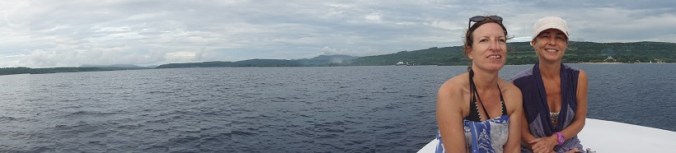
Lu offered to drive us around to the other side of the island to visit the Blue Lagoon. We headed off around the circular road which goes right round the island (a distance of around 122 kilometres.) The road sustained serious damage during Cyclone Pam and in places is still in a bad way. Repairs are slowly taking place – but something tells me it’s going to be sometime before work is completed. So, we bumped along and were thankful that Lu had a four wheel drive.
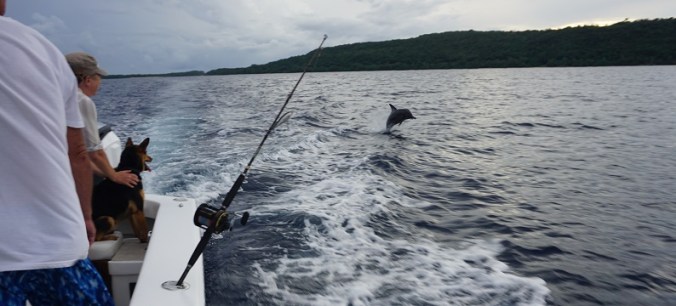
Along the way we passed groups of locals walking along the road. They were very friendly, shouting and waving and barking at Hilltop (Lu’s dog), who had her head stuck out the window to catch the breeze as we drove along.
We drove through lots of small villages which mainly consisted of simple huts made of wood with a thatched roof. The huts can easily be taken down in a Cyclone and then rebuilt again. Churches and schools are more substantial builds and often provide shelter in an emergency. Many villages have a small shop and all of them have a Kava bar or two. Kava is the traditional local drink which is sold by the ‘shell’. There is plenty of local folklore surrounding Kava. It is said to have hallucinogenic properties but I can’t comment as I haven’t tried it. If I do, I promise I’ll let you know. Prince Charles was here last week and he is reported to have necked down three shells which has earned him some kudos!
We passed a World War II museum. A sign outside read ‘Rust in Peace’. I was keen to take a look but apparently it’s not much more than a few old coke bottles and some rusty metal.
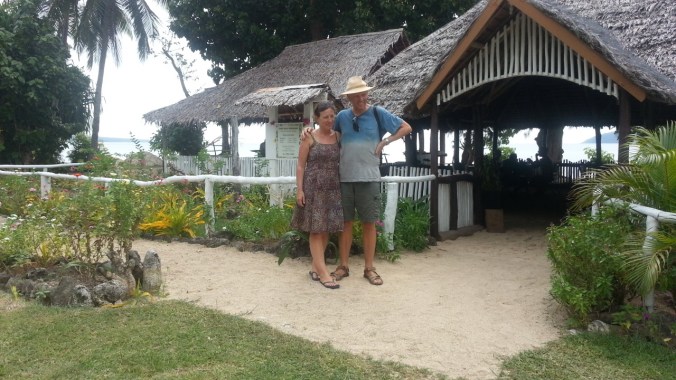
We stopped for a lunch at Orovy, a locally run restaurant which was right on the beach. It had fantastic views over the islands of Nguna, Pele and the mountainous Mataso. Lunch was freshly caught fish washed down with fresh coconuts cut straight ‘to order’ from the tree.
After lunch, it was back on the road. After clunking over a dangerous looking bridge which looked to be a relic from World War II, we spotted a large rusty metal frame buried in the undergrowth which Lu said was an old aircraft hanger. This part of the island was largely taken over by American soldiers in the war.
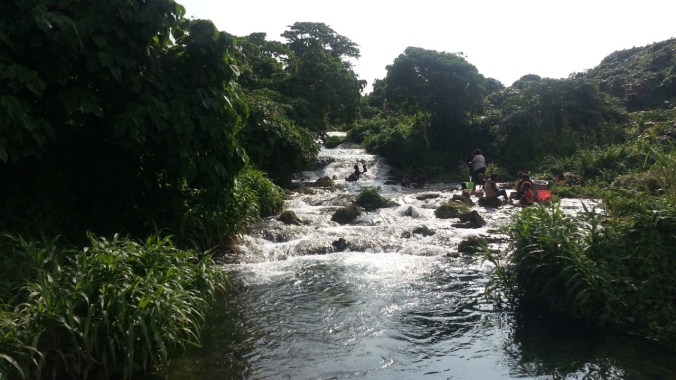
We soon passed over a beautiful river. We stopped to watch some locals messing about and having fun whilst doing the washing.
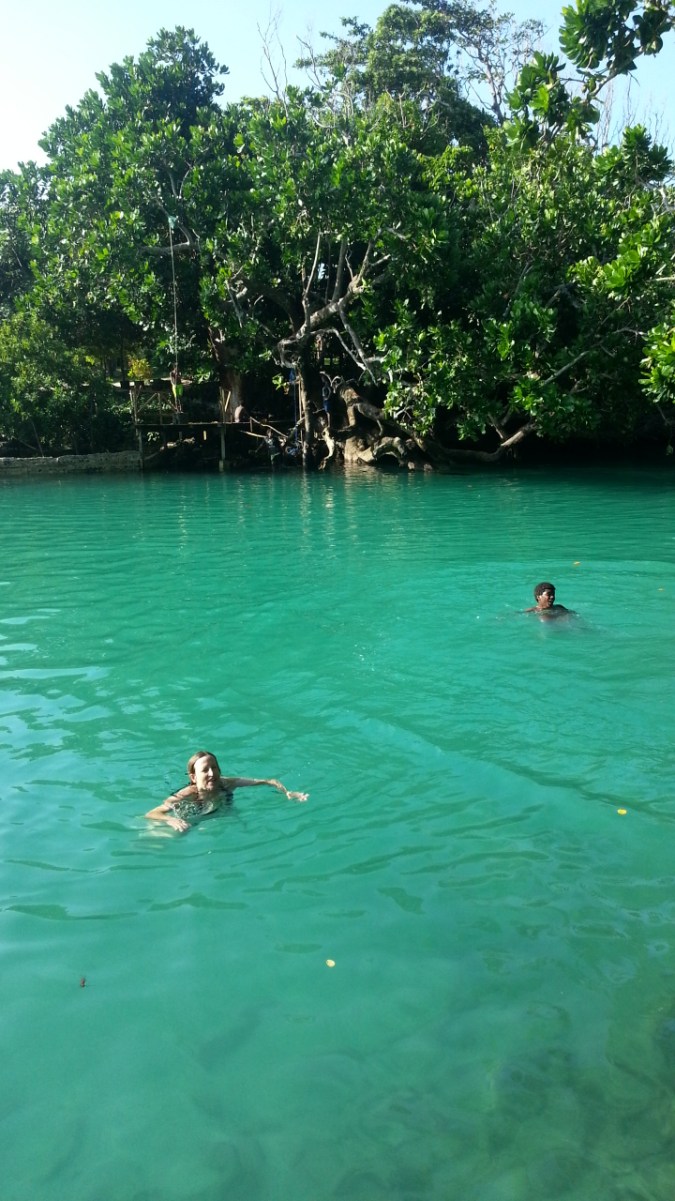
Finally we arrived at the Blue Lagoon and paid a small fee to get in. It’s a jaw-droppingly bright blue water hole which looks like a swimming pool but is totally natural. A fresh water spring feeds the hole from one end and the sea feeds it from the other. The result is a pool which at low tide is fresh water but at high tide is predominantly salt water. A clutch of local teenage girls were dancing to a stereo and taking selfies. The boys were hurling themselves into the water, swinging from the trees or jumping from ropes. Never one to resist the pull of a rope swing I joined the queue and ended up doing an undignified belly-flop. In my defence, it’s not as easy as it looks!
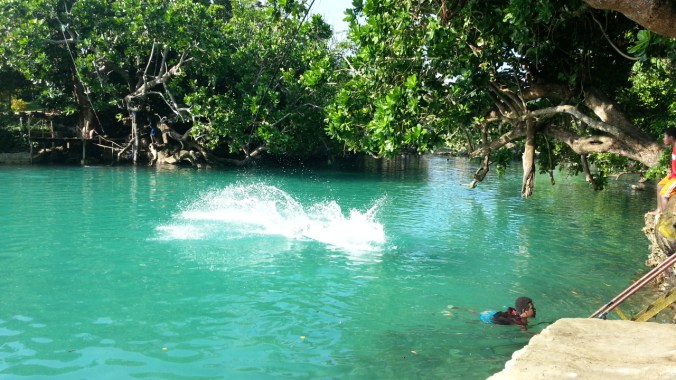
Hilltop was watching anxiously from the side, so Lu encouraged her in and eventually she jumped in and joined us. David and I then took a long swim through the lagoon towards the sea. It was beautiful all the way with trees studded with orchids and pretty flowering bushes. We came within about 100 metres of the sea and then stopped – the sea is quite rough on this side compared to Havannah Harbour – and the surf was up.
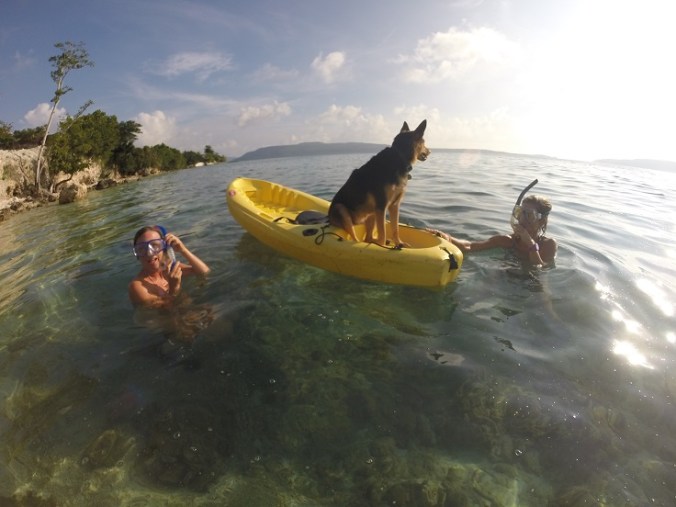
When we got back to the house, we were tired, but it was such a beautiful evening that Lu and I decided to head out for a snorkel. Hilltop was keen to join us so Lu loaded her onto a kayak and she came out too. I now understand why she is known as the most famous dog on the island!




 Senior gap year