A taste of Tokyo, Japan

day1

Today, we took a tour of some of the hotspots of Tokyo with our son, Oscar, acting as tour guide. We breakfasted on a bowl of soba noodles at a ‘Tachigui Soba’ or standing up café in Shinigawa Station. These kind of restaurants are very popular for busy commuters who want something quick and inexpensive. We ordered our dish by paying at a machine outside and then presenting a ticket at a serving hatch. In seconds, we were handed generous bowls of noodles. Mine was served with tofu and seaweed and swimming in a tasty broth. I was surprised to find my noodles cold – some dishes are hot, some cold – hot are more popular in the winter and cold in the summer. It’s perfectly acceptable to slurp the noodles loudly – infact everyone does.
DCIM100GOPROGOPR0009.JPG

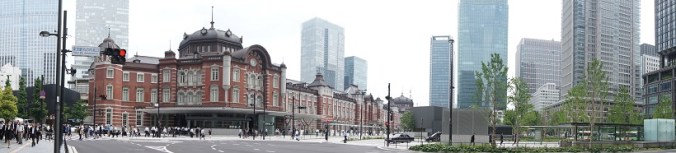
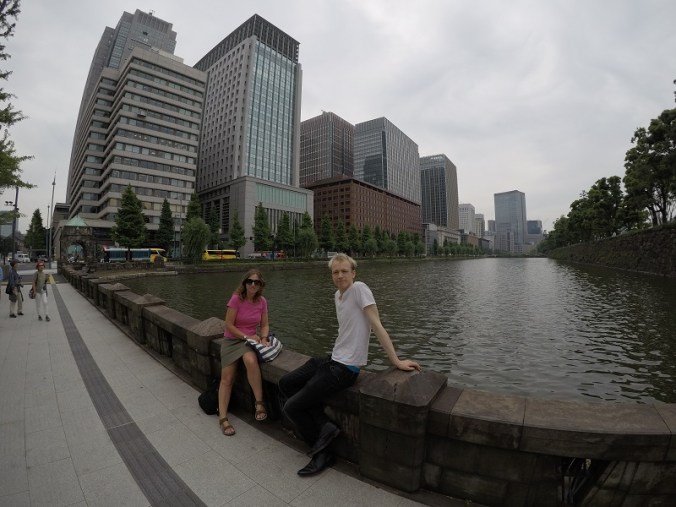
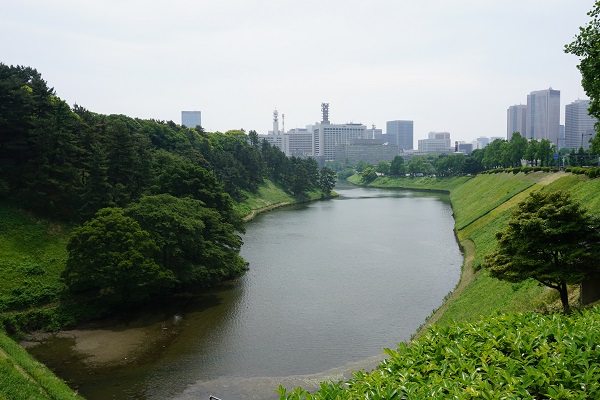
After breakfast, we caught a train to the Imperial Palace. The original Palace was destroyed by American bombs in July 1945. The following month, the Emperor met his government in an underground shelter and agreed to surrender, bringing the war to an end. A new palace was built and is still the home of the Royal Family but it is not open to the public. Instead, we wandered around the outer gardens – now a public park, and free to enter.
day10

The park is surrounded by a wide moat and high stone walls: the original defences of the palace. Inside the park, there are a few old buildings, such as an impressive guardhouse by the East Gate, but not as many as I expected. Not many ancient buildings have survived in Tokyo, partly due to earthquakes and partly due to bombs. The ones that are still standing have usually been rebuilt a number of times and so are not strictly speaking original. When the Guardhouse was built, it looked out over the sea towards Mount Fuji. Now the view has been filled in by all the modern tower blocks.
day2

After the Imperial Palace, we headed to a completely contrasting part of town – Akihabara. This area used to be known for its Electronics, and there are still shops where you can get just about everything you need to build a computer or power your home. However,  since the advent of computers, it is better known as a home to enthusiasts of computer games, anime and manga comics (geek central).
DCIM100GOPROGOPR0022.JPG

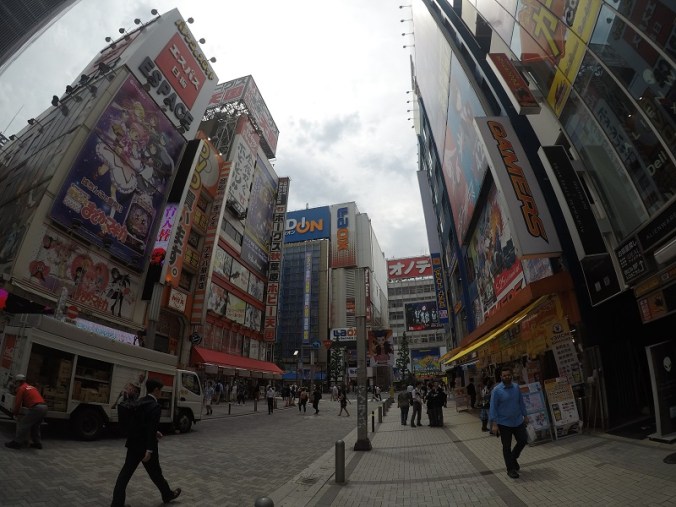
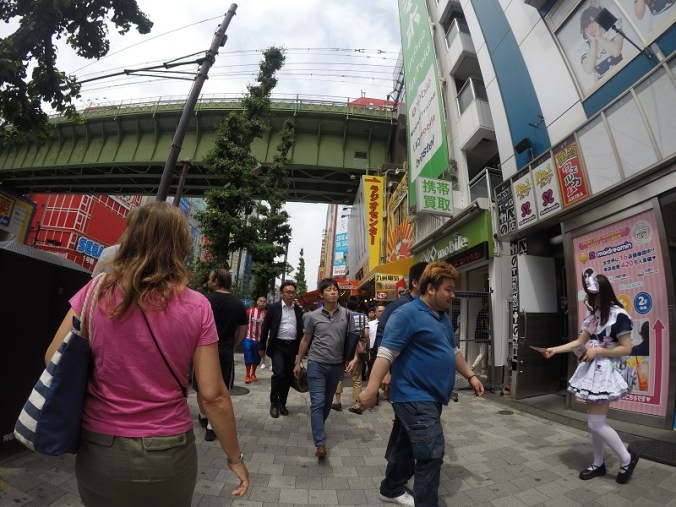
The moment I stepped out into the street, I felt as if I had landed in a Sci-fi film. Neon lights, tower blocks, massive bill boards everywhere, many showing moving images such as music videos or clips from anime (a style of Japanese cartoon, such as Pokemon). A sensory overload.
DCIM100GOPROGOPR0027.JPG

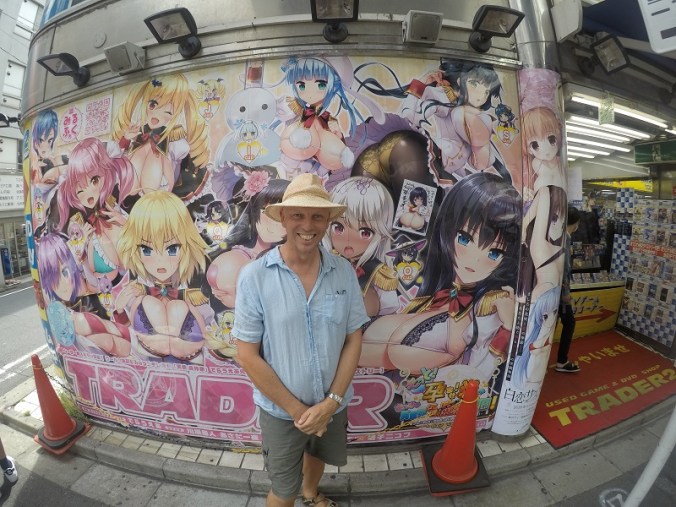
There’s a word ‘Otanga’ in Japanese which is used to define people with obsessive interests, particularly in anime and manga. What started as a pejorative term has now been proudly owned by such people and today the Otanga culture flourishes. There are cosplay cafes (where people dress up as characters from their favourite comics, TV, film, games etc) and also Maid cafes (where attractive young women dressed in ‘maid’ outfits try to lure you into cafes where they will act as servants to their ‘masters’ – slightly creepy in my view). At the top of a department store, there’s a stage where the popular Japanese girl band AKB48 plays live every day. This part of town is definitely aimed at a younger target audience than yours truly and after an hour there, I wanted to lie in a darkened room.
DCIM100GOPROGOPR0025.JPG

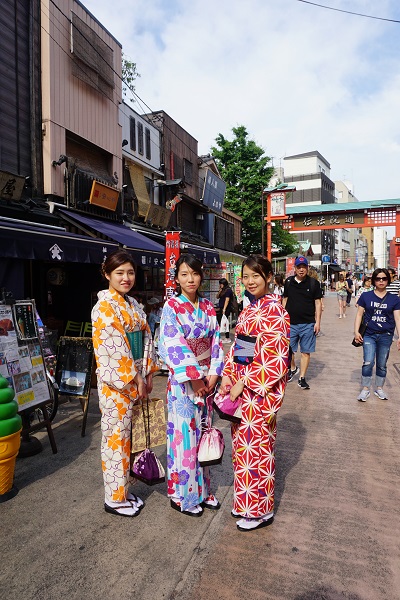
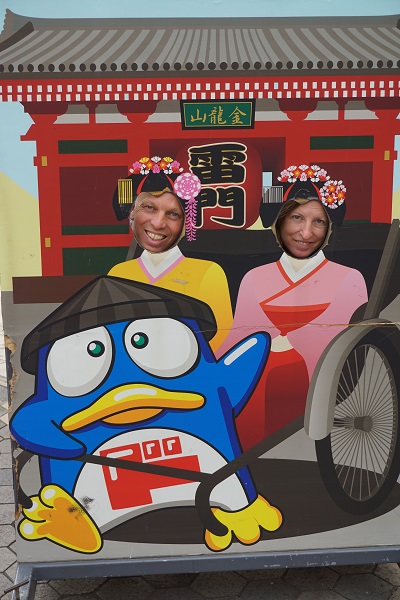
After a calming lunch in a Japanese Italian restaurant (strangely un-Italian) we moved on to our final destination for the day – Asakusa. Again, this presented a massive contrast to Akihabara. This district is all about narrow streets filled with rickshaws pulled by handsome young men, women hobbling by in wooden sandals and beautiful kimonos. Like Akihabara, it all felt rather unreal. I was under the impression that kimonos were just for tourists but apparently they are commonly worn by women – and men, too. The male kimonos tend to be in plain, dark colours and are less elaborate.
day13

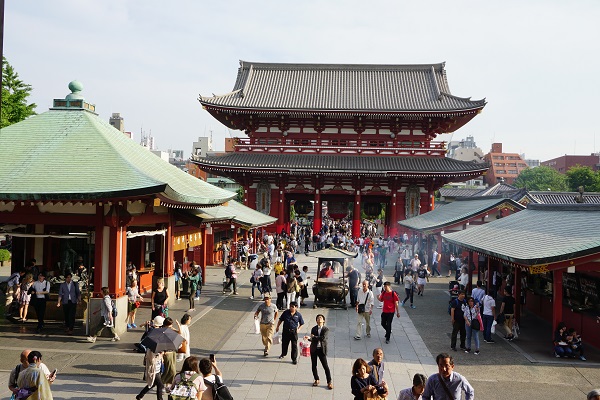
We wandered down the street, ducking into shops selling traditional items such as wood cut prints and traditional sweets and snacks. At the heart of Asakusa is a huge temple, the Sensoji Temple.  The best known building is the Kannodo Hall, a striking red and white structure which draws the eye. To the right of this is the Asakusa Shrine. The whole area is very popular with locals, with plenty of shady places to sit and relax. We took advantage of a handy vending machine to have a refreshing drink.
day11

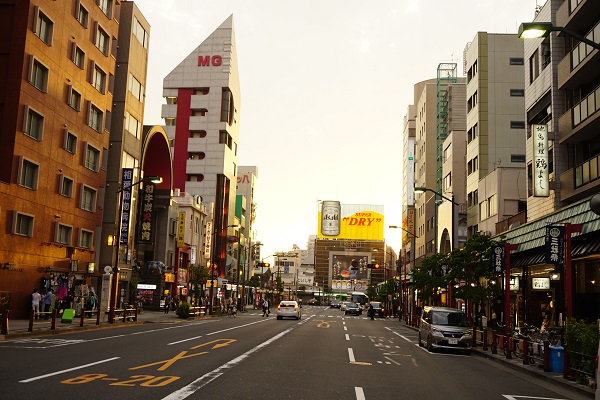
The daylight was beginning to fade, so we popped into a local bar for a beer. Apparently, it’s not ‘done’ to order a drink without ordering something to eat, so we made like the locals and selected a few small snacks – quails eggs, pickled onions, edamame beans and raw octopus.
day8


After another hour of wandering about, Oscar took us to a sushi restaurant. There was no menu and no English spoken. Thank goodness Oscar can speak Japanese. It was a modest looking place with only two tables and a few settings at the bar. Only sashimi was on offer (sashimi = raw fish) as we were too early for the sushi – the rice was still being prepared. Preparing rice for sushi is an art in itself, apparently, and cannot be rushed. The chef came up to the table and asked Oscar if there was anything we DIDN’T like. Oscar said no, we’d eat anything fishy. Half an hour later we were presented with a single, beautifully presented plate of fish and seafood garnished with seaweed. It didn’t look enough for three, but in the end we struggled to finish it.

day7

When it came to paying up, I was taken aback by the size of the bill –  however, it was the best sashimi I’ve ever tasted, and a satisfying way to end Oscar’s ‘taste of Tokyo’ day.
day12


Day trip to Enoshima Island, near Tokyo, Japan

tok11

Our first day in Tokyo, and the weather forecast was hot, hot, hot, so Oscar, our son (whose been living in Tokyo for the past year) suggested we take a train to Enoshima. So at 8 a.m. in the morning we met up at Shinagawa Station, which is just across the road from our hotel. We travelled out to Fukisawa station and then changed to the Odakya Enoshima line. The journey took just over an hour.

tok1

On arrival, we made our way to a bridge which connects the mainland to Enoshima Island. We immediately noticed some huge birds flying overhead. According to Oscar, these are the Enoshima Island hawks which have a fiercesome reputation for stealing food. He’s been a victim himself – sitting down to enjoy an enchilada, he found it snatched out of his hand by a hawk. Fortunately, he managed to snatch it back, but others have not been so lucky. So beware of picnicking at Enoshima!

Once across the bridge, we found ourselves on a pretty street lined with picturesque shops selling souvenirs to visitors. Definitely upmarket compared to the UK! Exquisite fans, beautifully crafted chopsticks, hand made sweets, and a surfeit of cat related items. Apparently, the Island is home to many stray cats which are fed and looked after by locals and visitors. I’m not a cat person (sorry!) so this didn’t really thrill me but for others I hear it is a major draw.

tok2

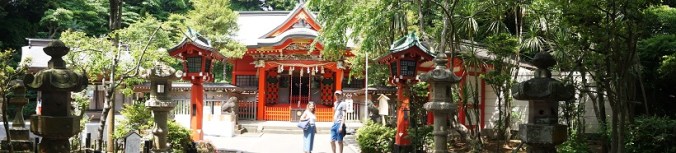
Once past the shops, we came to the entrance into Enoshima Shrine. The shrine is set in gardens which can only be reached on foot by climbing up a steep hill. It’s a beautiful and peaceful place to visit and especially nice on a hot day, being shaded by a good many trees. The Shrine consists of three separate temples which are dedicated to the Shinto Goddess Benten, a goddess of wealth, music and knowledge.  Arriving at a temple, I found an atmosphere of peace and quiet. Oscar showed me how to purify myself by rinsing my hands and mouth before making an offering at the temple. Next, I approached the temple, bowed my head, then threw a coin into a collection box. After making the offering, I bowed again, then clapped my hands twice, and made one final bow. All this had to be done slowly and with reverence. According to Oscar, these rituals are commonly observed all over Japan, by people of all or no faith.

tok4

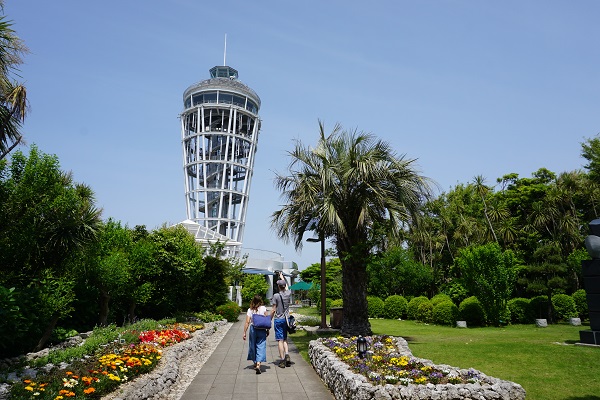
Moving up the hill, we paid a small fee to enter the Samual Cocking Garden and go up the Sea Candle. The Samuel Cocking Garden is an attractive botanical garden which belonged to Samuel Cocking, a British trader in the late nineteenth century. The Sea Candle is a working lighthouse with a couple of observation decks. It has fantastic views of the surrounding land and sea. The wind was blowing hard on the outdoor deck and I can only imagine how windy and cold it must be up there in Winter. The trees below were all bent over, indicating just how windy it gets. On a clear day it’s possible to see Mount Fuji, but sadly it wasn’t clear enough today.

tok3

After the Sea Candle, we headed up a short side trail, until we came to a small shrine where young couples were making romantic wishes and ringing a ‘Love’ bell. The couples write their names on locks and leave them attached to the fence.

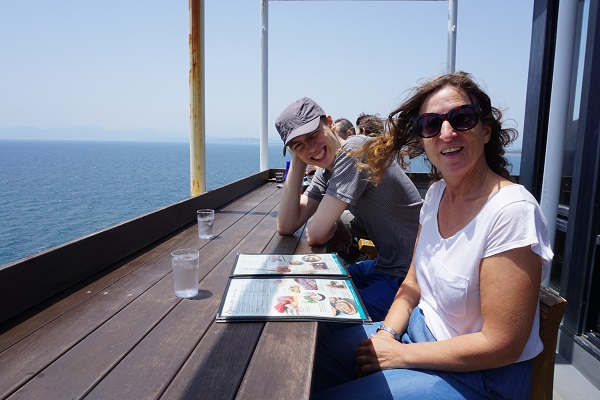
There are lots of lovely restaurants dotted around the hill. We took a table outside one of these for lunch. It was very blowy outside but worth it for the jaw dropping views of the sea. David ordered Shirasu fish, the tiny fish which are caught in large numbers around Enoshima. They were served half raw and half cooked over white rice.

tok8


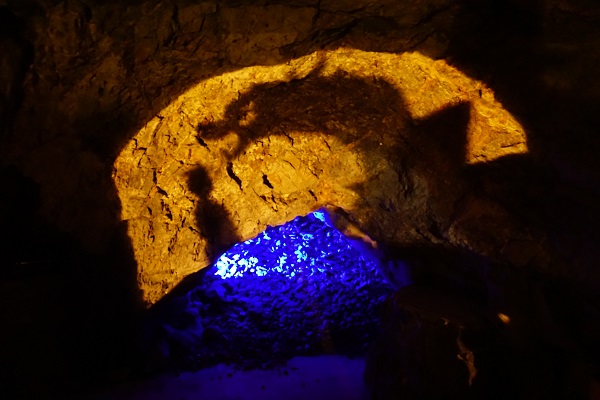
After lunch, we headed down to our final destination on the island, the Iwaya Caves. These two impressive caves have been carved out by the sea on the Southern part of the island. One is said to be the home of a dragon which used to terrorize the locals until he was subdued by the Goddess Benten, who agreed to marry him but only on condition that he mend his evil ways.

tok7

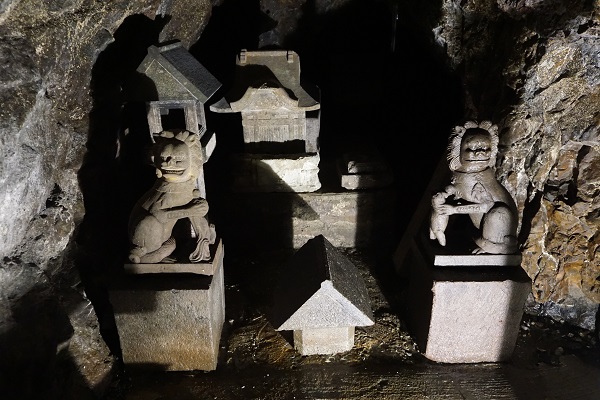
The Iwaya Caves have been a shrine since 552. Yes, 552! Inside the caves there are a number of ancient stone carvings which have been put there over the years. On entering the cave, you are presented with a candle in a candle holder, which helps to give the caves a more ‘mystical’ atmosphere. As you go deeper into the tunnel, you have to stoop to continue as the ceiling gets narrower and narrower. Coming out of the cave is a relief, as the sea breeze refreshes the senses. Unfortunately, the approach to the cave and the caves themselves were badly damaged by a typhoon last year and closed for some time. It’s still possible to see signs of damage.

tok5

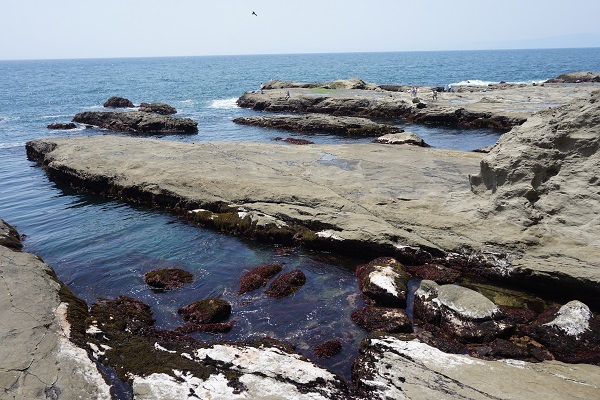
After visiting the caves, we walked down onto the rocks below and meandered about inspecting the rock pools whilst enjoying the fresh air. There were plenty of people fishing off the ledges – apparently, it’s a famous fishing spot.

Coming down the hill, we browsed round the shops, then headed down to Enoshima Onsen. Onsen is the Japanese word for a hot spring or Spa and Oscar says there are thousands all over Japan. The Onsen in Enoshima is a large, sophisticated building with several floors. We started in the ‘mixed bathing floor’ where men and women bath in pools together whilst wearing swimming costumes. On the second floor, there were five different pools of various temperatures. My favourite was the outside one, which had fantastic views over the bay. A staff member came out and made an announcement and Oscar suggested we head downstairs to the sauna. This floor was carved out of the rock to create a ‘cave’ like atmosphere.

tok6

In the sauna, we were subjected to a German ritual known as ‘Aufguss’. The ‘Aufgussmeister’ adds essential oils in water and then wafts the steam towards you with a towel. Actually, ‘wafts’ is too passive a word. It’s an alarmingly energetic action, which sees the meister take the towel overhead and then snap it down with whip cracking force. This Japanese Aufgussmeister could sure move that towel, despite being a tiny woman! The ‘aufguss’ lasts about 15 minutes, during which time the heat builds up to an almost unbearable degree. I ran for the door a couple of minutes before it was over. Fortunately, there’s a freezing cold plunge pool right outside and it was blissful to jump in there.

After the ‘Aufguss’ we split up and headed to the third floor to the single sex bathhouse. All costumes to be left at the door! I felt somewhat out of my comfort zone as I headed in. Fortunately, Oscar had briefed me on the etiquette of the Onsen – first, I had to sit at a low stool in front of a mirror and clean myself with soap and water from head to toe. Only then could I enter the baths. Once in, I realised that despite Oscar’s briefing, I had made a faux pas. No one else let their hair get in the water. Instead, they put their folded towels on their head. Not quite sure what the towel was for. Ah well. Better luck next time. Other than that, I think I did quite well. At the slightest hint of sweat, I returned to the shower and washed myself down again, as instructed. I even washed again from head to toe at the end. I came out feeling cleaner than I’ve ever felt before.

tok9

Downstairs, I met up with David and Oscar and we headed off back to Tokyo, only stopping to pick up a fresh mango and coconut juice to drink on the train. Unexpectedly, it had big lumps of black tapioca in it.  After one day, I can safely say, they do things differently in Japan.

DCIM100GOPROGOPR0003.JPG


Enoshima shrines

Sea candle

Enoshima Caves

Onsen

World War II Museum, Mele Cascades and Havannah Resort, Efate, Vanuatu

wat1

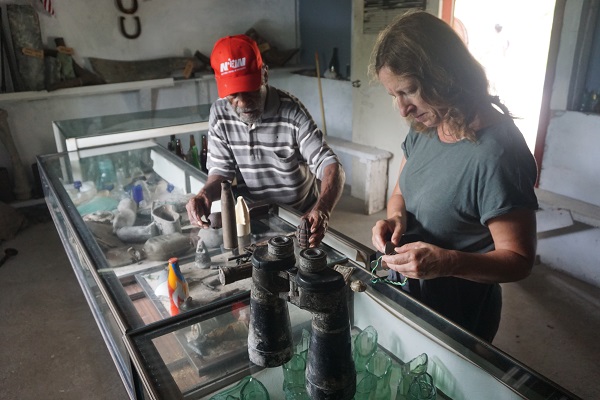
We woke up to find it was somewhat overcast, so Lu suggested we walk the dog up to the local village, Tanoliu. It’s a lovely little village with a primary school, some food stalls and a kava bar under an old Banyan Tree. It also has a Museum which showcases a collection of memorabilia from the Second World War. The collection has been painstakingly put together over many years by Ernest, a bit of a local character who is now 83. Ernest was 10 when a fleet of military ships first arrived in Havannah Harbour. At first Ernest was frightened that Vanuatu was being invaded by the Japanese but his father reassured him that they were American.

wat6

Ernest welcomed us with open arms to his collection. He was delighted to hear we were English: he motioned enthusiastically to a portrait of Winston Churchill painted by the door of the museum. ‘A great man – he saved the war.’ He is keen to add a Union Jack to his collection of flags which line the road outside the museum.

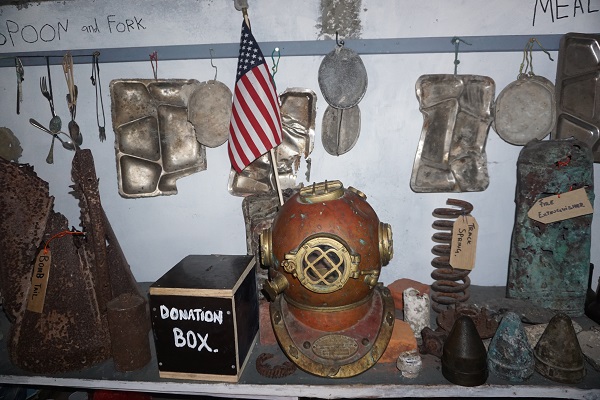
Ernest has collected his trophies from the shore and the sea. A mainstay of the collection is glass coca-cola bottles and fragments of bottles which the American servicemen left behind. Ernest pointed out that each bottle has the name of a different American state printed on the bottom. Apart from the coke bottles, he showed us hand grenades (NOT live, he assured me!), a rifle and bullets from a large naval gun. He had dog tags with the names of American servicemen on them. You could still read the names. I noticed that one was called Ernest!

wat7

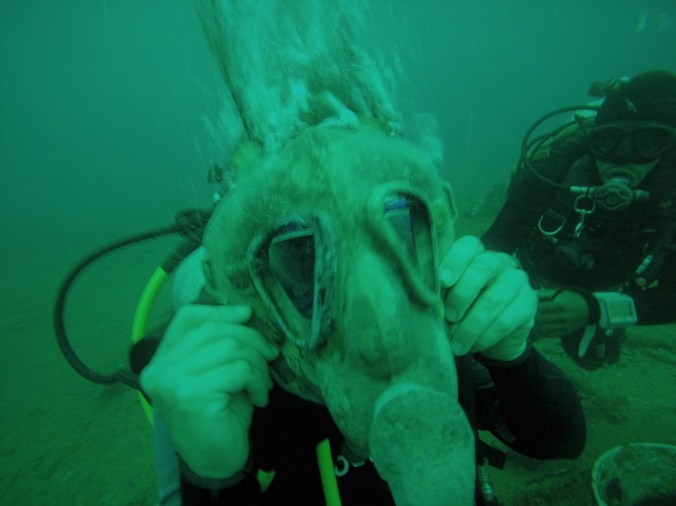
There were other, unusual things, like the helmet of an old fashioned metal diving suit and a pair of binoculars. There were also bits of fusillage from a range of war planes, including Spitfires. Ernest’s enthusiasm was infectious and I thoroughly enjoyed our visit. After we left, Lu told us that the original museum building was badly damaged by Cyclone Pam. The money to rebuild it was donated by a crowdfunding appeal launched by American workers at Coca-cola.

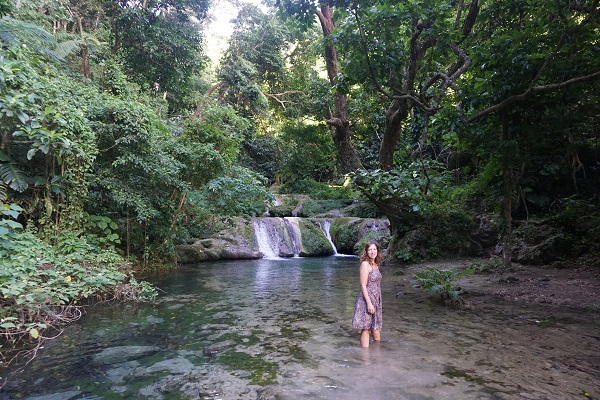
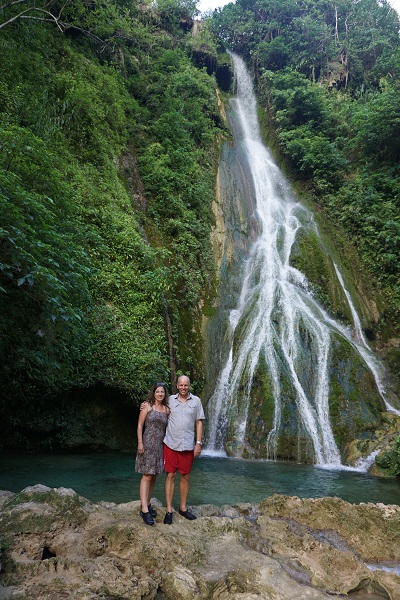
In the afternoon, the sun came out and David and I decided to visit Mele Cascades, which is on the road to Port Villa. The entrance fee is a fairly steep 2,000 vatu. For that, you get to meander up a series of pools leading up to a beautiful waterfall. At several points, you have to wade across the water. Towards the top, the path is completely submerged. Fortunately, we had been warned by Lu and were wearing wet shoes. We were pleased to find ourselves almost alone at the falls. Apparently it is on the cruise ship itinary and can be very crowded.

wat3

All the way up the shaded path, there are invitingly deep pools to jump into. We saved our swim until we reached the highest pool and walked back down in our wet swimming costumes. If we’d been feeling more adventurous, we could have stayed in the water and travelled all the way down the fall, sliding from pool to pool.

wat5

At the bottom of the fall, there was the option to lounge round a natural swimming pool filled with water from the cascades with a café and even a bar. However we wanted to get home and get ready to go out for drinks at the Havannah Resort.

wat2

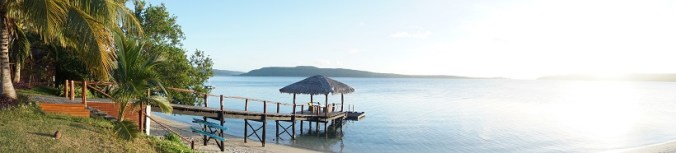
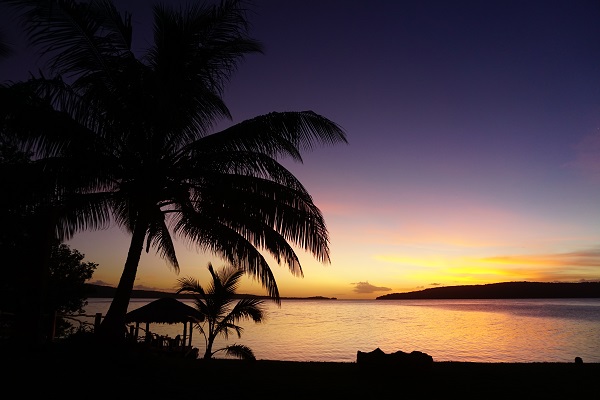
The Havannah Resort is an upmarket hotel for adults only. It is right on the beach, and only a five minute walk from Lu and Tim’s house. On arrival, we put in an order for cocktails – Margheritas all round – and then sat back to watch the nightly show: sunset! Despite being so close to Tim and Lu’s house, the bay looked quite different from the Resort. Once the sun went down, we surprised the staff by hopping down onto the beach to take a short cut home for dinner. Fish pie made with fresh local fish, loving prepared by resident chef, David Scull. The Havannah Resort was a great place to go for a drink but that night, I doubt that the guests ate as well as we did.

wat4

Port Villa, Efate, Vanuatu

villa1

Port Villa or ‘Villa’ as it’s known locally, is the capital of Vanuatu. The town itself isn’t particularly pretty, but it has a buzz about it and it’s beautifully situated on a natural harbour. Shopping in Vanuatu carries it’s own challenges and Lu’s once weekly shopping trip can end up taking most of the day. There are supermarkets but they’re not always well stocked and basics such as tinned tomatoes can disappear off the shelves for months at a time. There are local peculiarities – for example, the best local prawns can only be sourced from the upstairs offices of a local builder’s merchant.
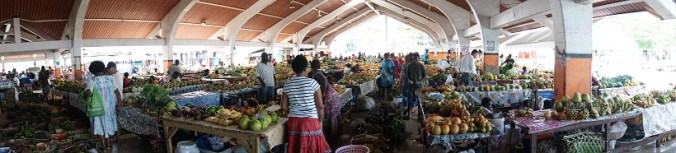
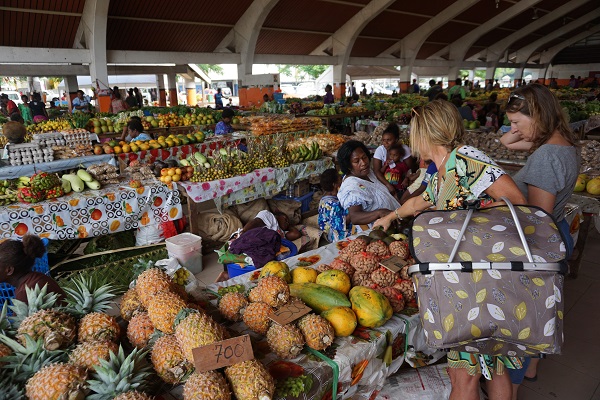
The daily fresh produce market is wonderful, with a variety of local fruits and vegetables colourfully displayed. Bananas, papayas, limes, coconuts, oranges all piled up alongside sweet potatoes, plantain, yams and avocados. If you’re lucky, you’ll find pineapples, green beans and pak choi but they might be sold out, or perhaps none came in today. The sellers stand between tables or more often than not lounge on the floor: you put down your coins and a hand appears mysteriously from below.  The fresh cut flowers are stunning, too, and inexpensive. They’re so exotic, I’ve don’t known their names since I haven’t seen them before.
Villa2

After visiting the supermarket, the market, the hardware store, the off licence and the shop that sells mixers, it feels like time for lunch. There are some lovely cafes along the front with great views over the harbour.

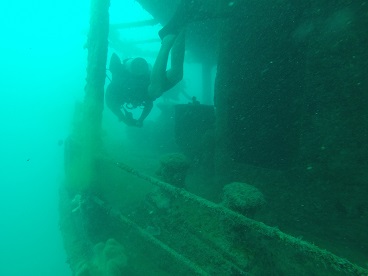
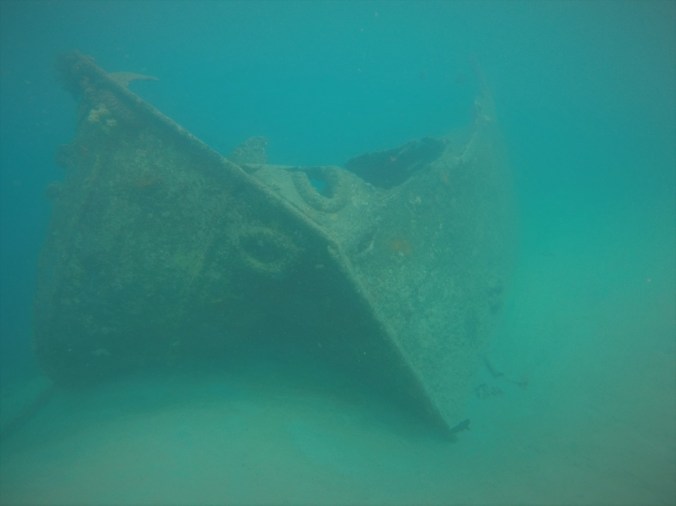
There’s also a dive shop called Big Blue. David and I signed up for a double dive and took a boat out into the harbour. We dived a wreck called Konanda which was deliberately submerged in the harbour as a diving site. After the splendour of the Coolidge on Santo, this felt quite tame, although I did venture to go inside the wreck and swim about – my first penetration!

DCIM100GOPRO

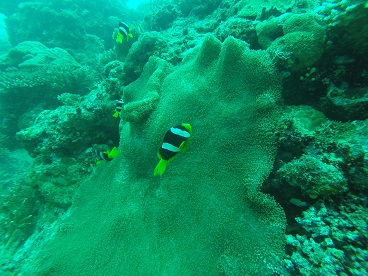
Then for a total contrast, we headed out to a coral reef to swim along a spectacular coral wall and from there to a double bommy with huge corals and plentiful fish.

DCIM100GOPRO

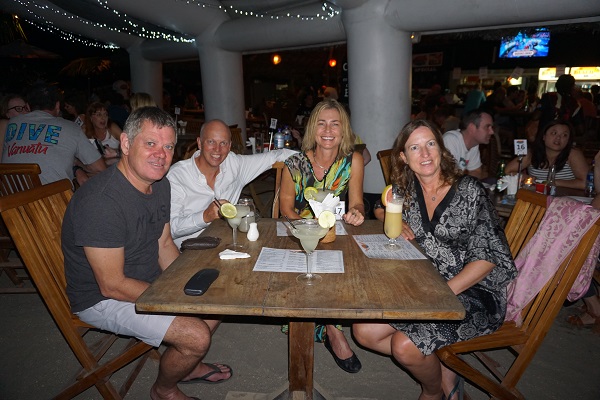
On Friday night, we booked a table at The Beach Bar, a popular restaurant on the outskirts of Mele facing the sea. I was amazed by the number of white people there, most of them families with kids. According to Tim and Lu, they were mostly expats rather than tourists. The food was simple fare – mostly pizzas and burgers – and the cocktails were cheap, but they were not the main attraction. We’d come to see the fire show.

Villa5

The show lasted a full hour and demonstrated the skills of an entirely local, Ni-Van cast of fire artists. The crowd clapped and cheered as they showed off their daring and athleticism, matching each piece to the tempo and style of the music. At the end of the night, the performers invited the audience to take to the stage and dance. The energy and enthusiasm of the performers was impossible to resist – at least for me and Lu. David and Tim did their best to look as if they’d never seen us before as we jumped up and took to the stage.

Villa6

Kustom village, Tanna, Vanuatu

Ku5

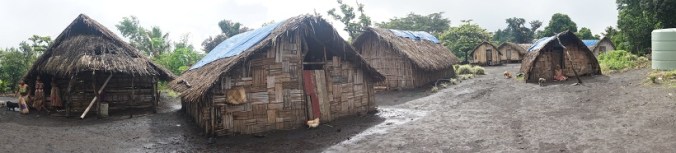
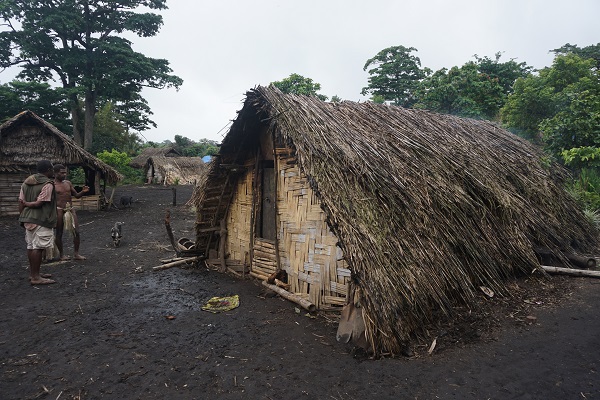
Today, we were taken to the Ipai Kustom Village. This is a village where the traditional way of life is still observed. Tom was away so his father drove us up there, and Tom’s daughter came along for the ride. We drove for about 20 minutes up a narrow, rutted earth track, sliding and stalling and bumping the axle on the ground. As we drove up, we talked about what to expect. We figured it would probably be a bit of a tourist trap, put on for visitors.

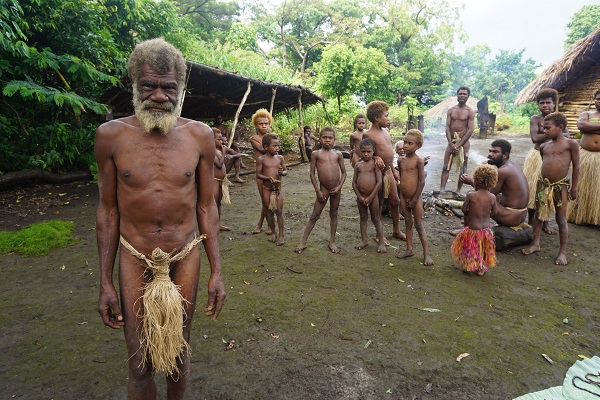
Eventually we arrived. Through the trees, I spotted a woman sitting in the door of a traditional hut breast feeding a baby with piglets and dogs running about her feet. A group of children crowded round us, some naked, some wearing nambas (penis sheaths) or grass skirts for the girls.  A Ni-Van in shorts and T-shirt shook our hands and said he would be leading the tour. The Ipai speak their own language and don’t have much English so without the guide it would be difficult to communicate.

Ku4

The tour began with a walk through the ‘gardens’ of the Kustom village. The crowd of kids followed shyly behind. Our guide pointed out the various plants and trees, which are used for food, medicine or construction of tools and houses: everything has its use. The people of Ipai are entirely self sufficient, with the exception of water which sometimes runs dry in the summer – then they have to ask for outside help.

Ku1

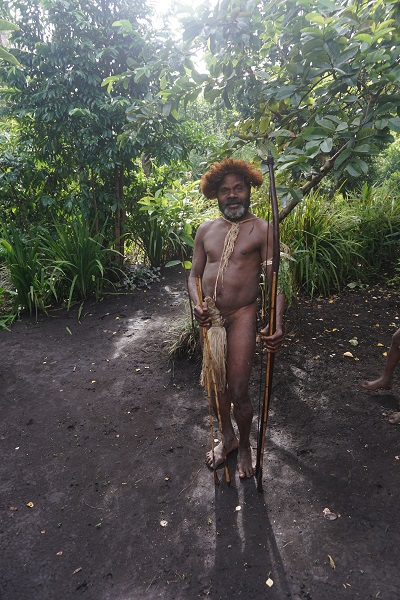
The first stop on the tour was to meet a hunter who, like all the men, was dressed in only a namba. He shook our hands, grinning from ear to ear. He demonstrated his skills with a bow and arrow and with a spear, and invited David have a try. The ‘great white hunter’ acquitted himself quite well with the bow and arrow but when it came to the spear, he couldn’t hit the target. A boy of around ten was invited to have a go and hit the target first time!

Ku2

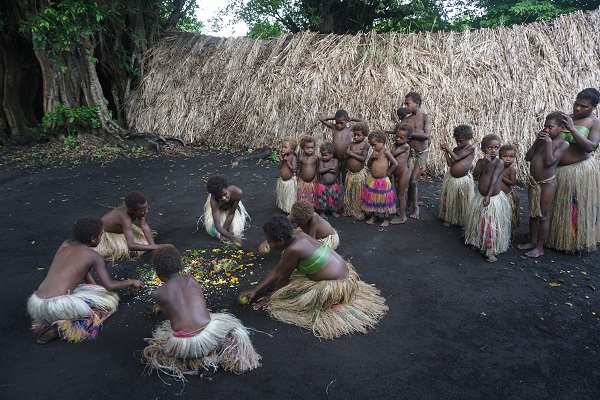
After the hunting display, we moved on to a clearing, where some girls demonstrated a traditional game. The game involved singing and passing oranges round the circle. When the song came to an end, the aim was that each girl should have an orange – no girl should have two. This teaches the children to share. If you go to the forest and gather two breadfruits, you should keep one and give the other to your neighbour.

Ku3

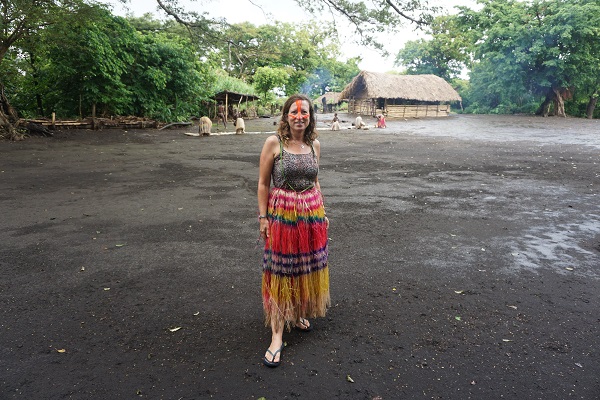
After the game, we moved on to look at the village. There was a old, traditional hut which is lower and more stable than the modern huts. Apparently, during Cyclone Pam, the 100 villagers all gathered in the traditional hut, which didn’t blow down. It began to rain, so we ran to the women’s hut, where some of the older women were making lap lap.  Lap lap is made with yam, cassava, plantain, bread fruit or sweet potato that has been grated and topped with coconut milk, then wrapped in banana leaves and roasted under hot stones. I tasted some bread fruit lap lap and thought it quite tasty!  After that, I was invited to stay in the women’s hut and be prepared to join in with the traditional dances.  It was a very special experience to be pampered by the women. I was kitted out in a beautiful, colourful grass skirt and had day-glo face paint applied to my face. I couldn’t understand what they were saying but  there was plenty of giggling and I kept hearing the word ‘English’ peppering their conversation.  The oldest woman called for a ‘glas’ and a young woman showed me my face in the mirror. I have to say, the luminous orange face paint looked much prettier on black skin than it did on my pasty face, but the women complemented me on my appearance.

Ku6

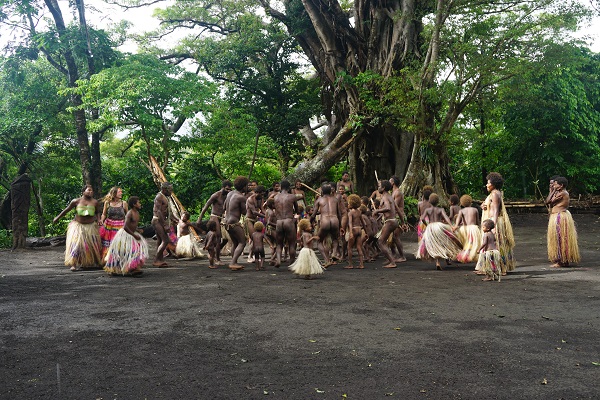
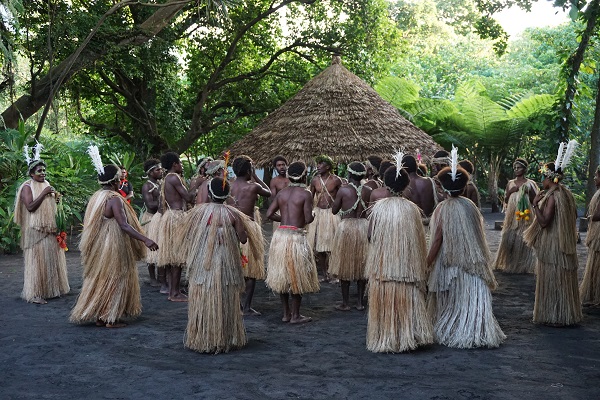
Now it was time to go out and join the rest of the village as they gathered under the banyan tree to take part in the dances. I wasn’t sure what to do, although having seen the ‘Tanna’ movie, I knew that there would be a lot of jumping! One of the younger women took me under her wing. We joined hands and I followed her lead. Altogether we did four different dances. In each dance, the men stand in the middle of a circle with the women around the edge. The men cup their hands together to make a loud clap and stamp their feet as they sing in unison. Individual women join in from time to time in a high, wailing tone. The dances involve jumping in time to the rhythm in a relaxed, joyful way. Sometimes, we skipped around the circle, first one way and then the other, or moving in and out in a Hokey Cokey kind of way. Before coming to the Kustom village, I thought the dances were laid on for the tourists, but according to our guide, they do them every evening, whether or not they have any ‘guests’ in the village.
Ku7

After the dances, every man and boy came up and shook us by the hand and said ‘thank you’ in their language. Then the villagers laid out some handmade tools and pieces of jewellery which they sell to raise a little extra money. The prices were very reasonable and the items were some of the nicest we’ve seen for sale in Vanuatu. Finally, we were introduced to the chief. I recognised his face from the ‘Tanna’ movie where he played a fictional version of himself –  ‘the chief’. In the film, he revealed that he’d met Prince Phillip and showed a picture of him shaking his hand. I asked him if it was true and he said ‘yes’. ‘Where did you meet him, Buckingham Palace?’ David asked.  The Chief shook his head ‘Windsor Castle’!

Ku8

After meeting the chief, it was time to offer our thanks and a payment of 2,000 Vatu each (about twelve pounds). The money is desperately needed. It allows them to have a mobile phone so that they can summon help if there is a medical emergency which requires a hospital visit and to send their children to school. Not many children in the village go to school, but this is beginning to change. However, unfortunately schools are not free on Vanuatu.

All too soon it was time to leave the Kustom village. The villagers had been so kind and welcoming, I was reluctant to take off my grass skirt and return to the modern world.

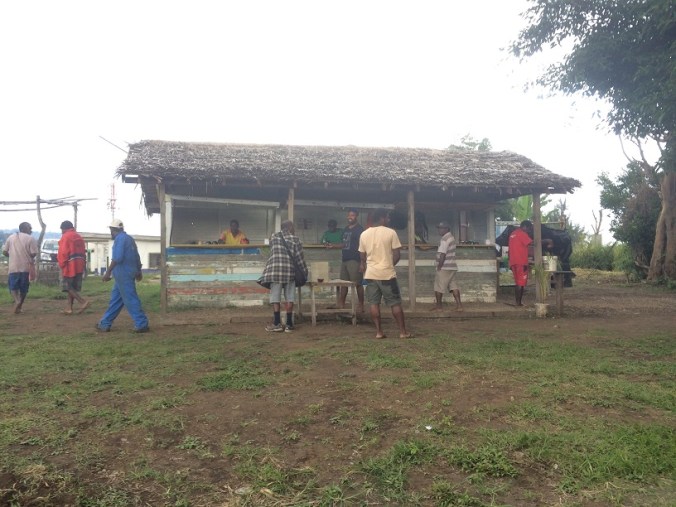
Back in our home stay, David and I decided to round off our ‘traditional’ day by walking to the local Kava bar and sampling Kava, a drink which is made by grating up the root of the Kava plant and straining it into water. It is said to offer a calming affect and to give a sense of well being. I only had one ‘shell’ but David had three, which puts him neck and neck with Prince Charles, who had three on his recent visit to Vanuatu. Neither of us noticed much effect beyond a numbing of the lips and tongue but I gather the affect is cumulative. On the walk home, I thought of the villagers of Ipai – the men gather together to drink Kava every evening and share stories and discuss any issues which have arisen during the day. I hope that they manage to steer their way through the challenges of the decades to come.

Ku10

Mount Yasur, Tanna, Vanuatu

Vol9

Mount Yasur is one of the main reasons that tourists visit the island of Tanna. There are advertisements at the airport welcoming you to ‘the world’s most accessible volcano’.   So as soon as we arrived in Tanna, we asked Tom, our guest house owner, if he could arrange a tour. He wanted to take us up on that afternoon, but it started to rain and the trip was postponed.

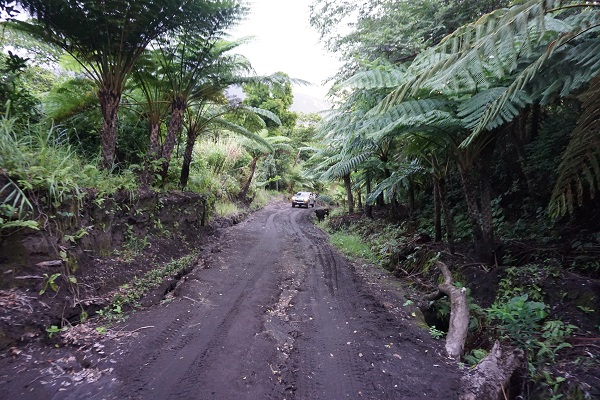
The second day dawned bright and the trip was back on. Tom had to go to Villa, so a friend of his, Willi, was enlisted to drive us to Mount Yasur. He was accompanied by his son, Felix. We bonded over the fact that we both have sons called Felix. The drive was quite arduous, since Mount Yasur is on the other side of the island and most of the roads are unsurfaced. A bone rattling experience! However, the Chinese have arrived in Tanna and are in the middle of surfacing the main roads. The locals hope the new roads will encourage more tourists to come and help their economy grow.

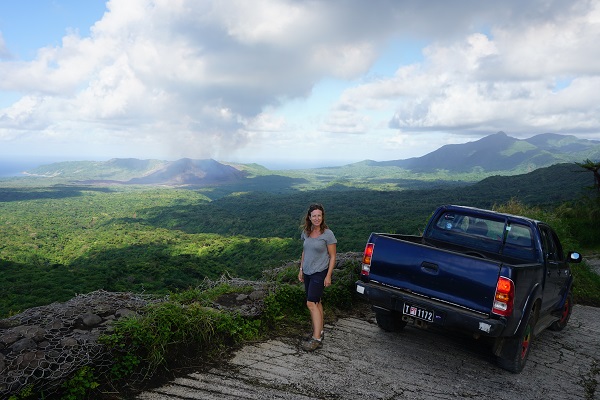
To reach Mount Yasur, we drove right across the middle of the island, climbing up to the top of Mount Lonialu and stopping at the Lookout to admire the view.

Vol1

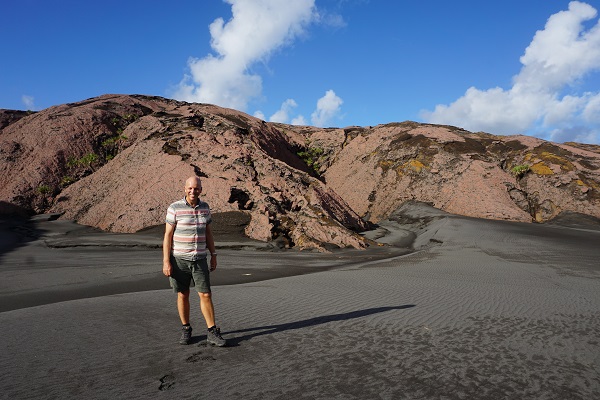
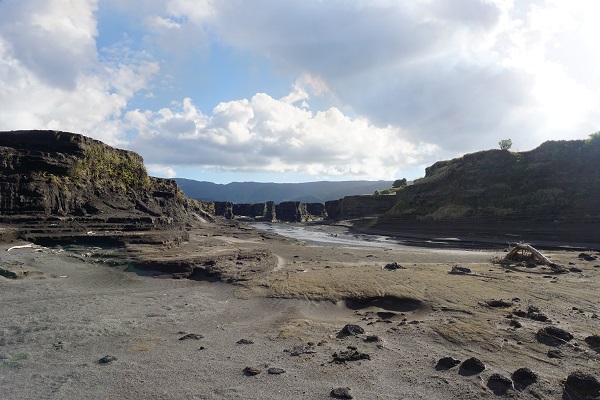
Back down the other side and on until the road became a narrow, deeply rutted track surrounded by high banks of volcanic soil.  We bumped along here until the road ran out and we drove out onto  the Western ash plain, a black and desolate landscape edged by pinkish coloured rock formations – lava flow.

Vol4

Above us loomed Mount Yasur, an ominous black triangle belching smoke. Willi took a wrong turn through the rocks and over a river to reach the volcano and we almost got stuck. Fortunately, we spotted another truck and followed it until we found the way through.

Vol3

The landscape changed again as we came to the fertile Southern slopes of the volcano. I spotted a number of homestays and hostels. In 2015, Cyclone Pam flattened this area but a number of new places have sprung up since then or have been rebuilt.

Finally, we arrived at the Mount Yasur welcome area. A large visitor centre is being built and is almost complete.  I was surprised to see 40 or so people waiting for the tour. A hefty fee of around 9,750 VT a person is charged for a tour.

Vol5

The tour started with a welcoming talk from one of the guides. This seemed to go on for some time, as everything was translated into French. In common with the other islands we’ve visited in Vanuatu, residents have the option of attending French or English taught schools. It is not unusual to find Ni-Vans who speak both English and French as well as Bislama, the national language and their own native language – on Tanna alone, 28 different local languages are spoken.  Apparently, the word ‘Yasur’ means ‘God’, since in the past, locals worshipped the volcano as a God.

One other useful fact I retained – the name ‘Tanna’ dates back to the time of Captain Cook. As Captain Cook sailed past Tanna at night, he spotted the glow of Mount Yasur. At daylight, he came ashore. There he met an old man and asked him what was the name of this land? As he asked him, he picked up a handful of earth and ran it through his fingers to indicate ‘land’. The old man replied ‘Tanna’ which means ‘earth’ in his local language. So Captain Cook gave the island the name ‘Tanna’ and it’s been known as Tanna ever since.

Vol6

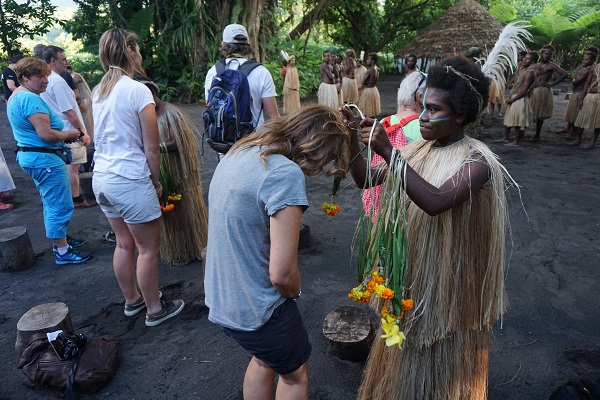
After the talk, a local group dressed in traditional costume performed a couple of traditional dances to welcome us.  I was interested to watch these, having seen the film ‘Tanna’ the night before we came here. It’s an amazingly beautiful film which captures traditional village life and customs in Tanna. The performance ended with the dancers presenting a flower necklace to each visitor.

Vol7

The sun was going down and it was time to go up the mountain. We were loaded into four wheel drives and then made a hair-raisingly steep ascent on a rough unmade road. I was glad to climb out the car and follow our guide for the last ten minutes on foot.

Vol8

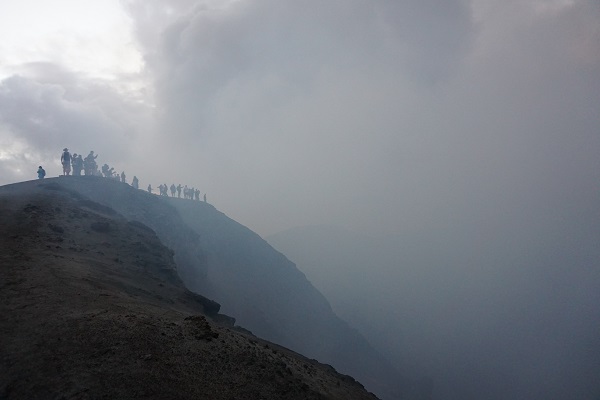
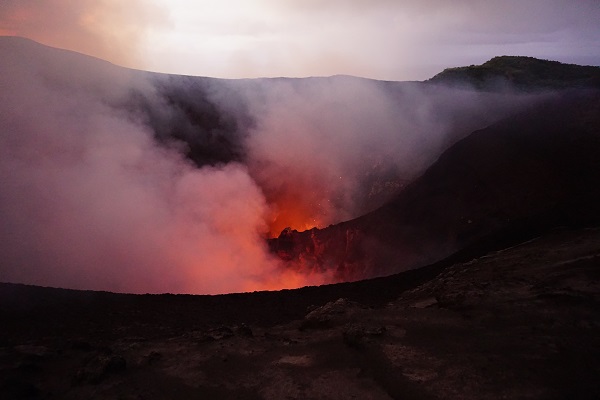
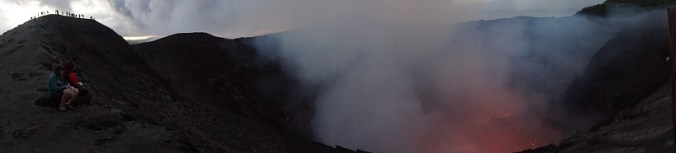
Arriving at the rim of the crater, the sun was about to set. Below us, the craters bubbled and rumbled, emitting clouds of blue, sulphurous smoke. We climbed up to the West side of the crater where we had a good view of the vents which take turns to spit out balls of red hot magma and send them flying into the sky. It’s an exhilarating experience.

Vol13

As the sun went down, the colours became more spectacular, the clouds of smoke glowing a deep red. It’s not particularly comfortable, as wind blows choking gases into your face and the ash goes into your eyes.

Vol12

There are no safety rails or guide ropes to stop you slipping over the edge. It all adds to the feeling that you are in a dangerous, frightening place. According to our guide, there is a scale for volcanoes which runs from 1-5. This volcano is only at level 2. If it goes up to level 3, it is closed to visitors as it is considered too much of a risk. Mount Yasur hasn’t yet gone above a level 3.

Vol11

The wind blew up and it started to rain. David and I were ill equipped for wet weather, in shorts and jumpers, and decided to come back down to the lower level and wait for the rest of the group behind the shelter of a wall.  By the time they came down, it was completely dark. We watched the points of their torches slowly wind down the hill to our left as ahead of us the volcano lit up the sky.

Vol10

John Frum, Tanna, Vanuatu


JF4After our visit to Santo, we were emboldened to explore a third island, so we took a plane from Efate to Tanna. Tanna is an island that is best known for Mount Yasur, it’s volcano. It also features in ‘Tanna’, a wonderful film which showcases its traditional culture and beliefs. Having seen the film, we wanted to find out more.
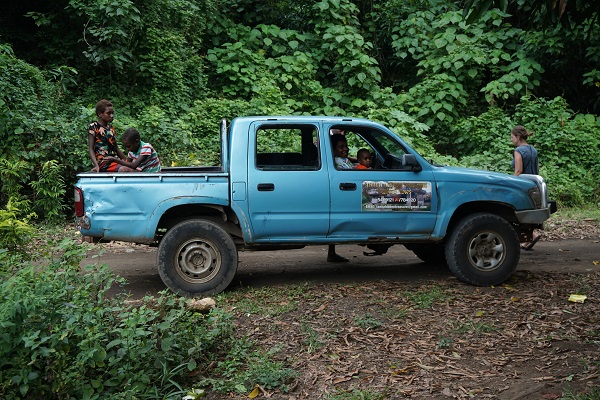
We were picked up from the airport by Tom, the owner of our guest house. As we clambered into his battered crew cab, I had an intimation that this was going to be a rather different kind of trip. Our guest house, Hidden Treasure, is situated on the West Coast, right on the beach. Next door live Tom and his extended family. Several traditional huts are clustered round an open fire where they cook their meals.

JF1


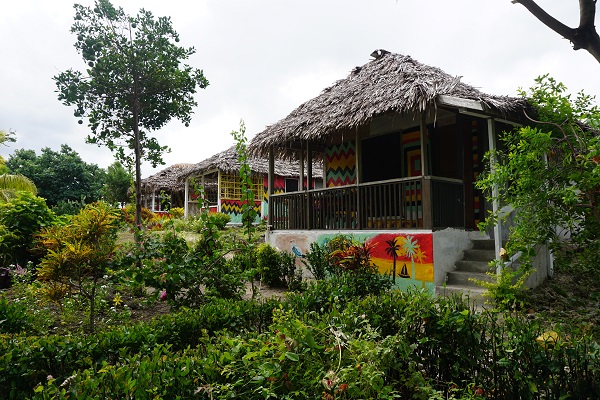
Tom has built five wooden huts for tourists, although at the moment we are the only ones here. The hut itself is very pretty. Inside, its basic – cold showers, no air con – but there are nets on the windows, the bed is comfy and there’s a mosquito net over the bed. Outside, there’s a balcony where we can sit and watch the waves crash on the shore.

JF5

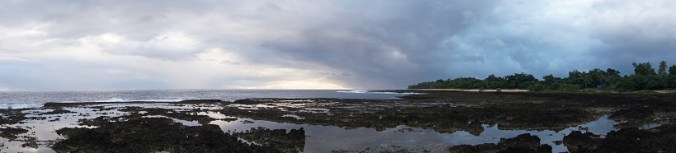
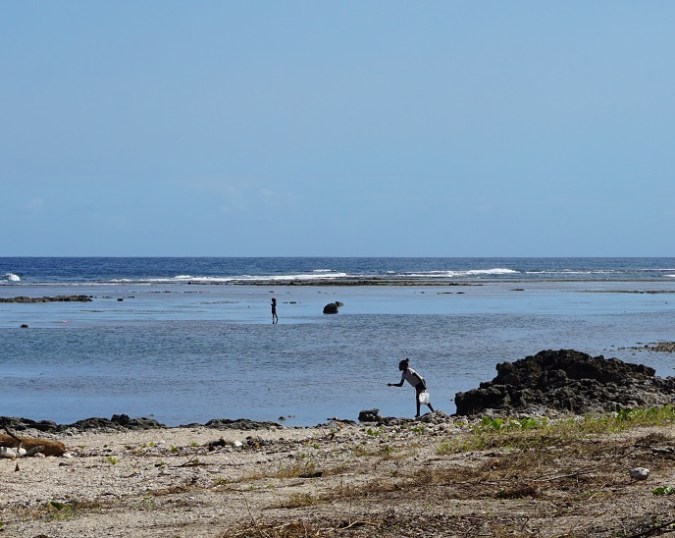
As soon as we arrived, we set out to explore the vicinity. The coastline is rugged, with a network of rock pools running out to meet the reef. It’s challenging to get in the water, but once you’re past the sharp rocks, you can jump over the edge of the reef. The water is beautifully clear and the coral is abundant and colourful.  Getting out the water is a challenge as the waves break on the reef  – you have to pick your moment and watch your feet. Ten minutes walk further north takes you onto a beautiful white sand beach. It’s holiday time and the local children are off school, so instead they take their long bamboo fishing rods to the edge of the reef or dive in with snorkels and masks, hoping to spear a fish. Tom says he goes out after dark with snorkel, mask and torch to catch lobster.

JF7

Later, Tom offered to take us for a drive down South and tell us about John Frum. Tanna is a place full of magical, mysterious beliefs which are passed down from generation to generation.  John Frum is one of the so called ‘Cargo Cults’ which have sprung up over the years to worship individuals as Gods. I thought the John Frum cult was in the past but according to Tom, there are still a central core of believers on the South of the island. Making sense of the story is difficult and perhaps it depends who you speak to, so I can only pass on Tom’s version of it.


According to Tom, John Frum appeared out of nowhere in 1936 on Mount Tukosmera, the highest hill on the island. He came in a boat. He was dressed in black shoes, black trousers, a white shirt and tie – in other words, conventional Western dress. I asked Tom if he was English or American, to which Tom said ‘perhaps – I do not know.’ In any event, he spoke in English but was also able to converse with locals in their language. He continued to visit the island until war came, sometimes by boat, sometimes by plane and then he stopped coming – Tom said that he went to join the war. He didn’t come back after that but his followers waited for him, preparing for the day when he would return.


John Frum made pronouncements which later came to pass. For example, he predicted that the island would prosper and new roads would be built. This has been fulfilled in the form of a new road which is currently being built by the Chinese. He also predicted that the hill that he was standing on would one day be flattened at the top – this has also happened as part of the road building scheme.  He also predicted that the town of Lenakel would expand beyond the airport to a certain point – at this certain point, a new resort has recently been built – preventing expansion beyond where John Frum predicted.

JF3

The chiefs all made different requests of John Frum – one asked for education for his children. Tom knows his descendents. They are a highly educated bunch, who have gone to school and even to university. Another asked for a way to keep his food from going bad. He was the first person on the island to get a refrigerator.  Another asked for eternal life. This was the only wish that was not granted. John Frum apologised and said that it was not in his power to grant it.

We went to the memorial to John Frum which stands on top of Mount Tukosmera with amazing views of the coast. Tom said that there was an English sign on the memorial, but it had blown away, leaving only the Bislama sign. (Bonus points for anyone who can translate it!) By this time, it was pouring with rain so we didn’t stop for long.

JF2

Tom is a Christian, but from what he said, he and other islanders are not entirely sceptical about John Frum’s powers, either. I asked him about Tanna’s Prince Phillip cult, which I’d heard about before I came. ‘Oh, that lot,’ he said scathingly. ‘They believe that Prince Phillip’s parents come from Tanna, you know. I told them it was rubbish – I’ve googled it and he comes from Greece – but they don’t believe me. What can you do!?’

JF6

The East Coast Road, Santo, Vanuatu

east5

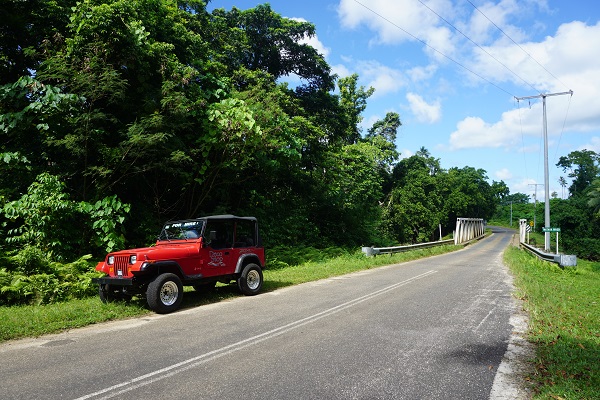
Today, we hired a jeep from Deco Stop, our hotel, and drove up the East Coast of Santo. Kim, the hotel owner, laughed when she saw us studying the map – “just turn right out the hotel and carry straight on – there’s only one road in Santo!” This isn’t quite true – there are unmade roads – but there’s only one sealed road, which goes up the East Coast from Luganville to Port Olry. To put it in perspective, the Circular Road in Efate (see previous blog re: The Blue Lagoon) and the East Coast road in Santo are the only sealed roads in Vanuatu.

east2

So, we set off up the East Coast Road. Driving the jeep took me back a few decades – soft top, stick shift, no seatbelts! I crossed my fingers and prayed that we wouldn’t have an accident. Fortunately outside Luganville, there was very little traffic. Santo is noticeably less developed than Efate and most of the villages seem to be set back from the road. The road was lined with coconut palm tree plantations. We pulled in to look at a beautifully clear river.

east1

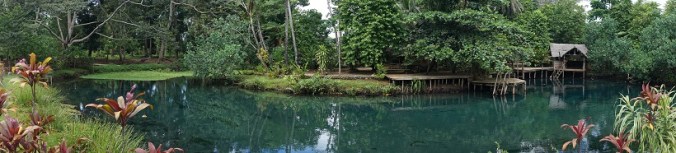
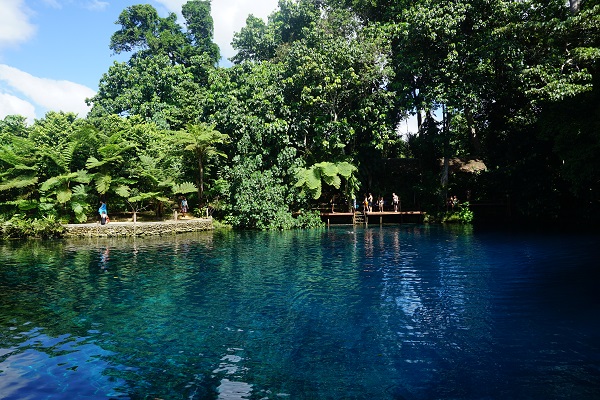
Continuing on our way, we pulled into Nanda Blue Hole. This had been recommended to us by our dive instructor, Scott of Pacific Dive, but there were signs to several other blue holes along the way. The entrance fee was a hefty 1,000 Vatu each  (about 7 pounds sterling), but it was a beautifully kept site with lovely tropical gardens, changing rooms, flush loos and a café. The pool itself was as blue as the Blue Lagoon on Efate but with a different, more mellow vibe. No rope swings, no music, just a beautiful spring fed pool. I tasted the water and it was fresh with no hint of salt. A variety of fish swam about. We chilled at the pool for an hour or so before heading off on our way.

east3


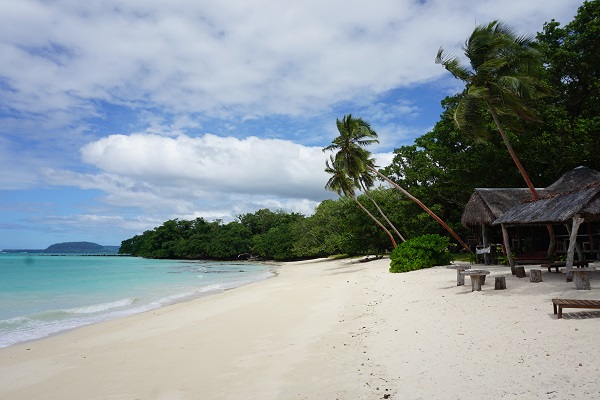
Our next stop was at Port Olry. The name led me to expect a port with perhaps a marina but instead I found a fishing village of traditional huts and two or three locally run restaurants and bungalows on the beach. The water was as blue as the water in the Blue Lagoon. The beach curved round to an island which can only be reached at certain times of the day. There were several fishing canoes but no sign of anything bigger.

east6

We selected one of the restaurants and took our seats in an open hut right on the beach. It was surprisingly windy and after swimming in the cool waters of the Blue Hole, I actually felt quite cold! (Bear in mind that the temperature here is currently around 27c).

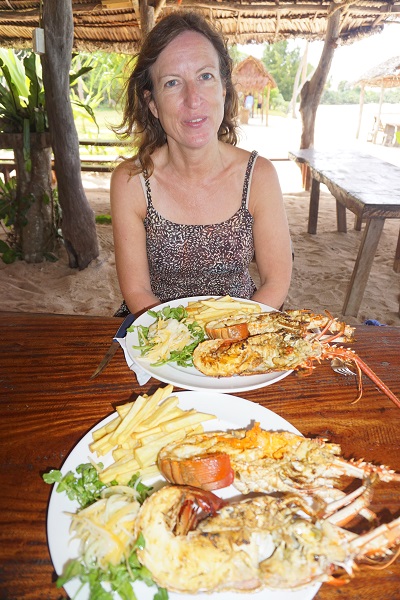
The menu was simple and based around seafood. Lobster was on the menu and we both opted for that. Unfortunately, they only had one lobster in. A boy was dispatched on a bicycle to ride round to the fishermen and order up another one taken straight from the sea. When the lobster arrived, we found ourselves with quite an audience: one cheeky kitten and two very humble dogs. The kitten jumped on the table and tried to steal our food. No lobster for him. The dogs waited ‘til the end of the meal and were rewarded for their patience.

east7

After our lobster, we took a walk round the bay until we reached the island. There were cow pats on the beach but no sign of the cows. We picked up some cowrie shells and a stone with a hole in it to take home.

After the beach, we turned the car around and headed back towards Luganville. En route, we pulled off the road onto a rough dirt track which lead to Champagne Beach. I had heard that this beautiful white sand bay is on the cruise shop itinary and can be horribly crowded.

east8

Not today. Apart from a girl in the café and a pregnant woman selling dresses, we were the only ones there. David brought some drinks from the girl and I brought a dress from the pregnant woman in an effort to up their sales.  Then we went for a swim in the bay. It was picture perfect. The sea was beautiful and the sand soft and powdery underfoot.

DCIM100GOPRO


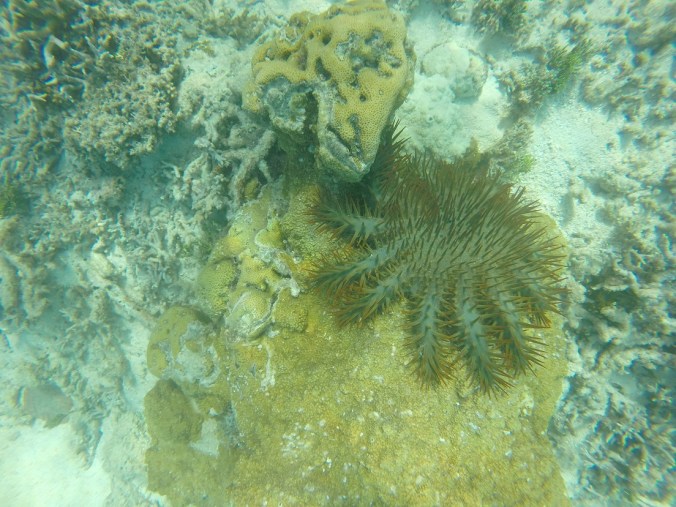
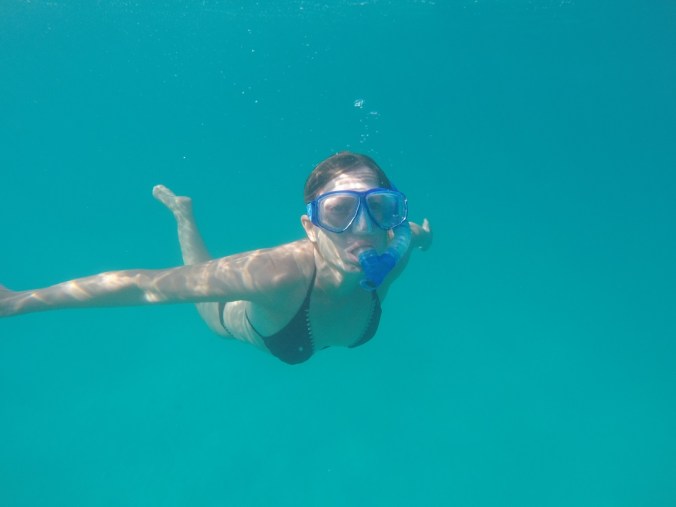
Then we put on our snorkels and checked out the coral at the edges of the bay. The corals were exceptionally colourful and in good health – although David spotted a Crown of Thorns, which eat and kill the coral.

DCIM100GOPRO


The afternoon was drawing to a close, so we headed back to Depo Stop and took up our places on the deck – just in time to watch the sunset over the bay.

DCIM100GOPRO

Wreck diving on Espiritu Santo, Vanuatu

dive14

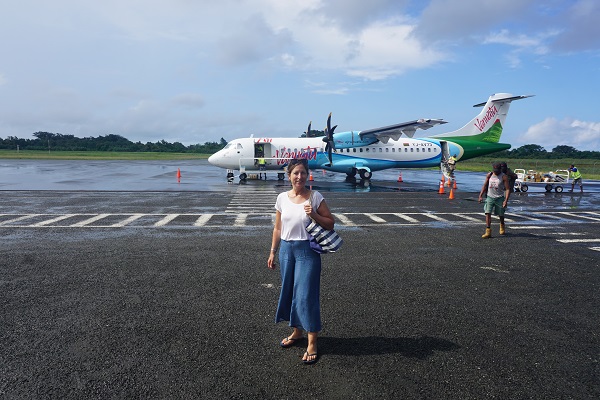
We wanted to explore other parts of Vanuatu apart from Efate Island. Espirito Santo was recommended to us by friends of Lu and Tim (the friends we are staying with on Efate).  It is particularly well known for its scuba diving, which we want to do more of –  so we took a small plane from Port Villa and just over an hour later, we arrived in Luganville, Santo’s capital, and Vanuatu’s second biggest town.

dive12

A taxi met us and took us up to our hotel, Deco Stop sits on a hill above Luganville. The hotel is a very cool and relaxing spot. The design is inspired by traditional Vanuatan architecture and decorated with traditional art. The name ‘Deco Stop’ references the scuba diving term ‘decompression stop’ which gives a clue to the clientele they attract! It is run by a lovely Australian couple Kim and Ben and staffed by local women who serve up super fresh local food. There’s a huge covered area which incorporates a deck with pool, seating areas and restaurant, all looking out over the South Pacific with Aore Island on the other side of the bay.

Unfortunately the views were obscured on the first night when a heavy rainstorm hit. Undeterred, David got on the phone and booked a couple of scuba dives for the next day. Looking out over the rain swept bay, I  wondered privately if we should have stayed on Efate. Would the sun come out or would our dives be rained off?

That night I found it hard to sleep. The bed was comfortable but the wildlife on Santo was in full throat, especially the dogs. Just as I dropped into a deep sleep, I was woken by someone shaking me. No, someone was shaking the bed. I turned to David and found him looking at me in alarm. No one was shaking the bed. It was an earthquake!! Fortunately, it was over in a few seconds. Still, it was a shock and a tiny taste of Vanuatu’s reputation as a dangerous place to live owing to the frequency of natural disasters – earthquakes, cyclones, volcanic eruptions. This combined with a lack of water, sanitation and resources to deal with emergencies have put it at the top of the United Nations most ‘at risk’ places in the world. As I write this, the people of Ambae Island are being taken from their homes and resettled on neighbouring islands due to the eruption of Manaro volcano.

dive13

The next morning dawned bright, if somewhat cloudy, and we were picked up from the hotel at 8 am by Scott and David of Pacific Dive. Scott is the very youthful owner of this great dive shop which is based at the Espiritu Hotel in Luganville. He is fortunate to have David as part of his team – David is a very experienced instructor, a Ni-Van (the local term for all Melanesian ethnicities originating in Vanuatan) who has been diving on Santo for 30 years.

DCIM100GOPRO

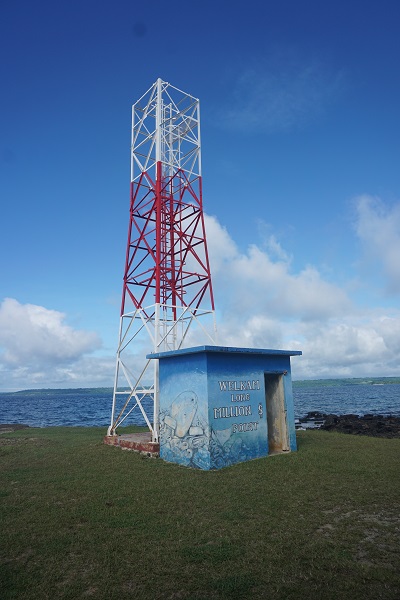
Our first destination was Million Dollar Point. At the end of World War II, the Americans couldn’t decide what to do with all their machinery – the trucks, the cranes, the tanks. They offered it to the French and the English for a knockdown bargain price but they both refused, reasoning that the Americans would leave it behind anyway and then they could have it for free. Picqued, the Americans made the decision to spite the French and the English and bulldozer the whole lot into the sea. A scene of waste and environmental destruction which shocked the residents of Santo and is still shocking today.

dive9.JPG

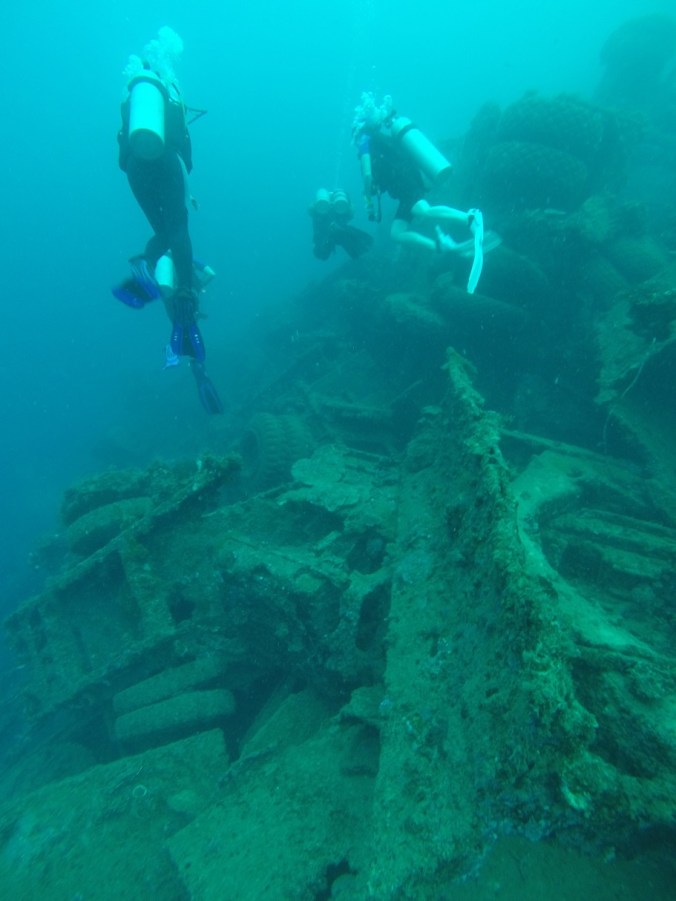
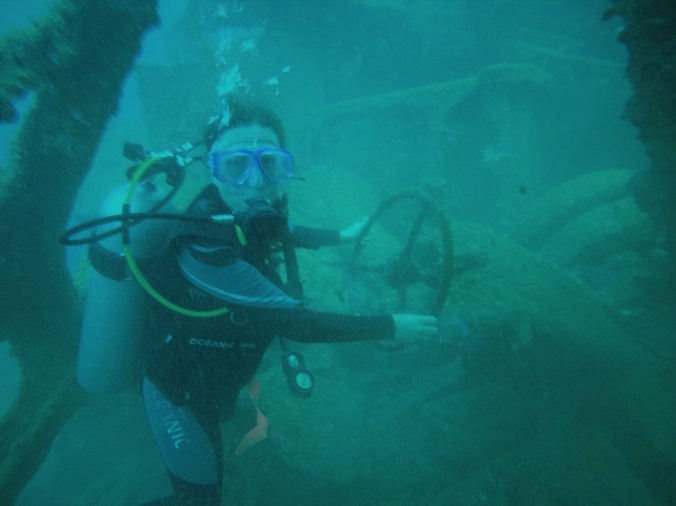
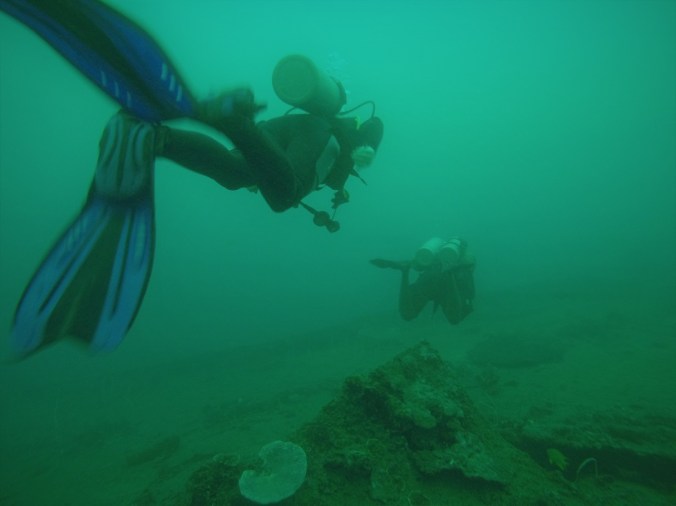
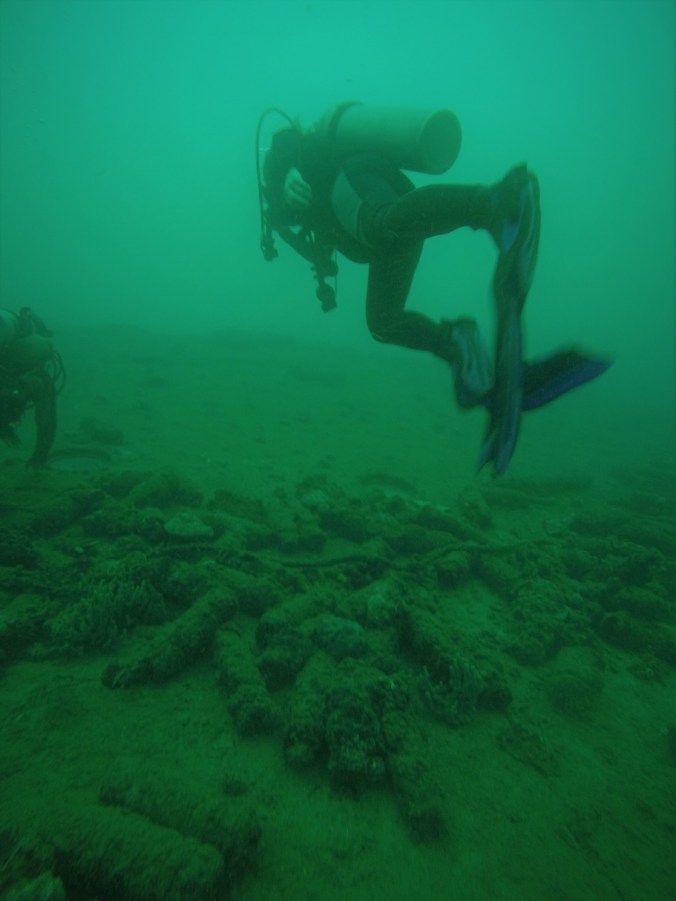
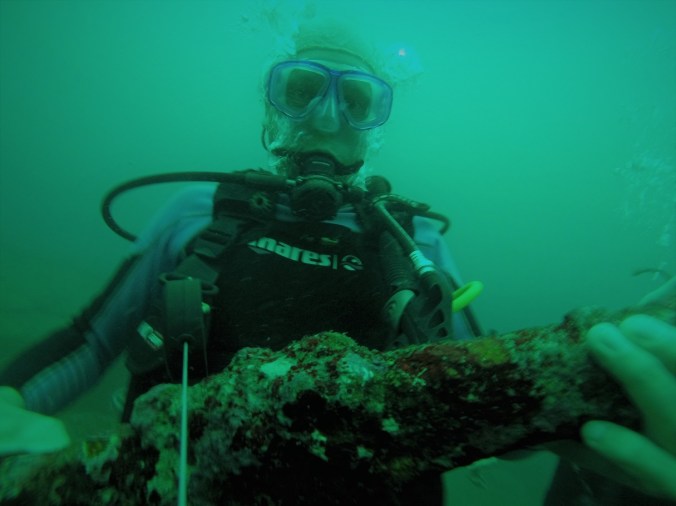
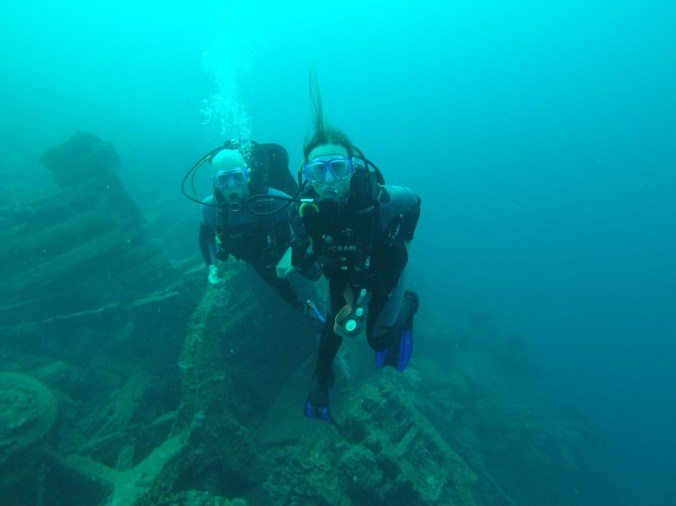
We put on our diving gear and sank down into the water to have a look at it all. Almost immediately, we found ourselves diving amongst upturned trucks and tanks. The ocean has covered the metal in coral and fish swim amongst the guns. It was my first taste of diving on wrecks, and I found it fascinating and ever so slightly scary.

DCIM100GOPRO

After the dive, we went back to Deco Stop for lunch. After lunch, we were picked up for our second dive, a wreck dive on the SS President Coolidge. Unfortunately due to a mix up we found that we had been picked up by the wrong dive operator, Allan Power and not Pacific Dive.  Allan Power has achieved almost God like status in dive circles, having been diving on the Coolidge for thirty years –  but his language when he realised what had happened was entirely human!  Alan Powers dropped us off at our dive site and gave Pacific Dive a call to let them know where we were.

dive15

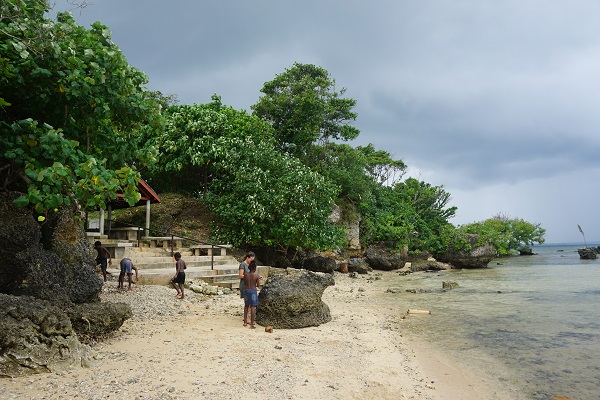
While we waited for our guys, we played with some local kids who were on the beach.  David skimmed stones, which they thought was very impressive. Then I started to search for shells and sea glass and they joined in. We decorated a rock with a garden of shells and sea glass. Pacific Dive turned up and we got kitted up to dive the Coolidge –  probably the most famous wreck dive in the world.

DCIM100GOPRO


The Coolidge started life in 1931 as a luxury liner. It was converted to transport troops in 1941. In 1942 she sailed into Luganville Harbour, unaware that the entire harbour had been mined as a defensive measure against Japanese ships. The first mine hit the engine room and killed one man, Fireman Robert Reid, instantly. A second mine hit the boat a few minutes later. The Captain ran the ship aground and immediately evacuated the ship. All 5,340 men got ashore safely, except for a handful who were stuck in the infirmary. Captain Euart returned through one of the sea doors and successfully rescued the men, but before he could get out the ship listed over and he went down with the ship. His body was not recovered until 2014, when it transported to America and buried with full military honours.

I was nervous about doing the dive, which was deep – in places as low as 30 metres (about 100 feet), a good 10 metres lower than we’ve dived before.  Almost as soon as we went down, we were swimming over the boat. I suddenly realised that the circular shape I was looking down on was a porthole. I swam down and rubbed the glass with my hand. I half expected a face to appear at the window. (Swimming over piles of live ammunition was also disconcerting!)

DCIM100GOPRO

As we explored the deck, we came across a large cooking pot filled with gas masks, helmets and a portable radio. Alongside the cooking pot lay a collection of rifles. They were covered in rust and barnacles but were still recognisably guns. The soldiers had planned to return to the boat and recover their possessions but they never did.Next we passed a large machine gun and saw huge shells standing ready on a rack.

DCIM100GOPRO

David, our dive instructor, suddenly dropped off the edge of the boat and beckoned me to follow. As I went down after him, I had a real sense of how deep we were. It was far more dark and much, much more spooky! “Like, yikes! A haunted wreck!” We checked out a couple of cargo holds and then began to ascend again. Like, phew!

DCIM100GOPRO

Back on dry land, I was filled with a sense of achievement. I had done a wreck dive – and dived to 30 metres. We had only just scraped the surface, of course. The Coolidge is the largest wreck in the world with many amazing features which we didn’t go anywhere near deep enough to see.  However, as an inexperienced diver, I found it a wonderful introduction to wreck diving  – and a sight which will haunt my dreams.

DCIM100GOPRO