Today, we decided to venture out of our comfort zone and head up North. North Martinique is a more sparsely populated and mountainous region, better known for its agriculture than its tourism. However, with the growth of ecotourism, this may change.The plan was to drive through Fort de France, along the coast, passing through Shoelcher, Case–Pilote, Le Carbet and the old capital of St-Pierre, until we reached the small fishing town of Le Precheur.
The first part of the drive was somewhat hair raising. It was a public holiday and the cycling clubs were out in force. Competitive cycling seems to be as popular in Martinique as it is in France. Hats off to them! Cycling in this heat – and in lycra – takes real dedication.
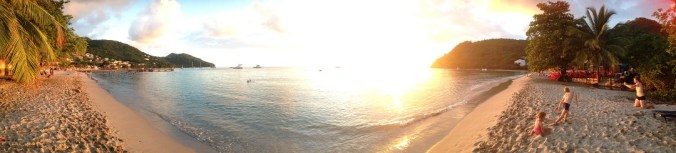
We continued to drive for another hour, not stopping until we reached Le Carbet, where we pulled in to look at the beach. The beach itself was very beautiful, but it wasn’t enhanced by a handful of rundown beach cafes. On closer inspection, we realised that the cafes had suffered serious storm damage. The jetty was also smashed up. My guess is that Hurricane Maria had more impact up here than it did in the South.
Paris of the Antibes
Our next destination was St-Pierre, which was originally the capital of Martinique, one of the most sophisticated cities in the Caribbean, known as the ‘Paris of the Antibes’. Tragically, it was destroyed by the eruption of Montagne Pelee in 1902 and the entire population wiped out. It was eerie driving through the town – many of the old buildings have been left as they were and are slowly falling apart. The skeleton of an elegant old house on Rue Victor Hugo was boarded up, and the words ‘Jamais oublie’ graffitied all over the boards. As we drove out the town, I was acutely aware of Mont Pelee looming over us.
Eventually we came to Le Precheur, which I had read was a pretty fishing village. However, my immediate impression was how poor and run down it looked compared to villages in the South. Just when I was thinking it was time for some public investment, we came to a massive shiny new bridge which I read cost a whopping 8.5 million euros to build.
After Le Precheur, the road started to get narrower and more potholed. Just when we were thinking of giving up, I spotted a sign to ‘L’Habitation Ceron’ which jogged a memory – we decided to take a look. And entered another world.
A forgotten world
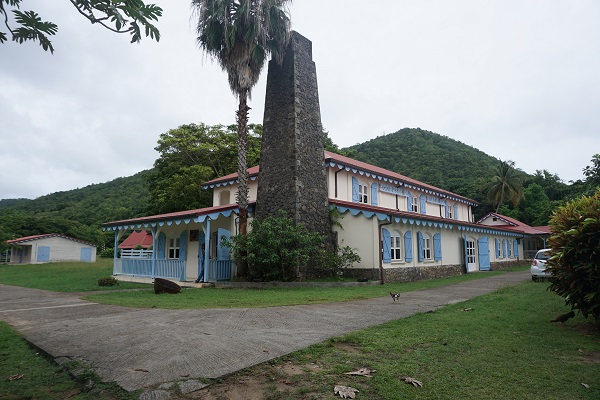
L’Habitation Ceron is an old sugar plantation with a water wheel which dates back to the 17th century. Today, it has become a very beautiful tourist attraction. The main attraction is the garden which is running with rivers and streams and filled with beautiful mature trees and plants which showcase the biodiversity of Martinique.
There’s a Zamana tree which is so huge, its canopy is almost a hectare wide (that’s 10,000 square metres, or 2.4 acres). It is a somewhat ‘chic’ place with surprisingly attractive staff and an eye wateringly expensive gift shop. It has a lovely wooden bar and restaurant set within the gardens. The garden is wheelchair friendly, and perhaps because of this, there were a disproportionate number of young French families with prams and pushchairs in tow.
After enjoying the feel of the river on my feet, and enjoying the shade of the trees, we decided to treat ourselves to the restaurant, and had a very good lunch which featured a number of products grown on site. We were excited to try the ‘ecrevisses fraiches’ which they say they fish from the streams at night, but were disappointed to be presented with an average plate of prawns. However, the chocolate fondants we finished with were delicious and could well have been made from chocolate produced on site, as claimed.
Don’t go chasing waterfalls
After Ceron, David was keen to continue a little further along the coast road. It soon got very exciting, the road pitching and plunging up with mudslides and pot holes everywhere. Around the next corner, the road ran out completely. The only way to continue from this point to the next village (Grand Riviere) was on foot. A 20 kilometre hike, apparently. And yet, there were hoards of cars parked up at the end – why? I’ve since discovered that there is a waterfall about 45 minutes walk from there. Perhaps we will return another day, but for now, we decided to turn around.
At St-Pierre, we took a sharp left towards Fonds-St-Denis, a charming, almost Alpine-like village high in the rainforest. It was beautiful up there, but the driving took nerves of steel. Fortunately, David was in the hot seat – and there was very little traffic so it didn’t matter that he had to veer onto the wrong side of the road to avoid the odd mudslide.
At the end of this road, we happened across another waterfall, the ‘Cascade du saut du Gendarme’. Perhaps because it was a public holiday, this was not a very peaceful spot. There was a large picnic underway complete with dancing, singing and rum. There was a macho thing going on with young men ‘daring’ to put their heads under the waterfall – but by English standards it wasn’t cold at all, so this middle aged English woman couldn’t resist showing ‘em how it’s done!
Lost at sea

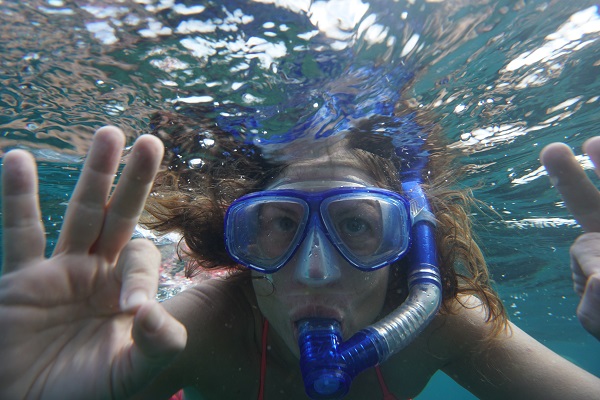
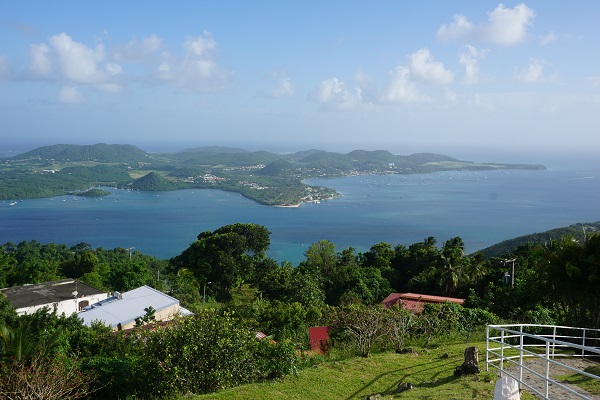
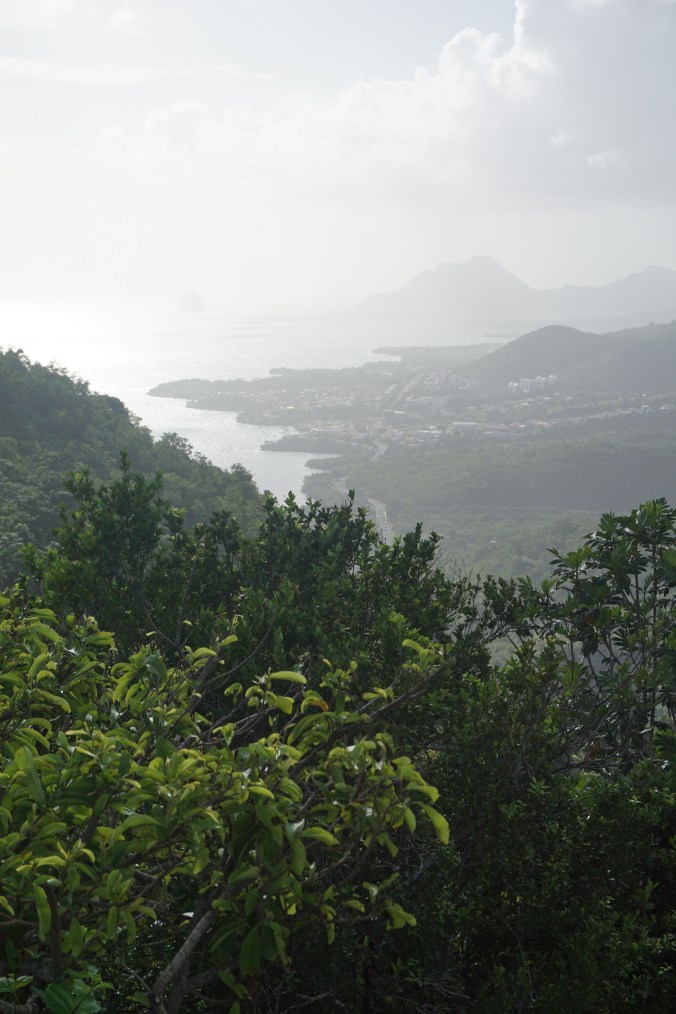
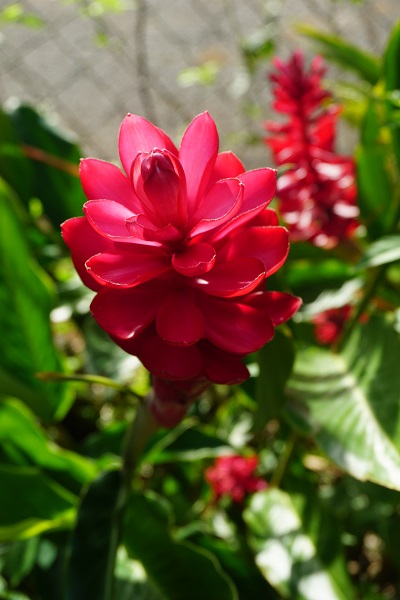
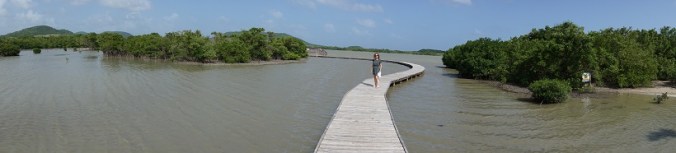
Stop press: David took an amazing array of photos for this post, but sadly they are missing in action. He was experimenting with some under water photography when the waterproof casing came apart. His lovely camera is no more, sob, sob. We’ve tried looking for a replacement out here, but no luck, so for now, we have to make do with a phone camera.





 Senior gap year