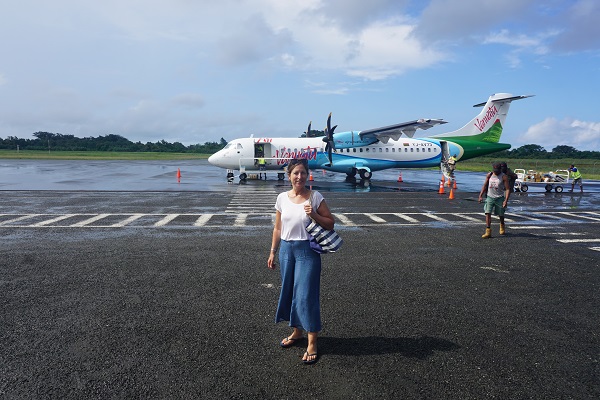
We wanted to explore other parts of Vanuatu apart from Efate Island. Espirito Santo was recommended to us by friends of Lu and Tim (the friends we are staying with on Efate). It is particularly well known for its scuba diving, which we want to do more of – so we took a small plane from Port Villa and just over an hour later, we arrived in Luganville, Santo’s capital, and Vanuatu’s second biggest town.
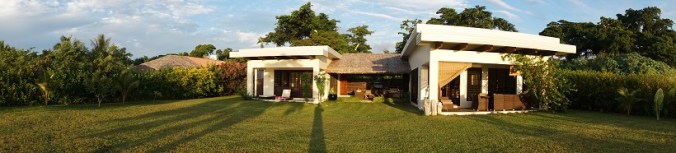
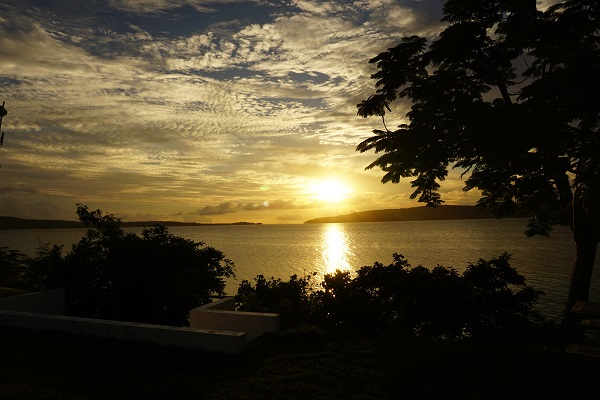
A taxi met us and took us up to our hotel, Deco Stop sits on a hill above Luganville. The hotel is a very cool and relaxing spot. The design is inspired by traditional Vanuatan architecture and decorated with traditional art. The name ‘Deco Stop’ references the scuba diving term ‘decompression stop’ which gives a clue to the clientele they attract! It is run by a lovely Australian couple Kim and Ben and staffed by local women who serve up super fresh local food. There’s a huge covered area which incorporates a deck with pool, seating areas and restaurant, all looking out over the South Pacific with Aore Island on the other side of the bay.
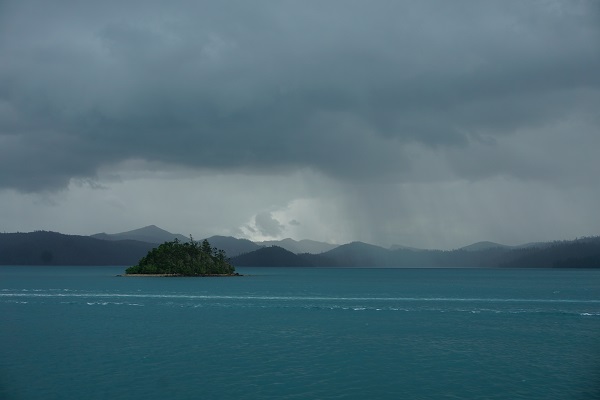
Unfortunately the views were obscured on the first night when a heavy rainstorm hit. Undeterred, David got on the phone and booked a couple of scuba dives for the next day. Looking out over the rain swept bay, I wondered privately if we should have stayed on Efate. Would the sun come out or would our dives be rained off?
That night I found it hard to sleep. The bed was comfortable but the wildlife on Santo was in full throat, especially the dogs. Just as I dropped into a deep sleep, I was woken by someone shaking me. No, someone was shaking the bed. I turned to David and found him looking at me in alarm. No one was shaking the bed. It was an earthquake!! Fortunately, it was over in a few seconds. Still, it was a shock and a tiny taste of Vanuatu’s reputation as a dangerous place to live owing to the frequency of natural disasters – earthquakes, cyclones, volcanic eruptions. This combined with a lack of water, sanitation and resources to deal with emergencies have put it at the top of the United Nations most ‘at risk’ places in the world. As I write this, the people of Ambae Island are being taken from their homes and resettled on neighbouring islands due to the eruption of Manaro volcano.
The next morning dawned bright, if somewhat cloudy, and we were picked up from the hotel at 8 am by Scott and David of Pacific Dive. Scott is the very youthful owner of this great dive shop which is based at the Espiritu Hotel in Luganville. He is fortunate to have David as part of his team – David is a very experienced instructor, a Ni-Van (the local term for all Melanesian ethnicities originating in Vanuatan) who has been diving on Santo for 30 years.
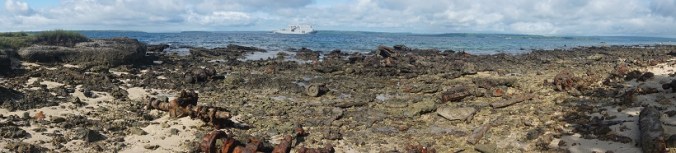
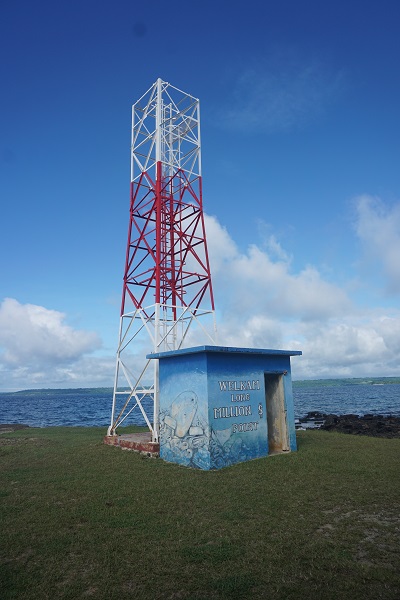
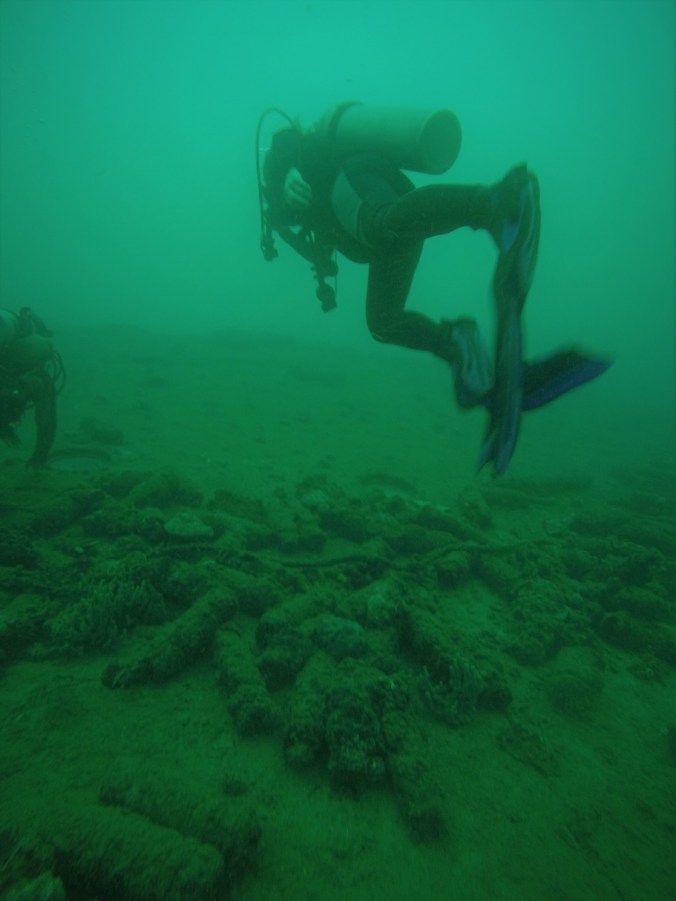
Our first destination was Million Dollar Point. At the end of World War II, the Americans couldn’t decide what to do with all their machinery – the trucks, the cranes, the tanks. They offered it to the French and the English for a knockdown bargain price but they both refused, reasoning that the Americans would leave it behind anyway and then they could have it for free. Picqued, the Americans made the decision to spite the French and the English and bulldozer the whole lot into the sea. A scene of waste and environmental destruction which shocked the residents of Santo and is still shocking today.
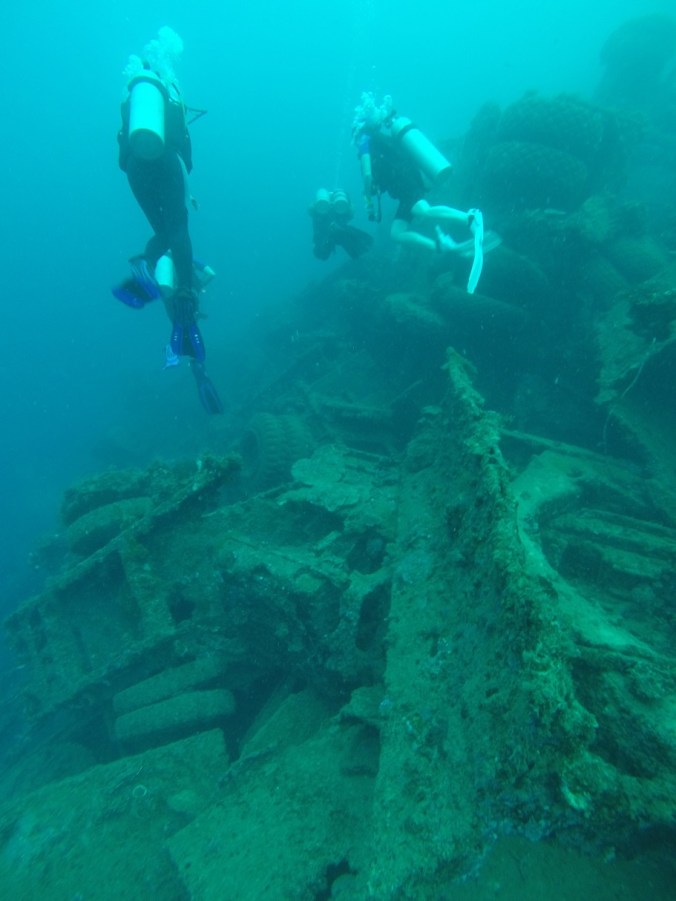
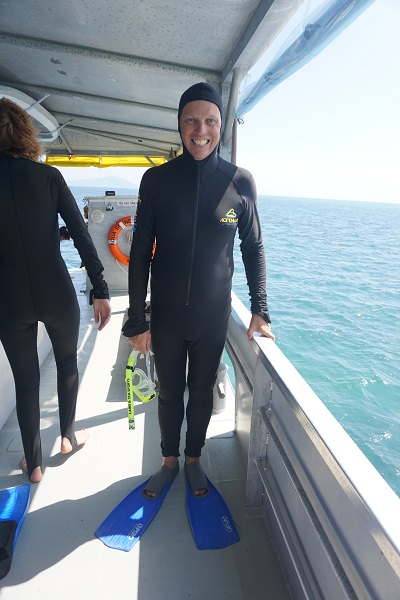
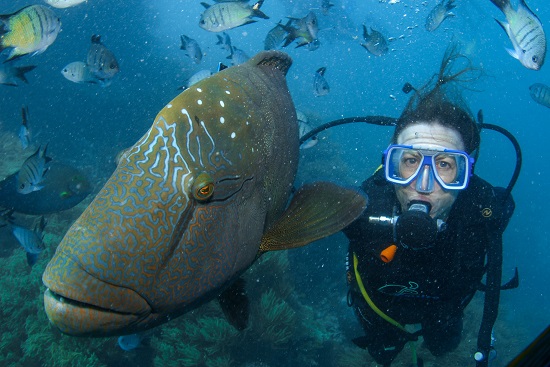
We put on our diving gear and sank down into the water to have a look at it all. Almost immediately, we found ourselves diving amongst upturned trucks and tanks. The ocean has covered the metal in coral and fish swim amongst the guns. It was my first taste of diving on wrecks, and I found it fascinating and ever so slightly scary.
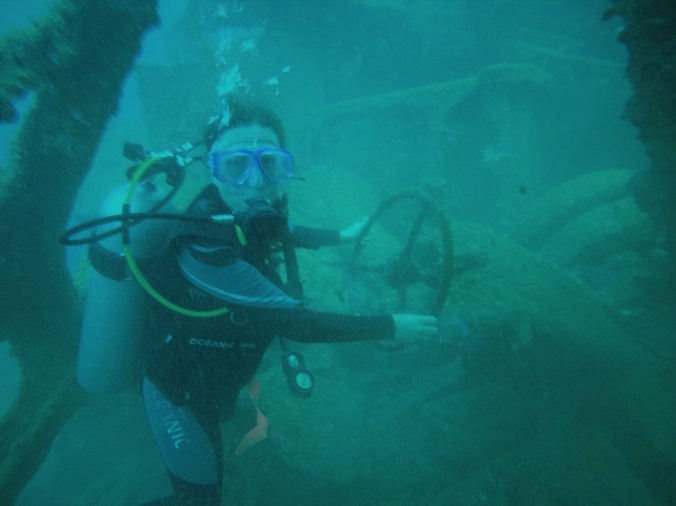
After the dive, we went back to Deco Stop for lunch. After lunch, we were picked up for our second dive, a wreck dive on the SS President Coolidge. Unfortunately due to a mix up we found that we had been picked up by the wrong dive operator, Allan Power and not Pacific Dive. Allan Power has achieved almost God like status in dive circles, having been diving on the Coolidge for thirty years – but his language when he realised what had happened was entirely human! Alan Powers dropped us off at our dive site and gave Pacific Dive a call to let them know where we were.
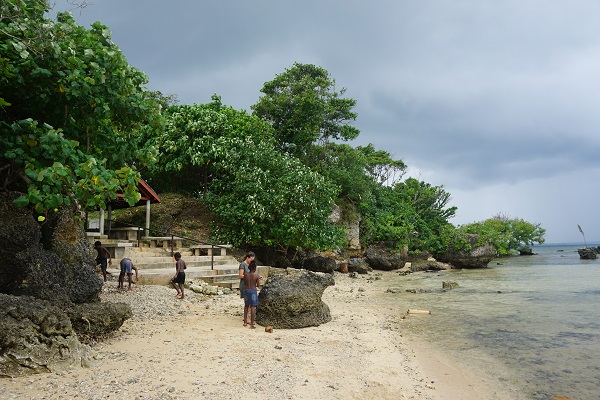
While we waited for our guys, we played with some local kids who were on the beach. David skimmed stones, which they thought was very impressive. Then I started to search for shells and sea glass and they joined in. We decorated a rock with a garden of shells and sea glass. Pacific Dive turned up and we got kitted up to dive the Coolidge – probably the most famous wreck dive in the world.
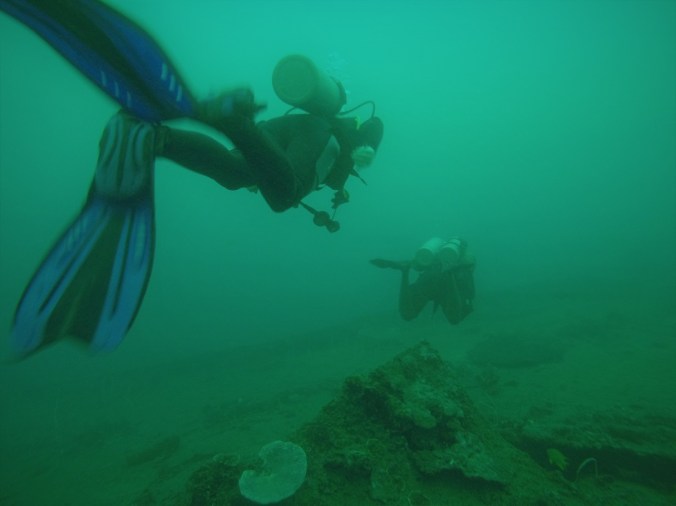
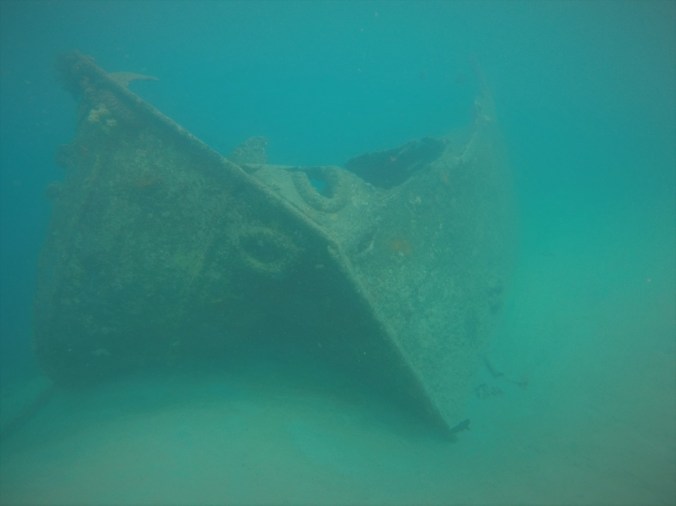
The Coolidge started life in 1931 as a luxury liner. It was converted to transport troops in 1941. In 1942 she sailed into Luganville Harbour, unaware that the entire harbour had been mined as a defensive measure against Japanese ships. The first mine hit the engine room and killed one man, Fireman Robert Reid, instantly. A second mine hit the boat a few minutes later. The Captain ran the ship aground and immediately evacuated the ship. All 5,340 men got ashore safely, except for a handful who were stuck in the infirmary. Captain Euart returned through one of the sea doors and successfully rescued the men, but before he could get out the ship listed over and he went down with the ship. His body was not recovered until 2014, when it transported to America and buried with full military honours.
I was nervous about doing the dive, which was deep – in places as low as 30 metres (about 100 feet), a good 10 metres lower than we’ve dived before. Almost as soon as we went down, we were swimming over the boat. I suddenly realised that the circular shape I was looking down on was a porthole. I swam down and rubbed the glass with my hand. I half expected a face to appear at the window. (Swimming over piles of live ammunition was also disconcerting!)
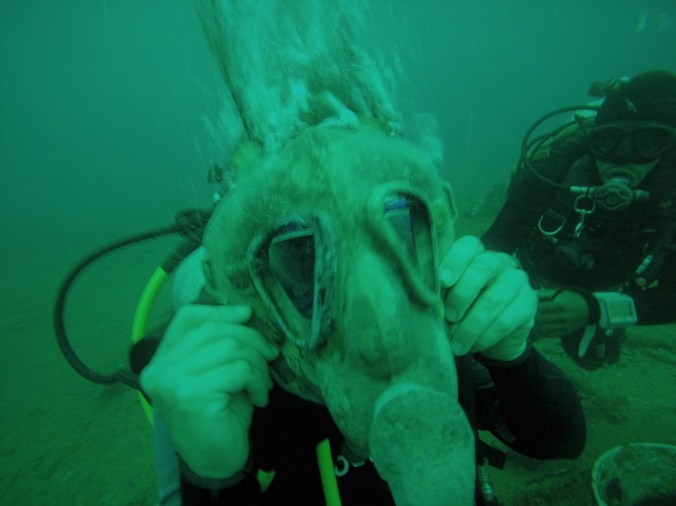
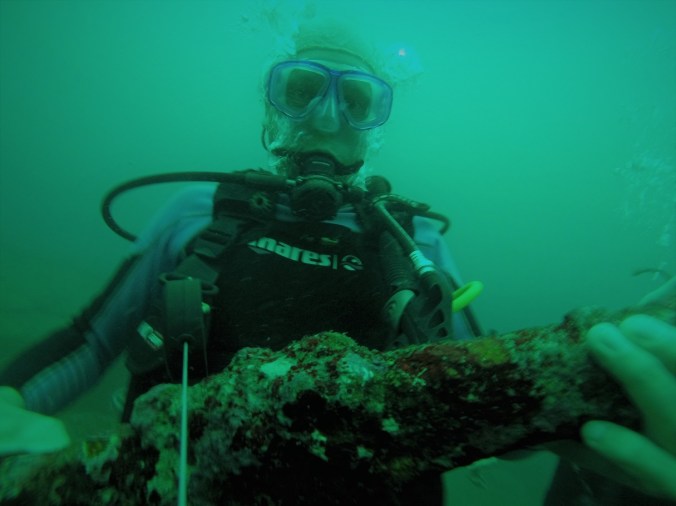
As we explored the deck, we came across a large cooking pot filled with gas masks, helmets and a portable radio. Alongside the cooking pot lay a collection of rifles. They were covered in rust and barnacles but were still recognisably guns. The soldiers had planned to return to the boat and recover their possessions but they never did.Next we passed a large machine gun and saw huge shells standing ready on a rack.
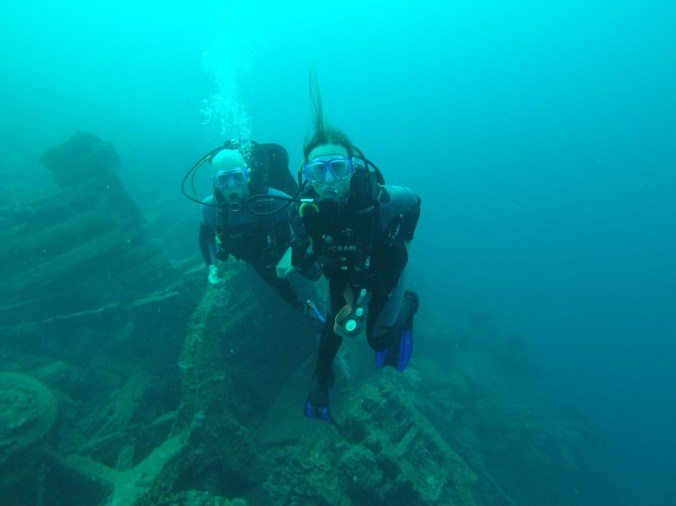
David, our dive instructor, suddenly dropped off the edge of the boat and beckoned me to follow. As I went down after him, I had a real sense of how deep we were. It was far more dark and much, much more spooky! “Like, yikes! A haunted wreck!” We checked out a couple of cargo holds and then began to ascend again. Like, phew!
Back on dry land, I was filled with a sense of achievement. I had done a wreck dive – and dived to 30 metres. We had only just scraped the surface, of course. The Coolidge is the largest wreck in the world with many amazing features which we didn’t go anywhere near deep enough to see. However, as an inexperienced diver, I found it a wonderful introduction to wreck diving – and a sight which will haunt my dreams.






 Senior gap year