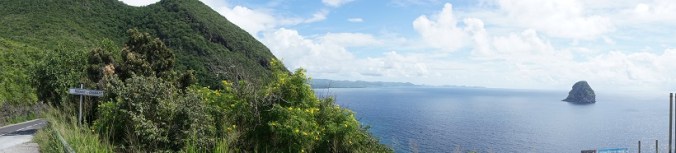
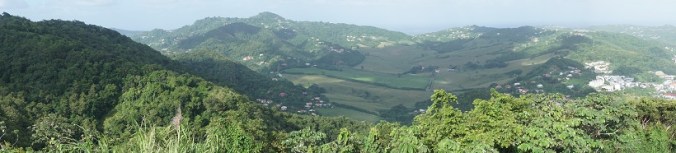
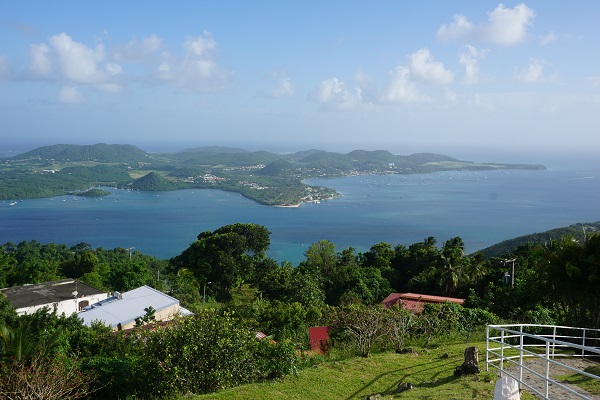
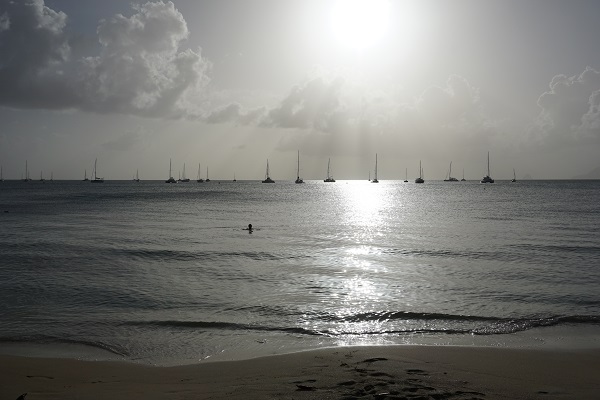
Today we drove South from Anses d’Arlet towards Pointe du Diamant (Diamond Point). We were soon in very rural surrounds, the road steep and twisty with verdant hills to our left and the coast to our right. Tethered goats grazed by the side of the road and colourful wooden fishing boats dotted small beaches. In places, the greenery ran all the way down to the sea.
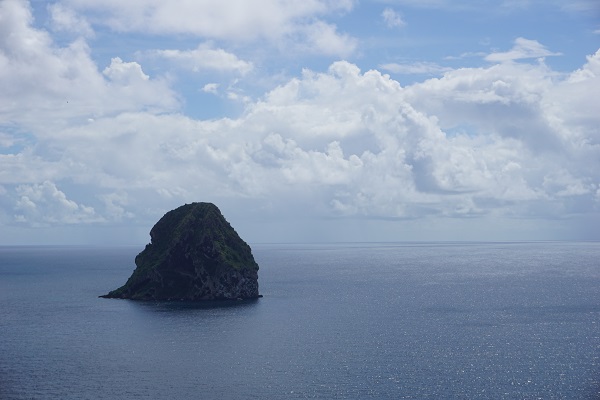
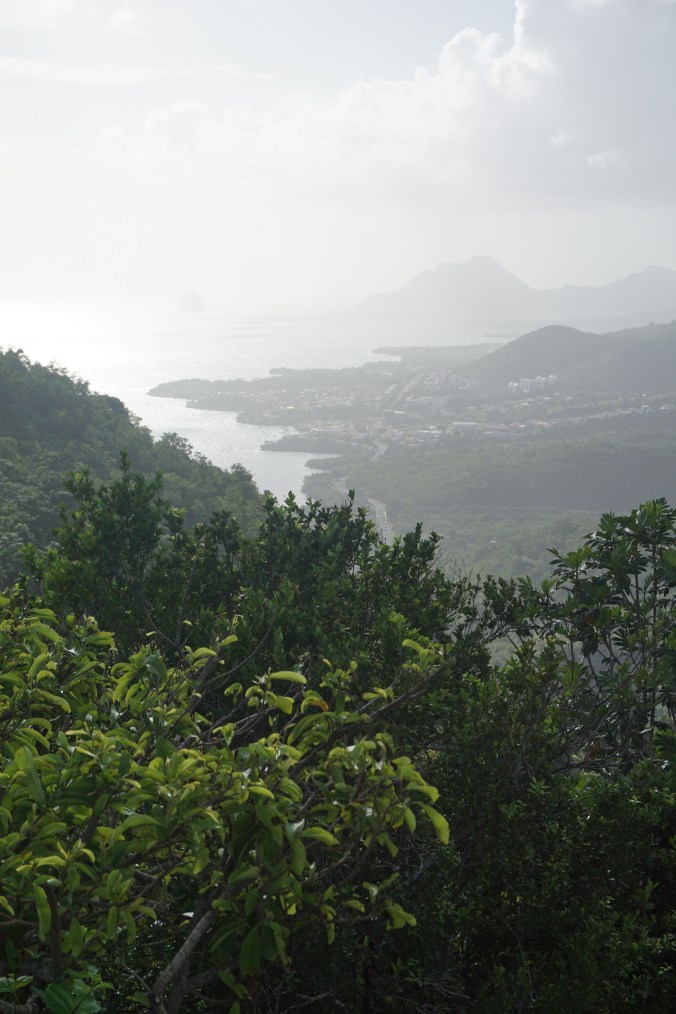
As we rounded the Pointe du Diamant, we pulled into a layby to admire the view of the windswept Diamant Plage and the Rocher du Diamant (Diamond Rock), a distinctive steep sided rock which rises 600 feet above sea level. It has the unusual distinction of being declared a British ship in 1803 by British Commander Samuel Hood. ‘HMS Diamond Rock’ was occupied by the British for 17 months and used to defend the port of Fort de France before a French/Spanish battalion managed to defeat them in the Battle of Diamond Rock. Some achievement, bearing in mind how hard it would be to get up on top of that rock using only ropes and pulleys, let alone how to get water, supplies and cannons up there. Nowadays, it is best known as a magnificent dive site: apparently you can dive right under the rock and out the other side, as long as you’re willing to take on the dangerous currents.
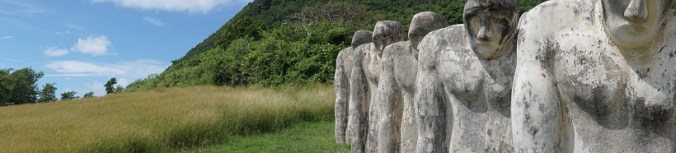
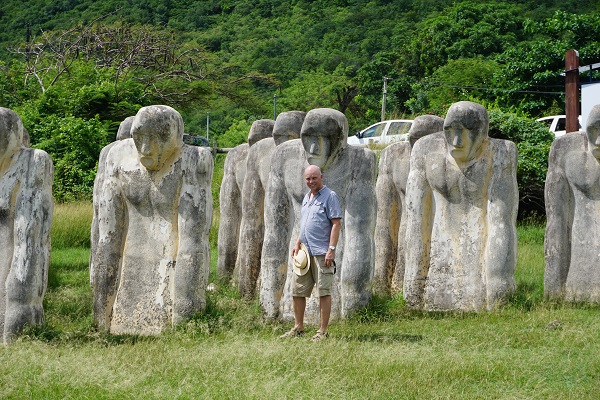
Round the next corner, there’s another historic site marked by a large, powerful sculpture by Laurent Valere. It was erected in 1998 to commemorate the 150th Anniversary of the end of the slave trade in the French West Indies. The importation of slaves had been made illegal in 1815, but the trade continued illicitly for many more years, with ships landing at night to avoid detection. On the night of April 7, 1830, a ship carrying a cargo of Africans sank off Diamond Point. More than 40 men, shackled together in the ship’s hull, drowned.
The sculpture consists of 20 massive figures. The figures are arranged in a triangle, in reference to the triangular slave trade between France, Africa and the West Indies. They are angled to face the Gulf of Guinea, where their journey began.
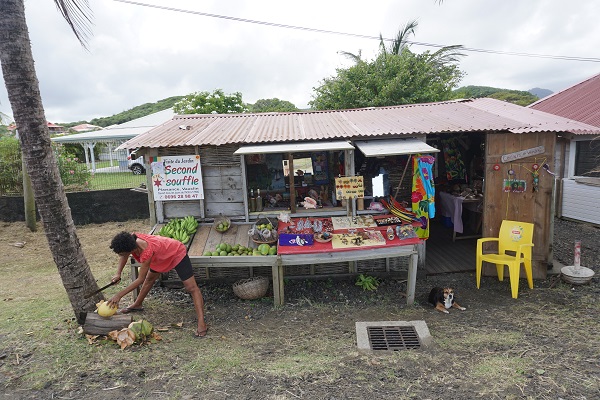
Arriving in the town of Diamont itself, we went to a market, and were heckled by fruit and veg sellers all competing for a sale. We were powerless to resist a young woman who peeled us each a small banana to prove how sweet they were. David stopped for a few minutes to watch some locals fishing off the end of the jetty.
Back home that evening, as dark fell, we heard the amplified sound of a woman singing rising up from the village. When she reached the chorus, other voices joined in. We walked down the hill to find out what was going on, and found small cluster of locals singing and dancing under a shelter between the jetty and the church. The women were dressed in colourful skirts and shawls which swished and swirled as they danced. We watched for a few minutes, but felt as if we were intruding on a private event, so we moved quietly off.









 Senior gap year