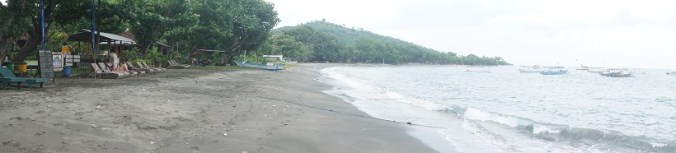
It is our last day in Permuteran, and I’m starting to realise what a special little place it is. The people are super friendly and will do anything to help you. There are no hawkers on the beach and prices tend to be fixed. The village community really make the effort to preserve the natural beauty of the place – they’re setting an example which the rest of the island would do well to follow.
It wasn’t always like this. Before 2000, Permuteran’s corals had nearly all died due to a combinatio of bleaching, high temperatures caused by global warming, and destructive fishing practices like reef bombing and use of cyanide. Then a conservation project was launched called the Biorock project. A number of artificial metal structures have been created and placed on the seabed. The structures have a light voltage current running through them which helps the coral to grow 5 to 7 times as fast. The structures are covered with an assortment of coral, some newly planted, others already well established.
It is heartening to see the assortment of fish and other marine life which have been attracted by the new reef. You can snorkel round the ‘trail’, enjoying the fish and the coral, but also having fun working out what the structures are – I spotted a buddha, a bicycle, and a temple. A new structure goes in every year.
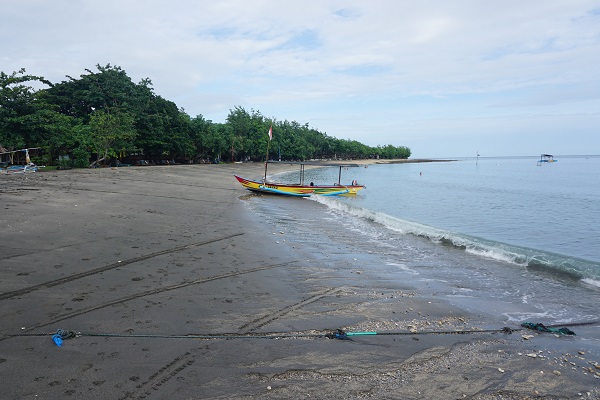
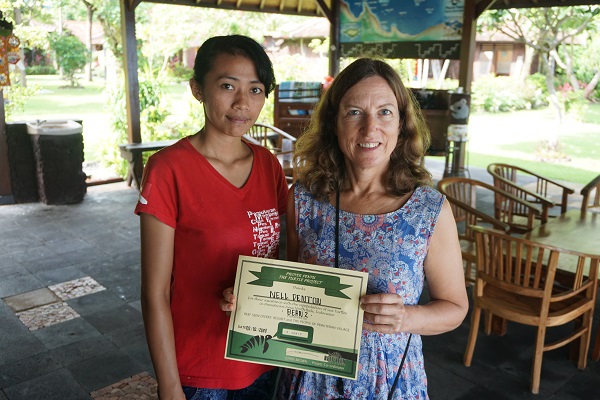
A Biorock centre provides education and guidance for visitors and school trips. It has a scheme to ‘adopt a baby coral’ – they plant it on one of the structures, and you receive a certificate. They’ll send you a video of your coral in situ and update you on how its doing!
The village has established a Marine Protected Area around the project and a community-based team enforce the ban on destructive fishing practices. It’s all been funded by a conservation tax on local businesses such as dive centres and restaurants, who benefit by the increased number of tourists – and by visitor donations, of course.
A second conservation project further along the beach is a turtle hatchery and sanctuary for injured turtles. We went along to visit it and heard how locals bring them the eggs and are paid for them. Previously, eggs were often dug up and eaten or given as offerings at the temple. The eggs are buried in sand and then hatched out.
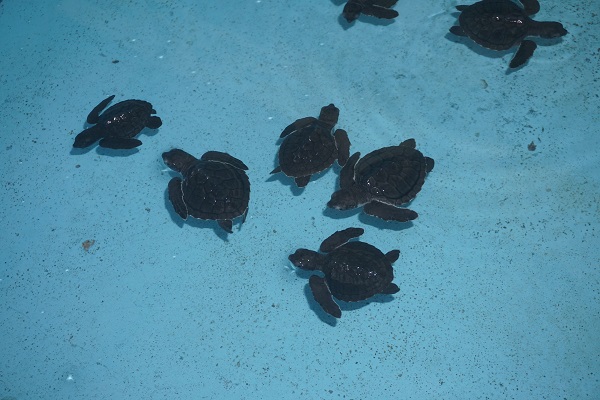
We saw a couple of tanks full of cute little baby turtles swimming about. Some were only a week old and the others were three months. There were also some full sized turtles which had been rescued from fishermen’s nets. In the past, these turtles would have been eaten, but now the fishermen bring them to the Sanctuary and receive a cash sum for their trouble. Visitors to the Sanctuary are invited to release a baby turtle in return for a donation of 100,000 rupees (around a fiver) to the sanctuary. You can release a big one, too, but it’ll cost more. I think it’s a great idea – although cynical Dave did wonder if the fishermen sit and wait for the turtles to be released and then go and catch them again!
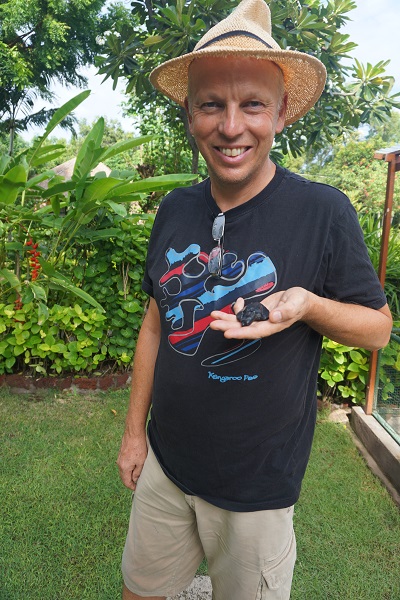
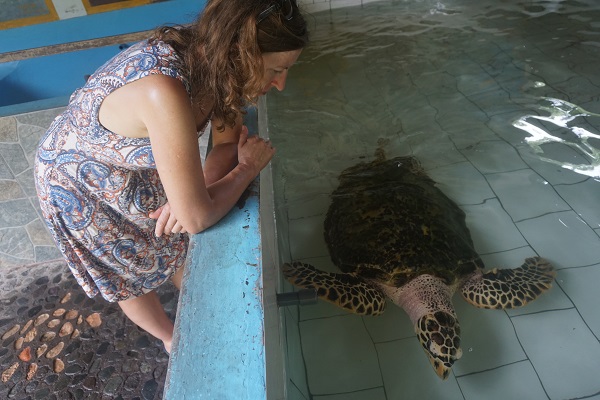
There was one huge Hawksbill turtle which is known as the ‘caretaker’ of the Sanctuary. Sadly, the staff said there are no plans to release him as he was caught and kept as a pet for the first six years of his life until he got so big that the family brought him to the Sanctuary. He doesn’t have the skills to survive in the wild.
David and I went along this morning to release a baby ‘Olive Ridley’ turtle. We called him ‘Bean 2’ in honour of our dog, Bean. We took him down to the sand and watched him go down to the water, turn round and come back up the beach again. In the end, I waded knee deep and released him in the sea. He perked up and swam away vigorously. Good luck out there, Bean 2!
This afternoon, we went out for a snorkel, and David was lucky enough to spot an adult Hawksbill grazing on the bottom. I wonder if he was born at the Turtle Sanctuary…?
 Senior gap year