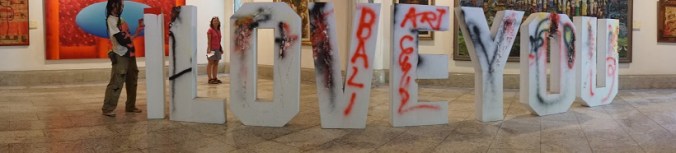
We have moved to Ubud, a Balinese town which is strongly associated with arts and culture. We are staying in another homestay, Mandia Bungalows, which is situated down a narrow alleys just off Monkey Forest Road. The set up is not dissimilar to our homestay in Permuteran – a nice double room with a verandah outside, overlooking a garden – but with one crucial difference: we are smack bang in the middle of a busy town. Our quiet, almost rural feeling, family run homestay is hemmed in on all sides by modern, high rise buildings.
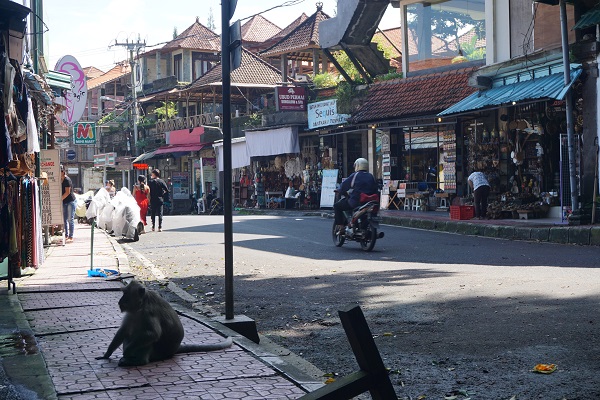
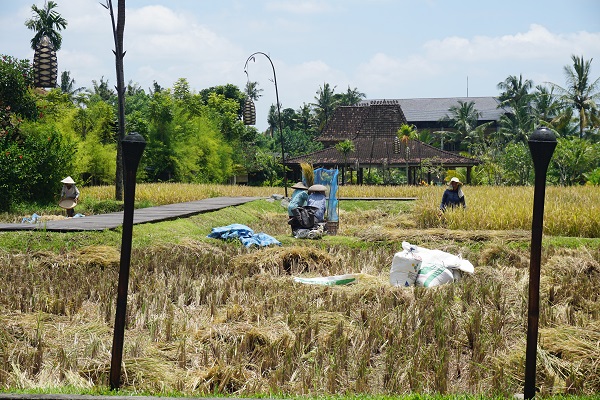
Such is the dual nature of Ubud. The streets throng with people and lined by hundreds of restaurants and shops selling everything from the usual tourist tat to handmade musical instruments and original artwork – but if you look beyond the road, you will see terraces of golden paddy fields, with women in traditional triangular hats harvesting the rice by hand. Ancient temples and traditional medicine practioners rub shoulders with coworking spaces and independent fashion labels.
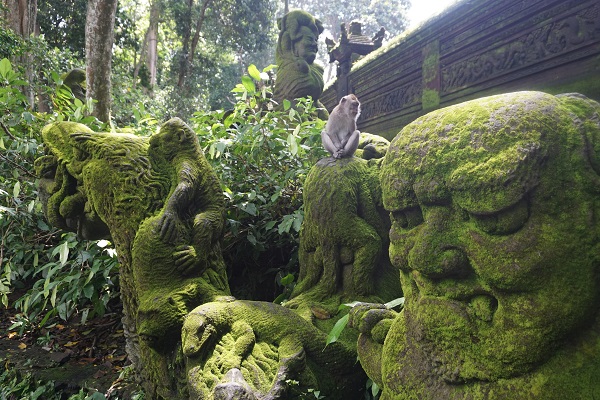
In the spirit of Ubud, we decided to divide our day in two and visit Monkey Forest Sanctuary in the morning and Agung Rai Museum of Art in the afternoon.
Monkey Forest Sanctuary wasn’t my first choice as I have to confess to being scared of monkeys, having been bitten by one once. However, since it is just round the corner from our homestay, I agreed to give it a try.
I’m glad I did. It’s a beautiful park with a lot more going for it than just monkeys. There are over a hundred species of trees, many of them very old, and the park has some beautiful sculptures and an impressive temple. And after hearing horror stories about how aggressive the monkeys are, it turns out that as long as you don’t bother them, they don’t bother you. Unless you’re carrying a plastic bag, in which case they’ll try to steal it. Or wearing a dress with a swirly skirt, in which case, they’ll have fun grabbing the dress.
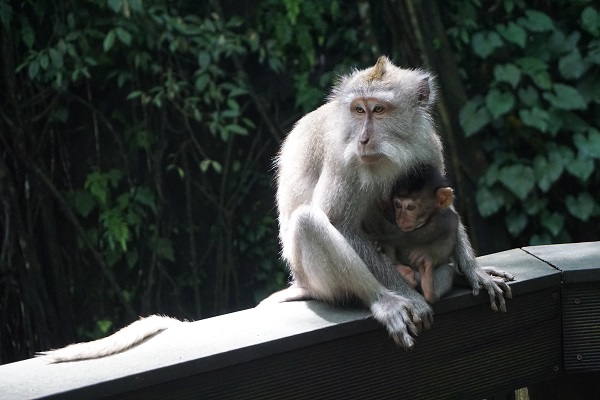
There are wardens all over the park, making sure you don’t get in to trouble. I saw a Japanese woman get too close to a monkey with a baby whilst trying to take a photo. The monkey ran at her and she shrieked, which only made things worse. Thankfully, a warden intervened.
Other wardens are selling bananas to feed the monkeys with. You to hold the banana above your head and they climb on your head and take it. I personally thought this a bad idea as it encourages the monkeys to see tourists as potential food sources, but the park clearly makes money from it.
The baby monkeys were so sweet and I loved the way they cling onto their mums – but the best thing was watching the monkeys play in the water. I didn’t realise monkeys can swim until now. They swim really well, keeping their heads under water, and are fearless about diving from a great height.
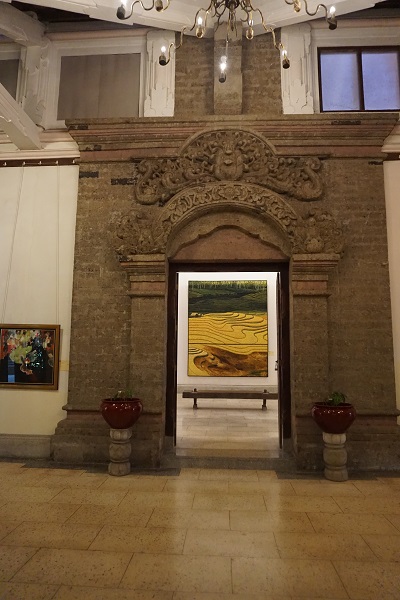
Agung Rai Museum of Art was a few minutes further South from the Monkey Sanctuary. It is not only a Museum of Art but an arts centre with a variety of classes and cultural events on offer. The impressive buildings are made in the traditional Balinese style and scattered about a beautiful garden. When we entered the garden, a pair of musicians were playing on xylophones. The peaceful sound merged with the sound of flowing water – there are many water features dotted about the garden.
The art is based in the private collection of Mr and Mrs Agung Rai. Agung Rai is an important collector who devoted his life to the preservation of Balinese art and culture. There are several important works by Balinese and Javanese artists and also by foreign artists who made their home in Bali in the 1930’s and 1940’s and contributed hugely to the development of art in Bali. These include the German primitivist painter Walter Spies. There is also some international contemporary work.
The ticket to the gallery includes a free glass of iced tea or coffee. As we made our way to the café, we spotted some photographs of Barrack Obama and family visiting the museum last year. Nice to know we’re in good company!
 Senior gap year