Surf’s up at Bondi Beach, Sydney

austb2

Bondi Beach is an iconic destination for visitors to Australia – and yet, despite the fact that this is my third trip to Sydney, I’ve never been to Bondi before. Time to head out there. Unlike Watson’s Bay, you can’t reach Bondi by ferry.  Stefan suggested we catch the bus, but instead we decided to walk there. Google maps tells me, it’s only five kilometres, but five kilometres feels quite long when you’re walking in 30 c plus, especially when walking up hill!
austb10

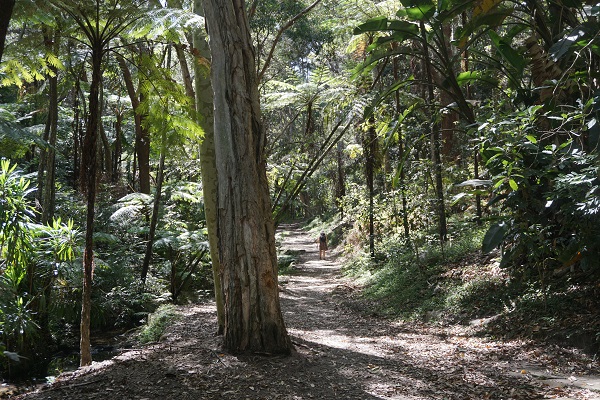
Most of the walk took us through quiet residential streets, but the nicest section went through Cooper Park, a large Bushland reserve which has been a public park for over a hundred years. The path winds along an ancient natural creek which follows the line of a volcanic dyke which dates back to the Jurassic period. No dinosaurs in sight but plenty of wet and muddy dogs enjoying a cooling dip!
austb1

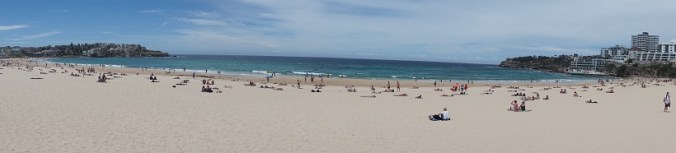
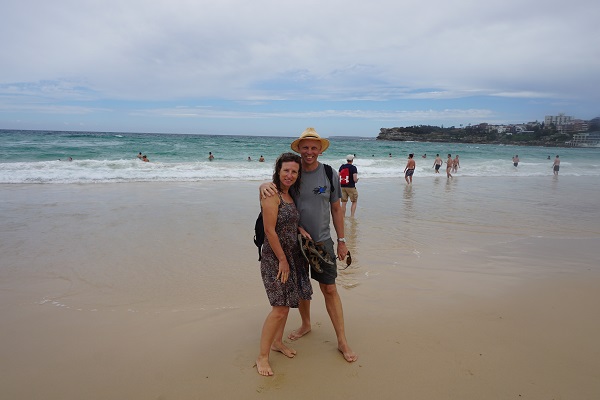
After an hour and a half, the houses began to give way to icecream parlours, funky cafes and organic supermarkets – welcome to Bondi! I can see why locals find it easy to lose a weekend in the Bondi Bubble. Soon, we could see the sea. First impressions? It’s not a very pretty town having been a working class suburb of Sydney until relatively recently. However, the long curved beach with fine white sand is lovely. David said it reminded him of Weymouth, but then, he always says that… There’s a wide grassy bank looking down over the beach which is dotted with people sunbathing and eating picnics. We joined them for a picnic.
austb3

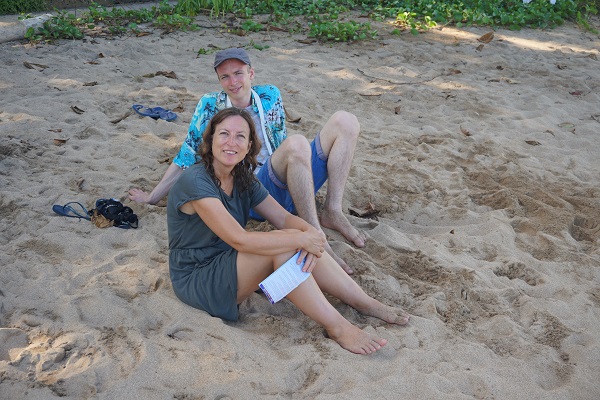
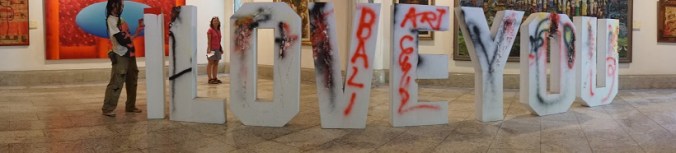
Walking down to the beach, the promenade was lined with street art, including a memorial to the victims of the Bali bombing in 2002. 202 people died. I was impressed to see water fountains with refill points for water bottles all along the front. England, take note! It was time to hit the beach and brave the Bondi surf – not on surf boards, it looked far too rough for newbies like us. Again, I was impressed to find free changing rooms with showers and lockers for valuables.

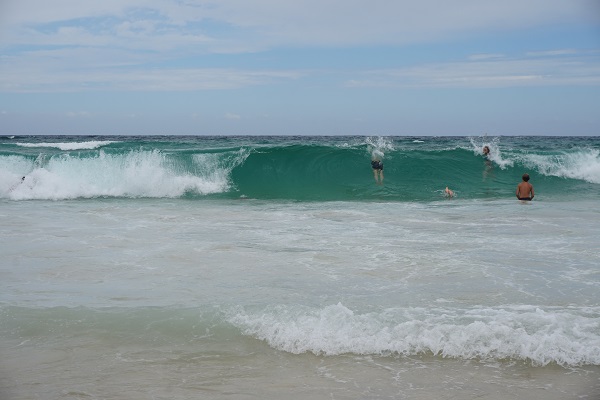
Once in the water, I had no time to feel surprised by the force of the surf – as soon as I was in, I was knocked off my feet and tumbled under the waves. I got up and tried again, only to be knocked down again. David was game to go in again, but I was in wimp mode.  The rip tides at Bondi are fierce and I wasn’t going to take any chances.
austb8

Once we were dressed, we walked down the beach, watching the swimmers and, further along, the surfers. At the far end of the beach there’s a huge salt water swimming pool called Bondi Icebergs which is almost as iconic as the beach.

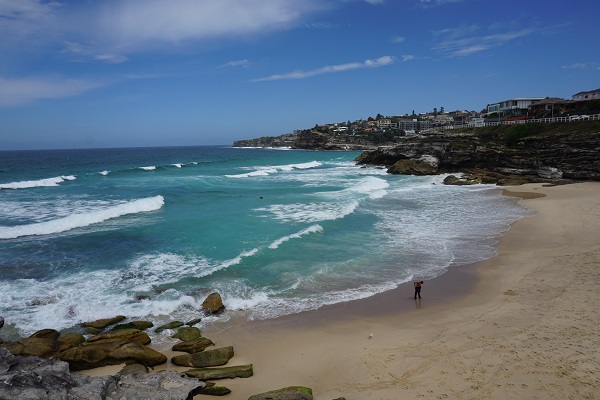
Above Icebergs, there’s a coastal walk which is one of the most popular walks in Sydney. It winds along the clifftop for 3.7 miles until it reaches Coogee Beach. We went about half way, passing the surfing beach, Tamara Beach until we reached Bronte Beach, a calm cove with a pretty ocean pool. We didn’t swim again, but hopped straight on a bus which took us up to Bondi Junction. From there it was a couple of kilometres easy stroll back to home sweet home, Double Bay.
austb4

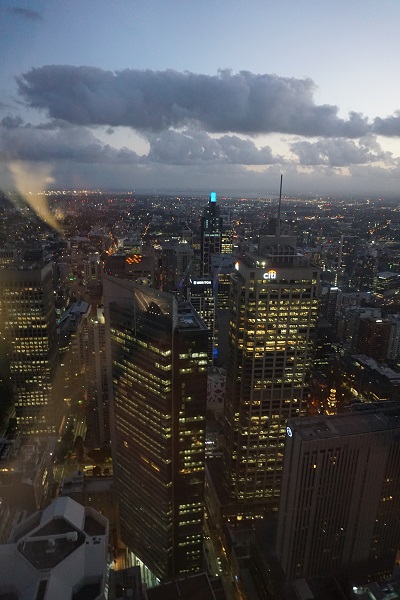
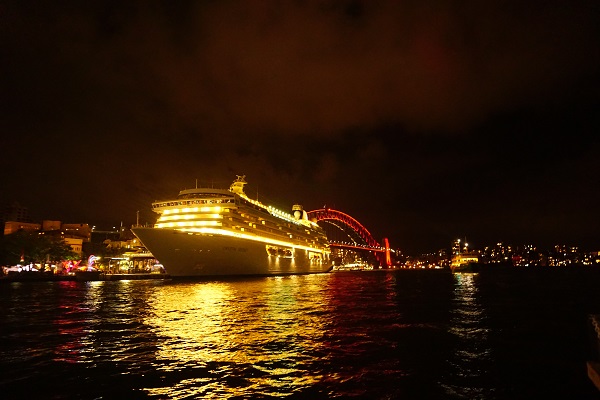
The day wasn’t over. David had booked dinner in the Sydney tower at the 360 bar and restaurant. We didn’t do anything for Valentine’s Day so this was our ‘romantic’ evening out. We took a ferry into Circular Quay about 7 pm. Arriving at the building, we took a lift 50 floors up.  After a drink at the bar, we took our seat at the table.
austb7.jpg

The view was spectacular, and constantly changing – it’s a revolving restaurant.  We saw the sunset and then gradually the lights came on all over the city.  Okay, it was overpriced and a bit of a tourist trap but overall, it was pretty romantic!
austb9


Beach life in Watson’s Bay, Sydney, Australia

austa1

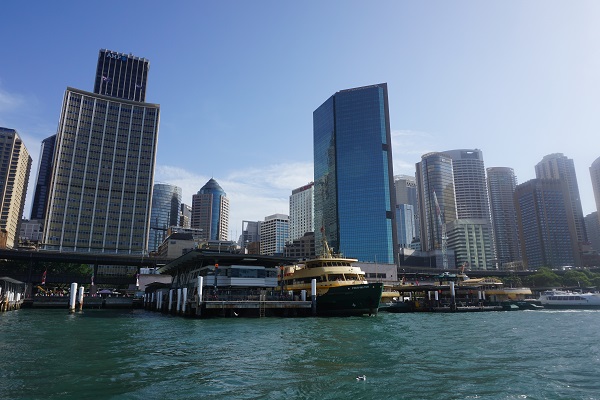
Energy renewed, we set off for a day at the beach – destination, Watson’s Bay, to the North East of Double Bay. To get there, we took a ferry back to Circular Quay in the centre of Sydney, and then took a ferry back out past Double Bay to Watson’s Bay. Apparently, there used to be a direct connection from Double Bay to Watson’s Bay but it’s now been scrapped, boo! However, the trip to Circular Quay was not wasted as we took the opportunity to do some shopping in the city centre. I needed pants! I lost a pair in the wash in Sanur and another pair seemed to have vanished, so new pants were definitely called for.
austa6

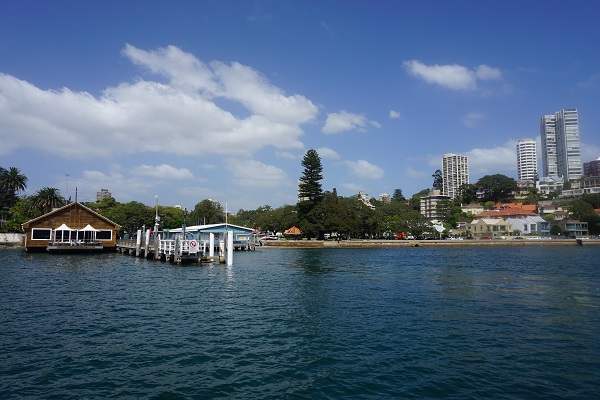
After our shopping, we were keen to get back on the ferry and take in the air and the views of Sydney which never get old. We saw a seaplane take off and a catamaran zipped by.

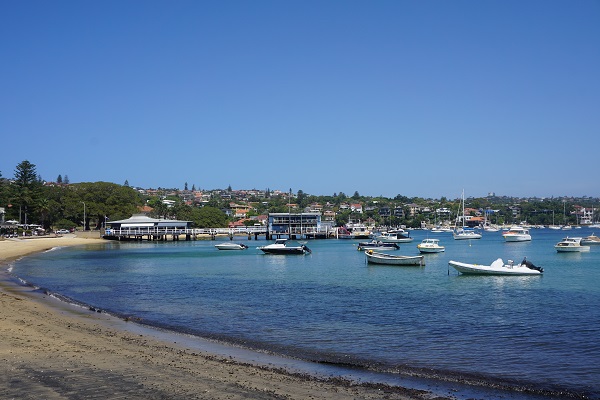
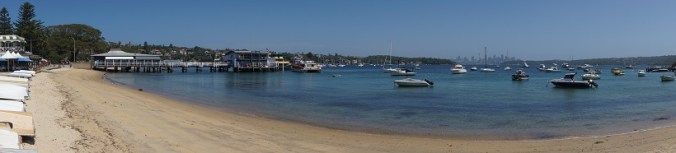
Arriving at Watson’s Bay, we found a pretty, old fashioned looking beach front with a large park called Robertson Park at one end and a promenade at the other. There were a multitude of outlets selling fish and chips, all bearing the famous name ‘Doyles’ There were people enjoying lunch in Doyles’s takeaway and Doyles’s traditional restaurant on the front, but with the temperature standing at 30 c, I wasn’t tempted by hot, fried food. Instead, we wove our way through the backstreets, past pretty wrought iron balconied cottages, until we came to Camp Cove.

austa2

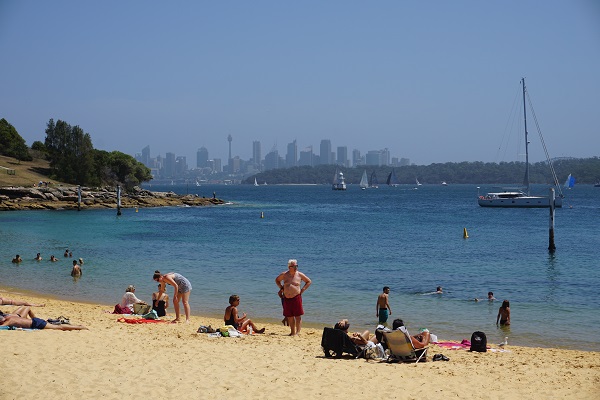
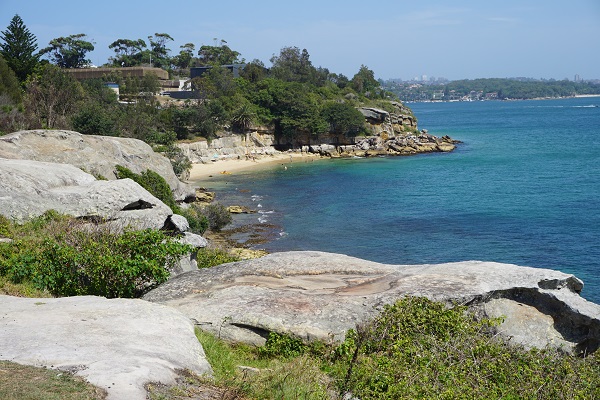
Camp Cove is a beautiful north east facing cove with a yellow sand and great views of Sydney harbour.  It is believed to be the first landing place for the first Governor of New South Wales Captain Arthur Phillip and a small party of marines in 1788. They were the first to call it Camp Cove. Today, we found numerous beach babes and surfer dudes enjoying a day at the beach. We ordered a salad and a homemade lemonade from a stall on the beach. This set us up for a walk known as the South Head Heritage Trail, a half a kilometre loop track around South Head.

austa3

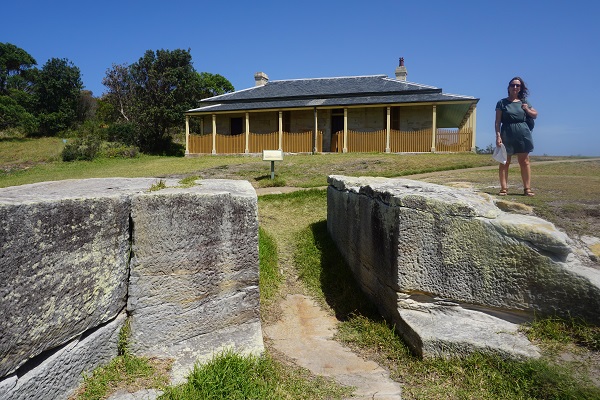
The trail took us round the stunning coastline where we soaked up the views and spotted various signs of naval defences dotted along the coast. The trail took us past the Hornby Lighthouse and the Lighthouse Keeper’s cottage. The lighthouse was built after the wrecking of the Dunbar in 1858. Apparently, the first lighthouse keeper was the only survivor from the Dunbar. Today, the lighthouse is still in operation, but the lighthouse cottage looks in need of some TLC.

austa5

On the way back to the Cove, we headed down some steep steps to a secluded cove known as Lady Bay Beach. Today, it is one of three beaches in Sydney where cossies (Ozzie slang for swimming costumes) are optional. We threw caution to the wind and threw off our clothes! All part of living adventurously. And, as I discovered as we climbed back up the steps feeling suitably refreshed, it has the advantage that you don’t have to cart a wet costume around with you.   We got back to the ferry to find we had a half hour wait. Fortunately, there was an ice cream seller close at hand and a large spreading tree in Robertson Park to eat ice cream under.

austa7


Living like a local in Double Bay, Sydney, Australia.

aust6

It’s been twenty three years since I was last in Sydney, and after one and a half days, I’ve decided I love it as much as ever. There’s an energy and confidence which is irresistible. And then there’s the climate. It was 23 c when we touched down in  Sydney at 7 am, rising to 34 c in the afternoon – a little hot even for me! Today is a very pleasant 28 c with a cool breeze coming off the harbour and barely a cloud in the sky.

aust5

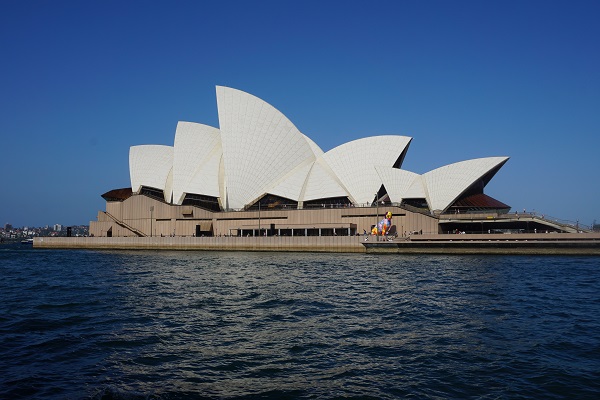
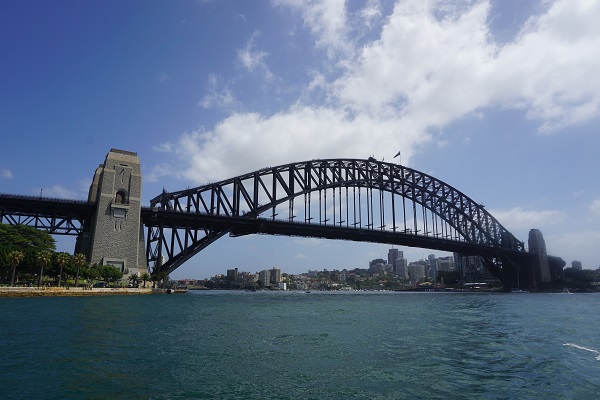
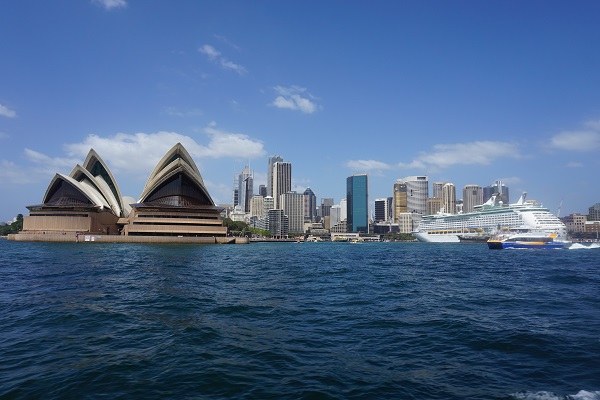
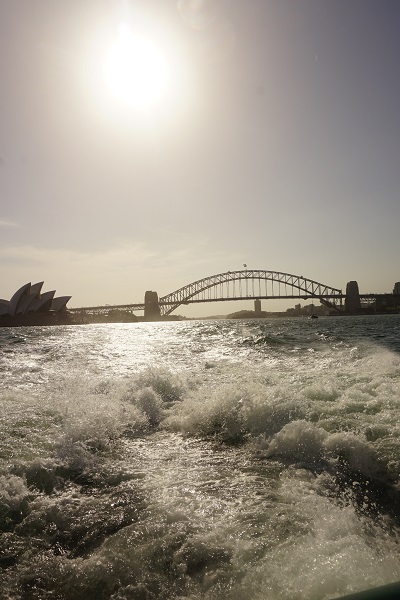
We’re staying at an Airbnb in Double Bay, one of the Southern beach suburbs. It’s a great place to be. Yesterday, we took a train from the airport to Central Quay (about half an hour) and then a ferry from there to Double Bay. The ferry ride is only fifteen minutes long, but it takes you past some of the iconic landmarks of Sydney: the Opera House, the Bridge, the Botanical Gardens.

aust2

After getting off the ferry at Double Bay Quay, it was five minutes walk to our new home, a ground floor apartment which belongs to Stefan, our lovely Airbnb host. Stefan is an Australian from Adelaide but he’s lived here for 25 years, so he knows the city well and he’s given us lots of tips. Yesterday afternoon (or arvo’, as the Australians say), we were too tired to do much after our overnight flight from Bali, and feeling the heat. Stefan recommended we stick on our ‘bathers’ and check out the harbour swimming pool, known as the Murray Rose pool.

aust4

The Murray Rose pool is named after a famous Australian Olympic swimmer who came from Double Bay. It’s not a pool as such, but part of the harbour which has been turned into a swimming area and is separated off by a concrete wall.. According to Stefan, there are plenty of sharks in Sydney Harbour and not everyone who has swam in it has lived to tell the tale. The wall at the pool is actually a nice feature as you can walk all around the top, and jump off it into the water. I enjoyed sitting on the beach and watching the Australians at play. A couple of teenage girls were competing with each other to see who could do the fanciest dive/backflip/somersault from the wall. There were dads taking their kids for a swim after school, and officer workers arriving straight from work in lipstick and high heels.

aust3

After swimming, we did something we haven’t done for a long time – we went shopping! It turns out Double Bay is a very fancy suburb and it’s easier to pick up a sparkling evening gown or some fine lingerie than it is to buy a pint of milk. However, eventually, we found a supermarket. We’ve been eating restaurant food for weeks, which is great, but it was nice to be able to select our own food and cook it chez Stefan. I cooked a veggie chilli and served it with homemade guacamole, followed by a rip snorter of a watermelon.  Stefan came in late from a tennis game and was happy to polish off the leftovers. Clearly he doesn’t mind eating vegetarian, or ‘Vejjo’ as the Ozzies say!

aust1


Island life on Nusa Lembongan, Bali

balif1

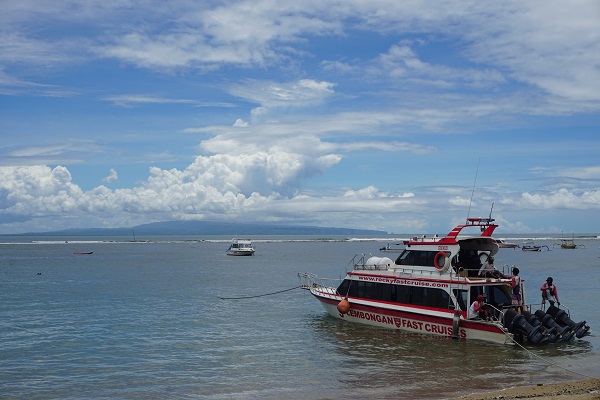
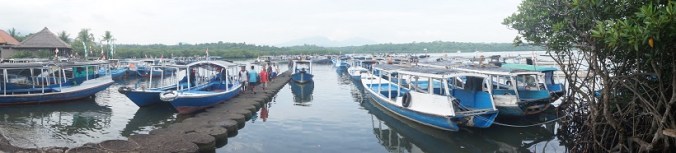
Half an hour off the coast of Sanur is an island called Nusa Lembongan. The first hurdle to cross once I’d decided to visit the island was choosing which boat to take. Things we take for granted in the U.K. such as lifejackets and life rafts are not fitted as standard here. Should I risk the small local boat and hope for a calm crossing or pay three times the price to an operator with a larger boat and a better safety record?

I opted for the latter and went for Rocky Cruises.  I’m glad I did – the sea outside the reef was surprisingly rough and a smaller boat would have struggled. Even so, the boat ride got off to an unusual start. We all had to roll up our trousers and wade out to the boat. This is because there’s no pier or jetty. However much you pay, there’s no getting round the fact – everyone has to wade. Fortunately, the crew carry the bags aboard . It’s quite a sight to see them load three suitcases onto their head and wade out into the sea.

balif7

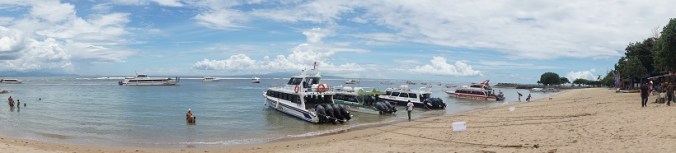
My first sight of the landing beach at Jungut Batu was exciting. The sea was crystal clear and the beach was pure white sand. Once off the boat, we were met by Kecho and Endra, the staff from the villa we had rented on AirBnB. They shouldered our bags and lead us a short walk up the hill to the villa.

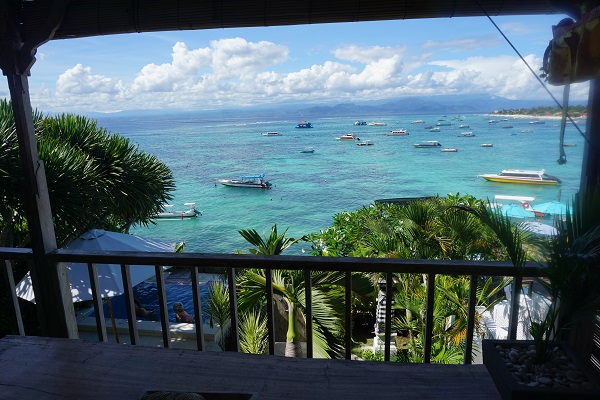
Villa Aman is positioned on a hill looking over the bay. It’s a bit more ‘high end’ than our usual choice – since we only have a couple of days before Oscar goes back to Japan, I wanted to make it special. There’s a ground floor with a pool and a deck. Upstairs, there’s an open plan living space with a jaw dropping view. As I type, I am looking across the bay to the East coast of Bali and beyond to Mount Agung. I am pleased to report that there’s no sign of volcanic activity!

balif2

Lebongan isn’t quite the getaway from it all island paradise I expected – infact, it’s surprisingly busy, with lots of restaurants and hotels and guesthouses. However, as soon as you get away from the main tourist areas, you see a different, more rural side to the island. Labongan is best known for its seaweed production.

balif3

As a tourist destination, the main attraction is the surfing. There are three main breaks, all of them out on the reef – Playgrounds, Lacerations and Shipwrecks. The names give a clue to the kind of surfing it is!  A bit beyond beginners like us, I think, but all the same, it’s great fun to sit and watch the surfers waiting to catch the wave. I’ve noticed a few boards flipping up into the air – ‘dinging’ your board seems to be an occupational hazard when you surf the reef.

balif4

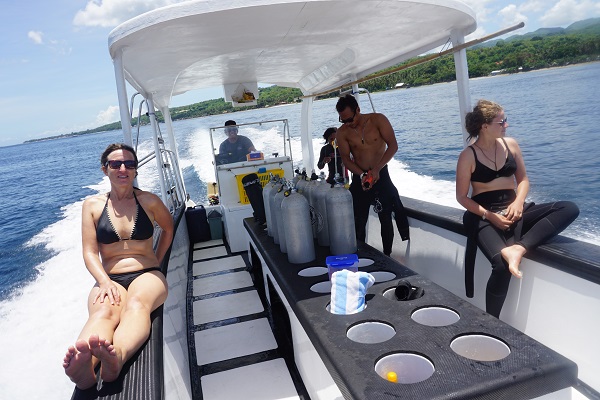
Diving and snorkelling are also big draws.  Yesterday, David and I took a boat out to the neighbouring island of Nusa Penida and made two dives on the South of the island (Oscar opted to stay home as he was rather sunburnt!)  Like Manjangan Island where we did out PADI Open Water qualification, the underwater scenery is spectacular. Unfortunately, the water was too rough to dive on the North of the island, where we could have spotted Manta Rays, but we still had an excellent time. It was great to put the lessons we’d learnt on our PADI course into practice.

balif5

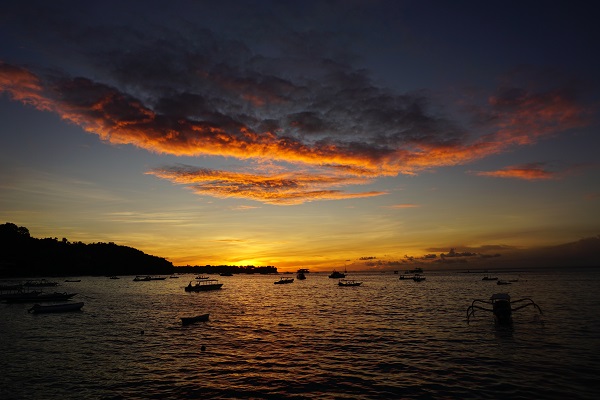
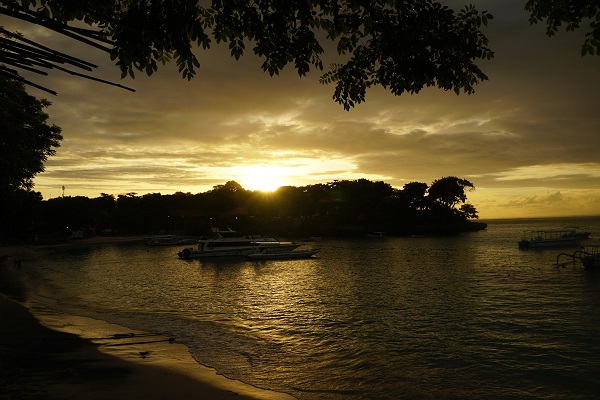
There are very few private cars on the island, but there plenty of scooters and a few jeeps which act like taxis. Last night, just before sunset, we took a jeep to Mushroom Beach, a gorgeous beach about ten minutes drive away. We went to a restaurant on the sand called Bali Hai. It was lovely to sit and watch the sun go down. It’s the second spectacular sunset we’ve seen since we got here. Whether it’s this island, or whether we are beginning to move out of rainy season, I don’t know, but this is the sunniest and driest part of our holiday on Bali.

balif8

Sadly, Oscar is catching the last ferry back to the mainland this afternoon and will fly back to Tokyo tonight (David and I are here ’til tomorrow). I know I’ll be sad when we wave him off from the beach, but at least I can console myself with the thought that we’ll always have Nusa Lembongan.

balif6

Sanur, Bali

balie2

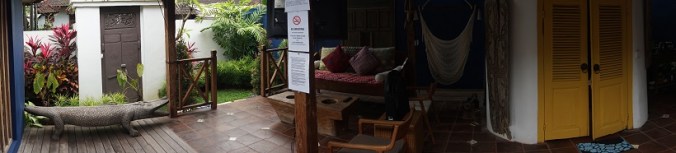
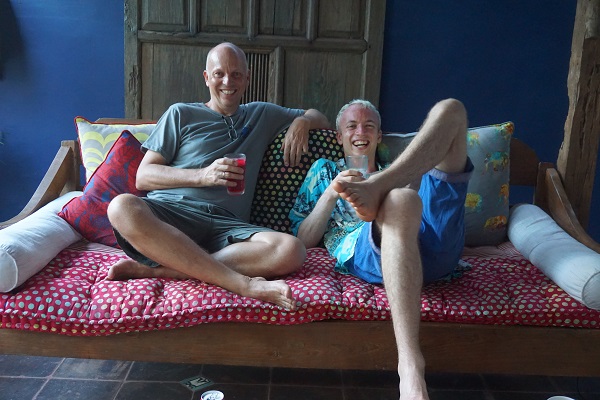
We have moved again – to Sanur, which is about 40 minutes drive away from Ubud on the South coast. Instead of staying in a homestay, we’ve got our own house which we rented through Airbnb. It’s a traditional Javanese style house known as a ‘Limason’. It’s constructed with reclaimed teak wood, which is over 100 years old, and has a stylish open plan living area and two bedrooms. ‘Why two bedrooms?’ I hear you ask? Because Oscar, our eldest son has come to stay! He’s teaching English as a foreign language in Tokyo. Tokyo’s not too far from Bali so we invited him to join us. I haven’t seen him for a year, so it’s a real treat to spend some time with him.

balie1

I wanted to come to Sanur, which has a reputation for being popular with the English. It was one of the first places on the island to be settled by Western tourists. It is well located, near to the main attractions but away from the crowds, and has a reputation of being ‘just right’ ie not too overdeveloped and not too quiet. I knew it had a nice beach with a five kilometre long beach promenade. However, my travel guide warns that it is sometimes referred to as ‘Snore’ –  because it’s a little bit dull.

Our house is on a little lane in a quiet – or quietish  – residential area. Where ever you are in Bali, there’s always the sound of cockerels crowing and scooters zipping by.  From here it’s a ten minute walk down a lane, across a busy high street, and then down a narrow alley to the beach.

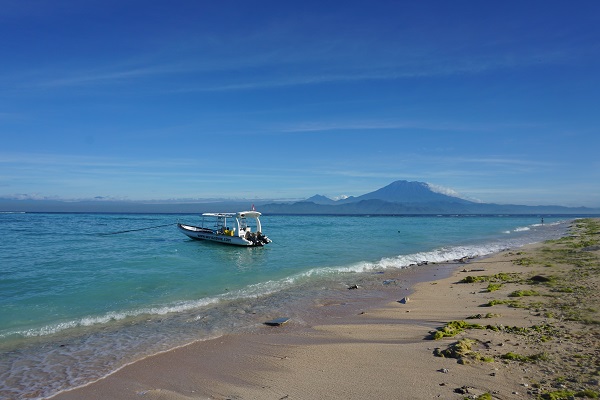
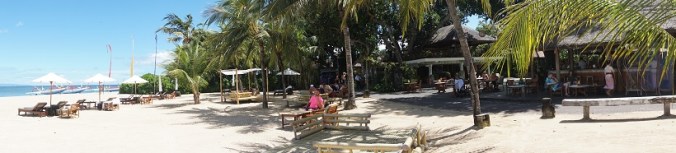
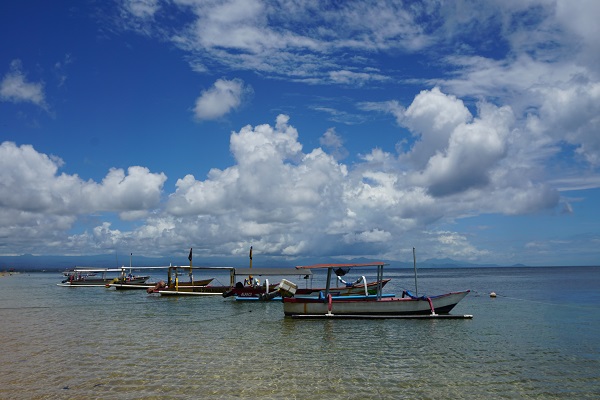
The beach is the main attraction.  It’s a really pretty beach, with clean golden sand and lovely views across the sea to the island of Nusa Lembongen. To the left we can see the Eastern end of the island, and in the distance the foothills of Mount Agung. So far the mountain has been shrouded in cloud and we haven’t been able to see if it’s smoking.


balie8

The beach promenade is a real asset to the town, allowing people to walk or cycle from one end of the town  to the other away from the traffic. Some sections have been left natural and wild, other sections have been filled in by upscale hotels and restaurants. The restaurants are great and the views are lovely. The only downside is the prices, which are the highest we’ve seen.

balie9

Away from the restaurants and hotels, which tend to have security guards, there are quite a few hawkers about, trying to sell you stuff. David and Oscar are good at walking away, but I seem to struggle. It’s not that I want to buy anything, I just find it hard to say no.  I now have a sarong, a batik dressing gown and a beach dress. I wonder if I can get a T-shirt printed with the words, ‘No taxi, no lunch, no sarong’ !?

balie3

Yesterday afternoon, Oscar and I went for a swim and a snorkel. The sea bed is shallow and sandy and covered in sea grass. We didn’t see a single fish, but we did see a black and white sea snake, a green sea snake and a couple of star fish. Further out to sea, there’s a coral reef. The reef means the water in the bay is as flat as a mill pond. During the season, it’s a hot spot for kitesurfing and paddle boarding. Surfers come to surf off the reef.

This morning, the tide was right out and the sun was beating down. We found a table in the shade and ordered breakfast. There were several locals standing in the bay or even on the reef to fish. I watched them idly as I sipped my coffee. Swifts swooped overhead, catching the numerous bright green dragon flies which flit over the beach.

I don’t think Sanur is a ‘snore’ – I think it’s ‘just right’.

balie6


A Day in Ubud – Monkey Forest Sanctuary and Agung Rai Museum of Art, Bali

bali8

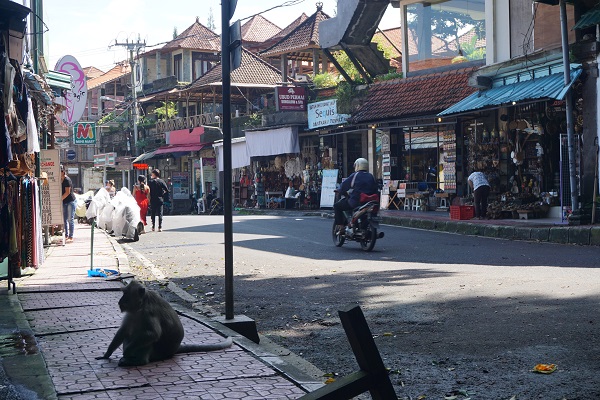
We have moved to Ubud, a Balinese town which is strongly associated with arts and culture. We are staying in another homestay, Mandia Bungalows, which is situated down a narrow alleys just off Monkey Forest Road. The set up is not dissimilar to our homestay in Permuteran –  a nice double room with a verandah outside, overlooking a garden – but with one crucial difference: we are smack bang in the middle of a busy town. Our quiet, almost rural feeling, family run homestay is hemmed in on all sides by modern, high rise buildings.

balid3

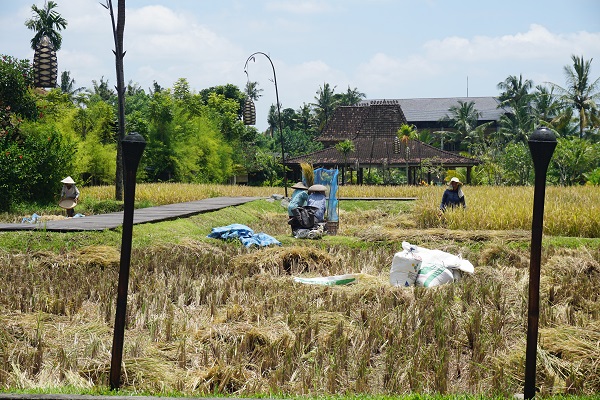
Such is the dual nature of Ubud. The streets throng with people and lined by hundreds of restaurants and shops selling everything from the usual tourist tat to handmade musical instruments and original artwork – but if you look beyond the road, you will see terraces of golden paddy fields, with women in traditional triangular hats harvesting the rice by hand. Ancient temples and traditional medicine practioners rub shoulders with coworking spaces and independent fashion labels.

balid7

In the spirit of Ubud, we decided to divide our day in two and visit Monkey Forest Sanctuary in the morning  and Agung Rai Museum of Art in the afternoon.

Monkey Forest Sanctuary wasn’t my first choice as I have to confess to being scared of monkeys, having been bitten by one once.  However, since it is just round the corner from our homestay, I agreed to give it a try.

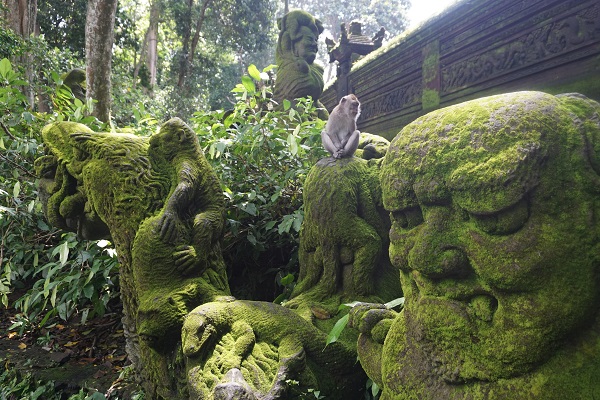
I’m glad I did. It’s a beautiful park with a lot more going for it than just monkeys. There are over a hundred species of trees, many of them very old, and the park has some beautiful sculptures and an impressive temple.  And after hearing horror stories about how aggressive the monkeys are, it turns out that as long as you don’t bother them, they don’t bother you. Unless you’re carrying a plastic bag, in which case they’ll try to steal it. Or wearing a dress with a swirly skirt, in which case, they’ll have fun grabbing the dress.

There are wardens all over the park, making sure you don’t get in to trouble. I saw a Japanese woman get too close to a monkey with a baby whilst trying to take a photo. The monkey ran at her and she shrieked, which only made things worse. Thankfully, a warden intervened.

balid6

Other wardens are selling bananas to feed the monkeys with. You to hold the banana above your head and they climb on your head and take it. I personally thought this a bad idea as it encourages the monkeys to see tourists as potential food sources, but the park clearly makes money from it.

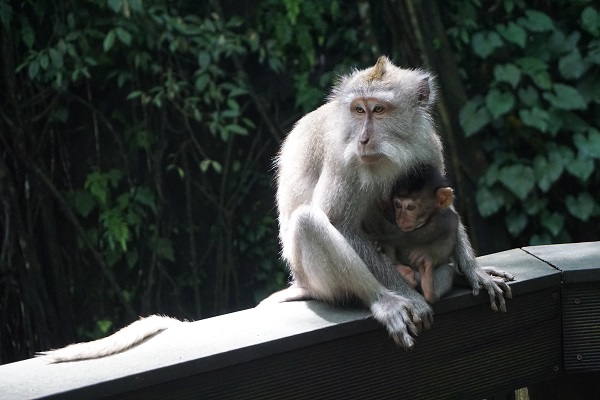
The baby monkeys were so sweet and I loved the way they cling onto their mums  –  but the best thing was watching the monkeys play in the water. I didn’t realise monkeys can swim until now. They swim really well, keeping their heads under water, and are fearless about diving from a great height.

balid5

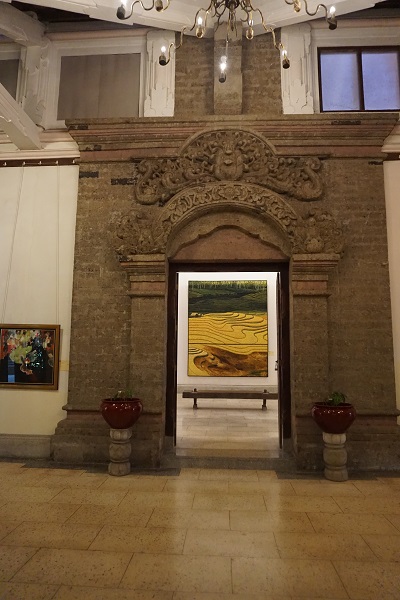
Agung Rai Museum of Art was a few minutes further South from the Monkey Sanctuary. It is not only a Museum of Art but an arts centre with a variety of classes and cultural events on offer. The impressive buildings are made in the traditional Balinese style and scattered about a beautiful garden. When we entered the garden, a pair of musicians were playing on xylophones. The peaceful sound merged with the sound of flowing water – there are many water features dotted about the garden.

The art is based in the private collection of Mr and Mrs Agung Rai. Agung Rai is an important collector who devoted his life to the preservation of Balinese art and culture. There are several important works by Balinese and Javanese artists and also by foreign artists who made their home in Bali in the 1930’s and 1940’s and contributed hugely to the development of art in Bali.  These include the German primitivist painter Walter Spies. There is also some international contemporary work.

balid9

The ticket to the gallery includes a free glass of iced tea or coffee. As we made our way to the café, we spotted some photographs of Barrack Obama and family visiting the museum last year. Nice to know we’re in good company!

balid1

Turtles in Permuteran, Bali

turtle7

It is our last day in Permuteran, and I’m starting to realise what a special little place it is. The people are super friendly and will do anything to help you. There are no hawkers on the beach and prices tend to be fixed. The village community really make the effort to preserve the natural beauty of the place –  they’re setting an example which the rest of the island would do well to follow.

It wasn’t always like this. Before 2000,  Permuteran’s corals had nearly all died due to a combinatio of bleaching, high temperatures caused by global warming, and destructive fishing practices like reef bombing and use of cyanide. Then a conservation project was launched called the Biorock project. A number of artificial metal structures have been created and placed on the seabed. The structures have a light voltage current running through them which helps the coral to grow 5 to 7 times as fast. The structures are covered with an assortment of coral, some newly planted, others already well established.

It is heartening to see the assortment of fish and other marine life which have been attracted by the new reef.  You can snorkel round the ‘trail’, enjoying the fish and the coral, but also having fun working out what the structures are – I spotted a buddha, a bicycle, and a temple. A new structure goes in every year.

turtle8

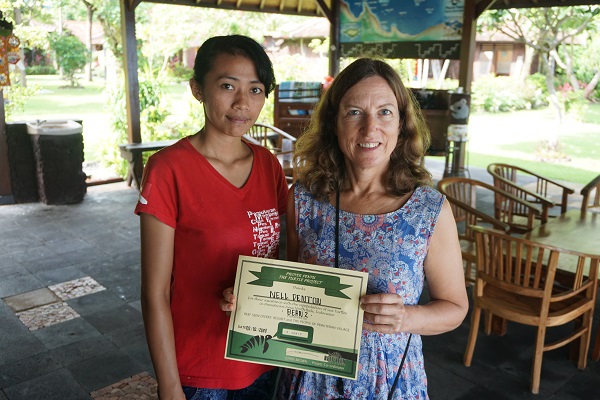
A Biorock centre provides education and guidance for visitors and school trips. It has a scheme to ‘adopt a baby coral’ – they plant it on one of the structures, and you receive a certificate. They’ll send you a video of your coral in situ and update you on how its doing!


The village has established a Marine Protected Area around the project and a community-based team enforce the ban on destructive fishing practices. It’s all been funded by a conservation tax on local businesses such as dive centres and restaurants, who benefit by the increased number of tourists –  and by visitor donations, of course.

A second conservation project further along the beach is a turtle hatchery and sanctuary for injured turtles. We went along to visit it and heard how locals bring them the eggs and are paid for them.  Previously, eggs were often dug up and eaten or given as offerings at the temple.  The eggs are buried in sand and then hatched out.

turtle6

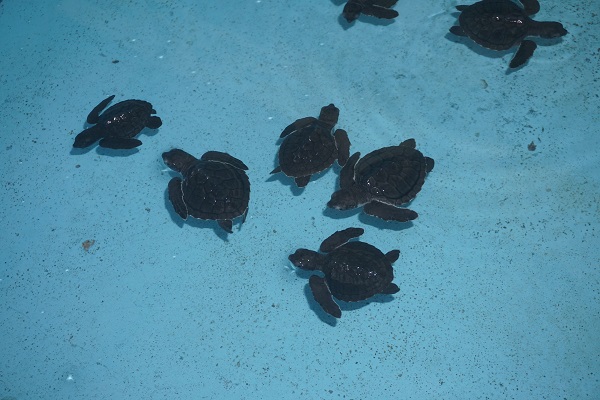
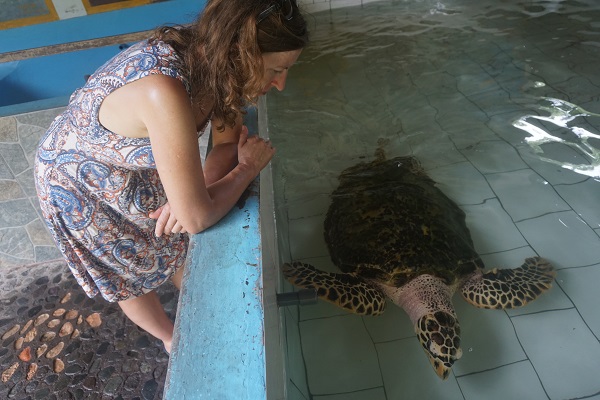
We saw a couple of tanks full of cute little baby turtles swimming about. Some were only a week old and the others were three months. There were also some full sized turtles which had been rescued from fishermen’s nets. In the past, these turtles would have been eaten, but now the fishermen bring them to the Sanctuary and receive a cash sum for their trouble.  Visitors to the Sanctuary are invited to release a baby turtle in return for a donation of 100,000 rupees (around a fiver)  to the sanctuary.  You can release a big one, too, but it’ll cost more. I think it’s a great idea – although cynical Dave did wonder if the fishermen sit and wait for the turtles to be released and then go and catch them again!

turtle1


There was one huge Hawksbill turtle which is known as the ‘caretaker’ of the Sanctuary. Sadly,  the staff said there are no plans to release him as he was caught and kept as a pet for the first six years of his life until he got so big that the family brought him to the Sanctuary. He doesn’t have the skills to survive in the wild.

turtle5

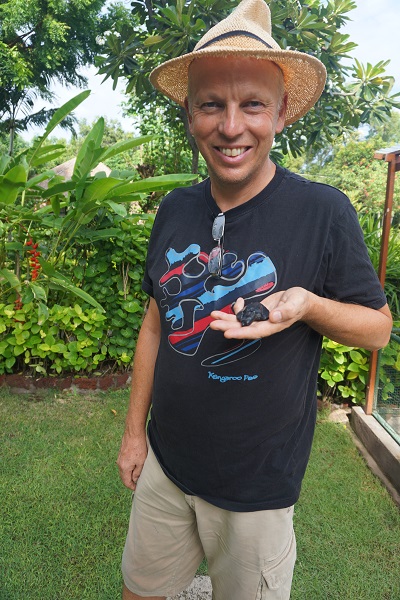
David and I went along this morning to release a baby  ‘Olive Ridley’ turtle. We called him ‘Bean 2’ in honour of our dog, Bean. We took him down to the sand and watched him go down to the water, turn round and come back up the beach again. In the end, I waded knee deep and released him in the sea. He perked up and swam away vigorously. Good luck out there, Bean 2!

This afternoon, we went out for a snorkel, and David was lucky enough to spot an adult Hawksbill grazing on the bottom.  I wonder if he was born at the Turtle Sanctuary…?

turtle4


Diving at Menjangan Island, Bali

balid4

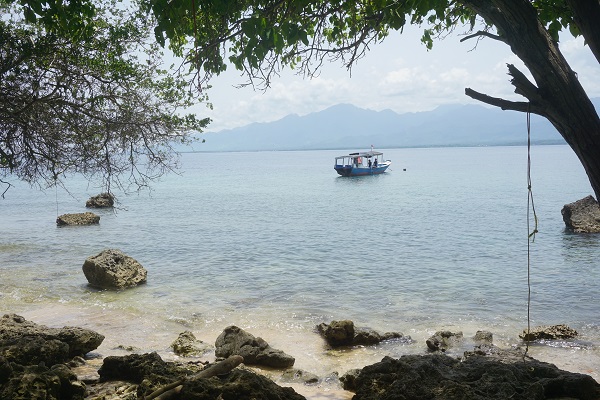
The tiny, uninhabited island of Menjangan is situated in the protected marine reserve of Bali Barat National Park. It is known to be one of Indonesia’s best dive sights. Although it is just off Bali, it is actually a part of Java. To get there from Permuteran, we drove 7 or 8 kilometres to a small inlet and then took a boat from there.

It was a cloudy day and as soon as we got out of the protected bay area, we found ourselves heading into very rough waters. The boat, which was very flat and made from wood, was soon shipping water. We were relieved when the Captain decided it was too dangerous to go any further.

balid3

The next day, we tried again. This time, success! The sea was calm with not a wave in sight. We dived off a ledge to a depth of 12 metres and were treated to a tour of an incredibly diverse and pristine coral garden. Of course, there were lots of fish, too, often passing in big shoals, but the plant life was really the star with giant clams and massive sea fans (not sure ‘sea fan’ is a technical term but it’s the best I can come up with!)  A ‘Balinese’ style packed lunch was provided –  veggie fried rice and a couple of Rambutan, if you haven’t tried them, you must – they are delicious. A spiky red ball which peels away easily to reveal a single white fruit, not unlike a lychee, which we ate sitting round on the beach. In the afternoon, we moved round the island and did another, equally good dive.

As soon as we got back to Permuteran, we signed up to complete our PADI open water certificate. Our teacher was a lovely, laid back local called Kadek Suparma from YOS dive in Permuteran. For those of you who read our blog in Martinique, you may recall that we had to abandon our PADI diving course in Grand Anse after David had problems with his ears.

baLID6

The following day, we went into the shallow waters off the beach at Permuteran with Kadek and did a few training exercises designed to up our confidence in the water. As a contact lens wearer, I was nervous about filling my mask up with water and then blowing it clear again, but I kept my eyes squeezed shut and it went okay. That evening, we spent a few hours swotting up on the diving theory, in preparation for an exam at the end of the course. It was all a bit ‘sciencey’ for me, with lots of charts and tables to learn, and I’m nervous I’m going to mess it up.

balid5

The next day, we set off for Mengangan Island again, and did our final two dives. In the morning we went down to 18 metres, which is the deepest we are allowed to go at this stage in our training. Unfortunately the visibility was poor, and we didn’t get such a good view of the coral. However, I found I was much more confident about moving around under the water and was starting to enjoy the sensation of weightlessness and stop worrying all the time that my eardrums/lungs are going to burst!

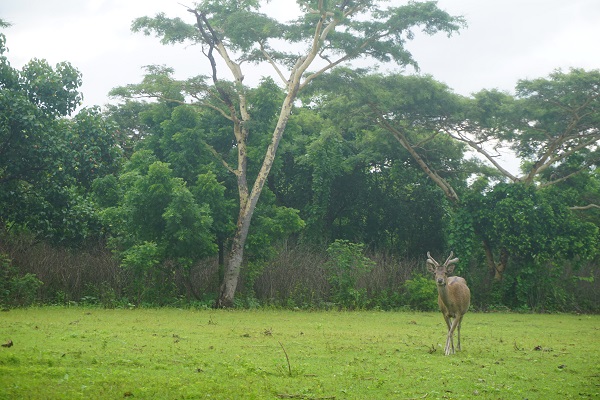
During our picnic lunch, we discovered what Menjangan means – deer. The island is home to the rare Java rusan deer. Apart from the deer, the island is uninhabited – except for sixteen Hindu monks. We saw a few deer but we didn’t see any monks.

balid2

After the dive, it was back to the classroom, to do our exam. David did better than me – and delighted in rubbing my nose in it, as usual – but happily we both passed!

It’s official., as of today, we’re qualified PADI open water divers – yay! We plan to do  some more diving as we continue our travels.

P.S. A second achievement of the day – we’ve completed Dry January without touching a drop!

balid1

Permuteran Beach, North West Bali

balic2

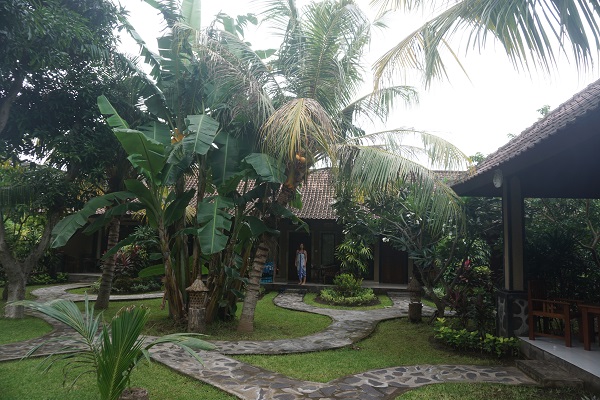
We have moved – to Permuteran village on the North Western tip of Bali, which is one of the quietest and unspoilt places in Bali. It is common practice here for your accommodation to take care of travel arrangements, so we arranged for a car and driver through Echo Beach Villas and made the three hour trip across the mountains to Permuteran. For the next week, home is a simple homestay called ‘Pondok Rayhu’. The family we are staying with really take care of their guests. The rooms look out over a  lovingly tended garden.

balic1

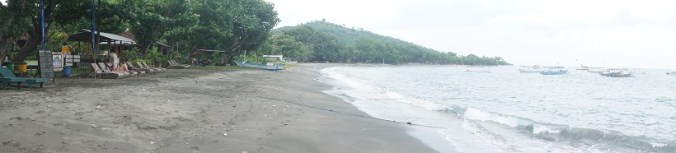
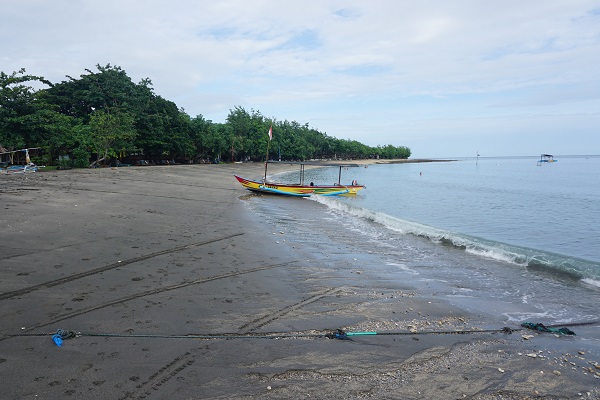
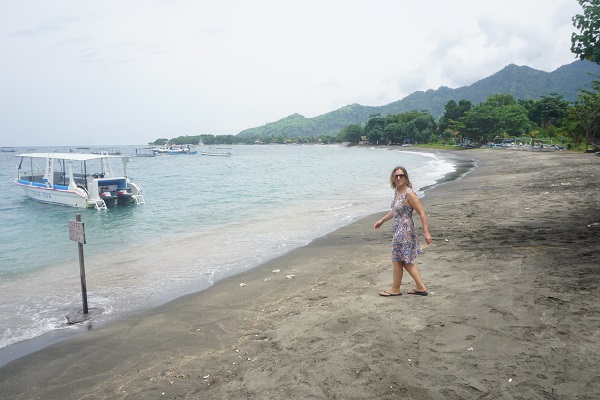
Permuteran is a seaside town with a very pretty beach. It is best known as a diving hot spot because of its proximity to Mengangan Island. However, since it is the rainy season, there are few divers around. The whole place has an ‘off season’ feel, but as long as you don’t mind having entire restaurants to yourself, it is all the more beautiful for it.

balic7

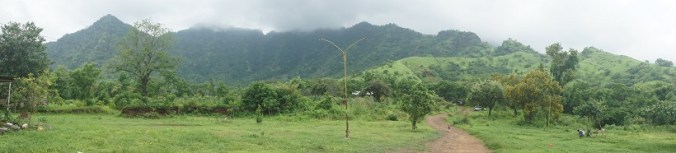
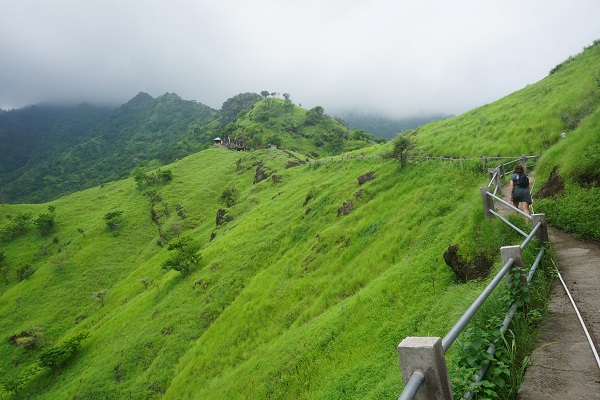
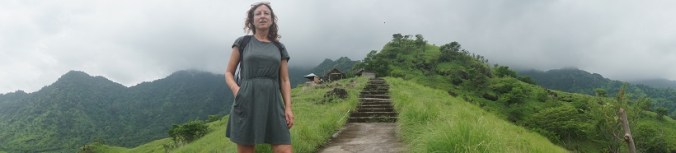
The village is surrounded by lush green hills. Our first day was cloudy so we decided to skip the beach and go for a walk. Our landlady recommended we walk up to a temple called Bukit Kursi which is situated directly behind the village.

balic3.jpg

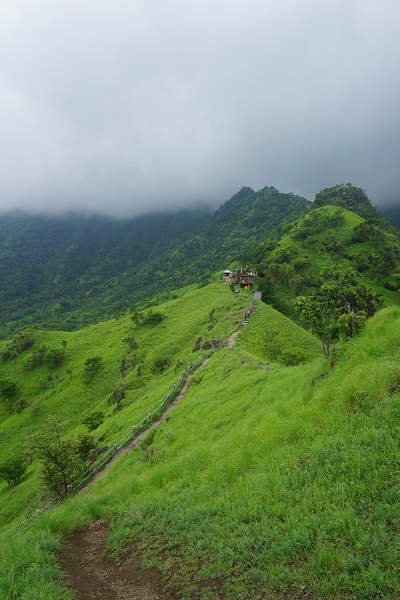
After walking about a mile along the the main street, which is lined with guest houses and restaurants, we turned right and headed inland. Another half a mile and we arrived at a car park where we were invited to make a small donation to the upkeep of the temple. Then we set off for the temple. This involved climbing hundreds of steps.

balic5

It was very hot and I had to keep stopping to knock back water and moan to Dave about how hot I was! After twenty minutes of stop-start climbing, we arrived at our destination. The temple itself was small and simple – it was all about the location.  The views were spectacular! The colour of the hills impossibly green!

balic6

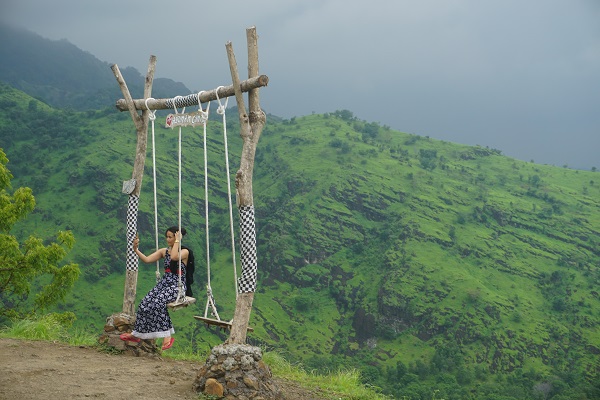
Next, we walked down a secondary path to a ridge. There were a couple of swings which swung out over the bay. After taking some time to admire the view, we set off back down the path. As soon as my foot touched the final step, the heavens opened. Neither of us had brought a coat! We splashed our way back down the road until we spotted a café. We ducked in and ordered a couple of juices, which we sipped very slowly as we waited for the rain to stop.

balic4

A tale of two temples: Pura Tanah Lot and Pura Luhur Batukau, Bali

balib2

We wanted to get out and see the sights so David hired a scooter. It is well worth hiring a scooter in Bali, it cost us 60,000 a day, which is just over three quid! I did find it nerve-racking on the busy roads,  especially leaving Canggu but David is an experienced rider and I soon started to relax.

balib5

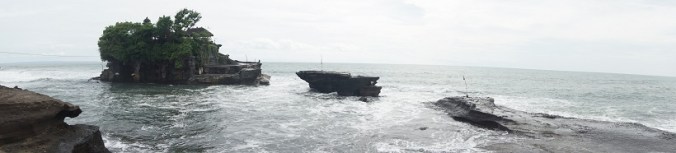
Our first ride was to Pura Tanah Lot, one of the most important sea temples, which is about 40 minutes ride from Canggu. I gather in peak season the queues to get in stretch for miles but after stopping to pay our admission fee, we went straight in.

One advantage of being here in the rainy season is the island is relatively quiet. Whether tourists have been scared off by the fact that Mount Agung is active, I don’t know. The island is still on ‘amber’ alert and there is an exclusion zone of six kilometres –  but away from the volcano, everything is running normally.

Arriving at Tanah Lot, I was surprised by the size of the car park and the hundreds of shops and restaurants which lead up to the temple. The commercialism extended into the temple, with hawkers selling souvenirs on every corner and dozens more giftshops and restaurants.  Quite a few areas of the temple were cordoned off, with noisy building work in progress.

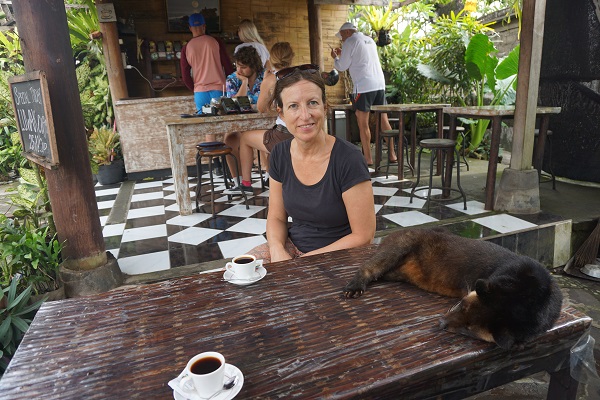
Part of the temple can only be reached at low tide. We arrived at high tide, so there was no chance of crossing, but I gather only Balinese visitors are allowed in, anyway. We climbed up a steep hill to get a better view of the ‘island’, and were greeted by another row of shops and cafes. We stopped in one for a ‘Kopi Luwak’ or civet coffee.

balib3

For anyone who hasn’t heard of this, it is a very high quality coffee which gets it’s particular flavour from the unusual production method – the coffee beans are eaten and pooed out by the Asian Palm Civet! Don’t panic, the beans are scrupulously cleaned and roasted. It is the digestive juices of the civet which give it its particular flavour. Personally, I didn’t notice the difference between this and my usual Lavazzo, but I can’t claim to be a coffee expert.

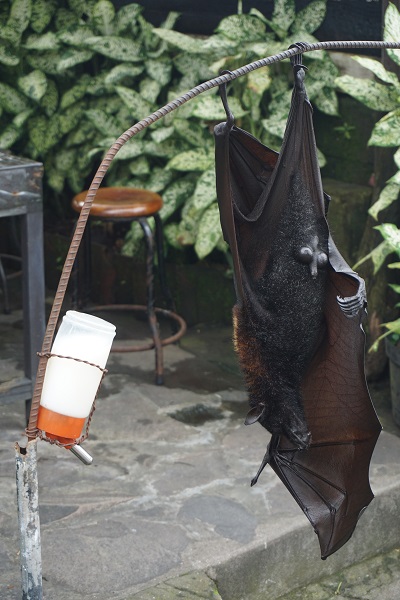
I gather there have been ethical issues about the way civets are treated in this production process, but in this café, the civets were treated like Gods! They sprawled about the furniture, sleeping or revelling in being stroked by the café owner and visitors.  As well as the civets, there was a big scary fruit bat, which attracted plenty of attention from passing tourists.

balib4

I enjoyed our visit to ‘Tanah Lot’, the ‘island’ part of the temple was well worth seeing, but with all the hawkers and sellers and tourists and building work, it didn’t have much spiritual atmosphere.

Our second ride was to the temple of Pura Luhur Batukau. This was a much longer ride, probably about two hours. Fortunately, David had brought our SatNav along, loaded with maps of Bali.

balib6

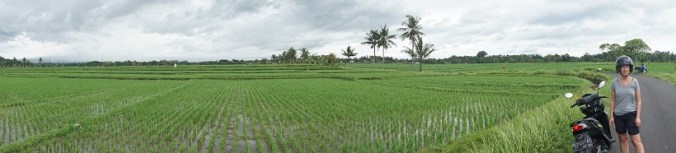
The urban scenery soon gave way to terraces of paddy fields and picturesque villages dotted with small shrines and temples. At one stage, we found ourselves bumping along an unmade road. It began to rain and we stopped to put on our coats. I donned a long brown poncho which I found under the seat of the motorbike – it was very effective, if not very fetching! I thought perhaps we should turn back, but David was keen to press on. Fortunately, we soon popped out onto a better road and entered a tiny village. We were well off the tourist trail now.

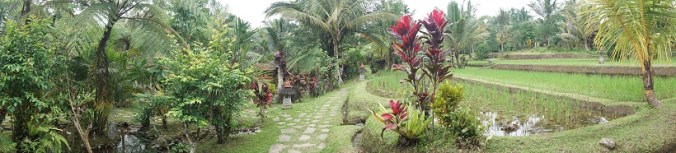
As the rain began to thicken, we passed a temple where a ceremony was about to begin. Dozens of villagers were dressed in white and an entire orchestra sat by the side of the road with traditional instruments in front of them. As we climbed the lower slopes of the Gunun Batukau mountain, the rain became torrential and we decided to take a break. It was difficult to find anywhere to stop but eventually, we saw a sign to ‘Pruna Dewi – Bungalow and Restaurant’. The restaurant looked over an enchanting garden where they grow the organic red rice and vegetables which we ate in the restaurant. The red rice was particularly delicious.

balib10


Refreshed, we got back on the bike and rode the remaining few miles to Pura Luhur Batukau. The rain had stopped. We paid a small entrance fee, and were kitted out with sarongs. Then we climbed up a long flight of steps to the various parts of the temple.

balib8

What a contrast it was to Pura Tanah Lot with its peaceful mountain setting and deeply spiritual atmosphere. The temple is set in a fragrant garden of frangipani and hibiscus and surrounded by dense tropical forest. Apparently, it is one of the most sacred places in Bali, which dates back to the 11th century, and yet we only came across two other groups of visitors. Certain areas of the temple were out of bounds, but there was still plenty to see. The sound of monkeys screeching merged with ceremonial chimes as mist curled through the trees.

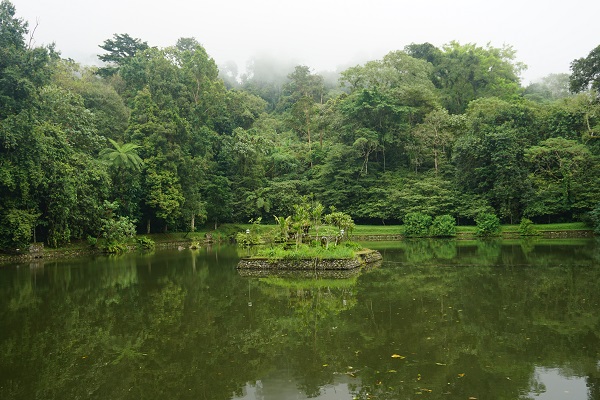
Walking through the gardens, we came across a large lake full of huge koi carp (cue excitement from David – Fish! Fish! Fish!) There were some steps across the lake to an island in the middle, but the steps were submerged and we were not brave enough to attempt it.

balib9

On the way home, the Sat Nav ran out of power and we had to find out way without it. If it was left to me, we’d still be out there but fortunately, David has a good sense of direction and we made it back before dark.  I’m not sure I’m ready for Canggu on a scooter at night.

balib7